THE ADVENTURE COLLECTIVE® · Independent discovery and booking for outdoor travel

A private Mercedes transfer delivers you from Athens to the cliff-top Temple of Poseidon at Cape Sounion. Expect comfortable travel, short coastal stops, and a sunset visit to one of Greece’s most evocative ancient ruins.
A private Mercedes transfer delivers you from Athens to the cliff-top Temple of Poseidon at Cape Sounion. Expect comfortable travel, short coastal stops, and a sunset visit to one of Greece’s most evocative ancient ruins.
The Mercedes E‑Class eases out of the city and the Aegean opens like a promise — silver in the morning, molten at dusk. Along the coastal road, pine-scented air and the constant hush of the sea frame brief stops: a modern cultural park, a seaside harbor, and finally the cliff-top ruin where columns stand against open sky.
Verified experiences and guided adventures in the surrounding area.
Operated by Greece Experience Tours · Sounio, Attica
The Mercedes E‑Class eases out of the city and the Aegean opens like a promise — silver in the morning, molten at dusk. Along the coastal road, pine-scented air and the constant hush of the sea frame brief stops: a modern cultural park, a seaside harbor, and finally the cliff-top ruin where columns stand against open sky.
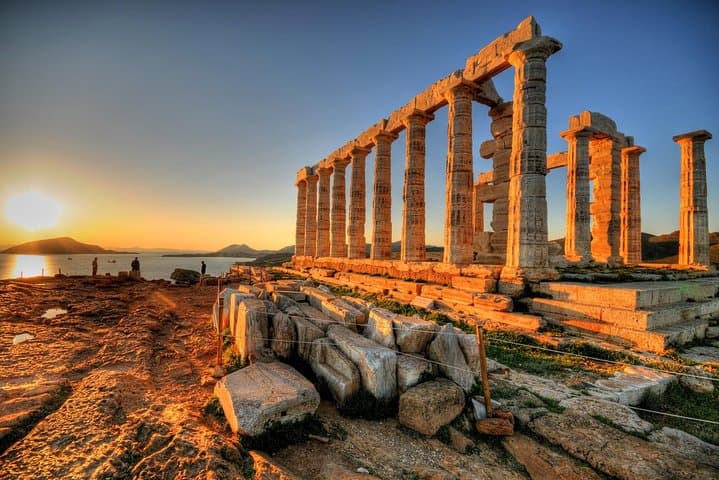
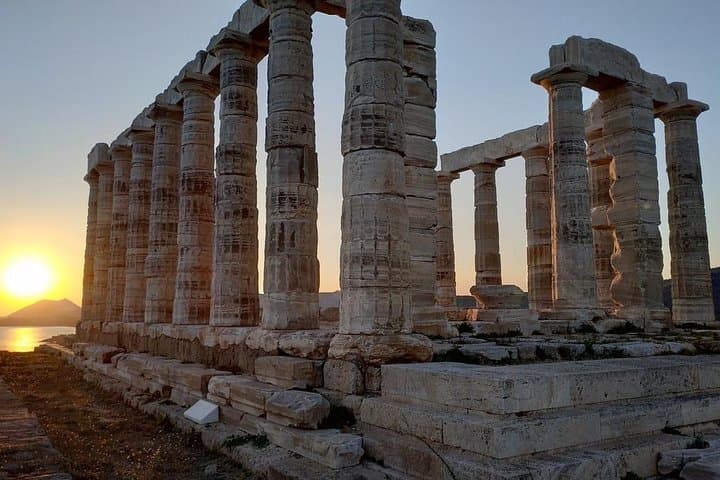
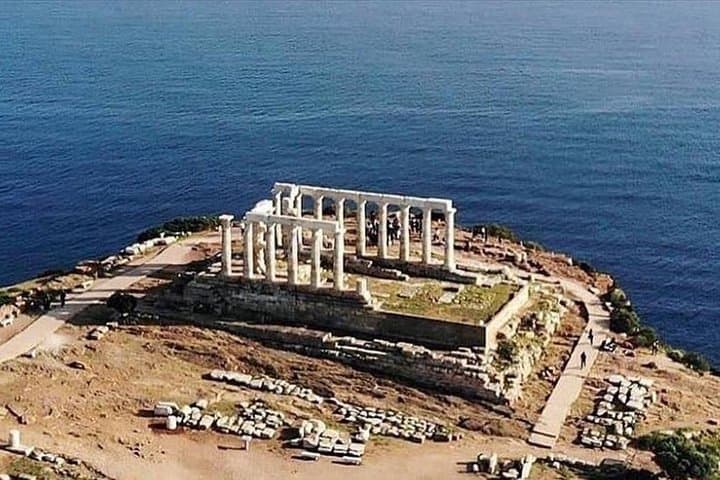
Built between 444–440 BCE, the Temple of Poseidon crowns Cape Sounion on weathered rock and is visible from miles of sea. Its Doric columns, worn by salt and wind, once guided sailors home; Homer mentions Sounion, and later visitors like Lord Byron left physical marks of their passage. Geologically the cape is limestone and schist with thin soil that feeds scrub pines and hardy shrubs; the site’s exposure to the Aegean creates dramatic winds that seem to push you toward the cliff edge and the view.
Culturally the temple is a ritual landscape and a scenic landmark for Athenians — best experienced at golden hour when the sea reflects molten light and the crowds thin. Expect a short, uneven walk up from the parking area to the ruins; the ground can be rocky and wind-swept.
Practical notes: the private transfer includes a comfortable, WiFi-equipped Mercedes and roughly a four-hour window for departure, stops and the site visit. Entrance to the archaeological site is typically paid separately; bring a charged card or some euros. Wear sturdy shoes, sun protection and a wind layer; if you want the classic photo, plan for sunset but book early — that slot fills fast.
easy.
4 hours.
Light fitness required — mostly seated transfer with a short, uneven walk to the ruins
No — entrance to the archaeological site is generally not included in the private transfer; bring a card or cash for tickets.
Pickup point is arranged at booking — common options include central hotels or agreed city locations; provide full pickup details when requested.
Yes — infant seats are available and infants may ride on laps per provider policy; indicate needs when booking.
The tour can be canceled for a full refund if severe weather prevents safe access; check the 24‑hour cancellation policy for details.
The 5th‑century BCE Temple of Poseidon marked a navigational and ritual landmark for ancient sailors; later visitors like Lord Byron made it a Romantic-era icon.
The site is vulnerable to erosion and wear from foot traffic; stay on designated paths, don’t climb ruins, and follow onsite conservation signage.
Greece Experience Tours operates guided outdoor trips and adventures with an emphasis on safety, stewardship, and memorable experiences.
The Mercedes E‑Class eases out of the city and the Aegean opens like a promise — silver in the morning, molten at dusk. Along the coastal road, pine-scented air and the constant hush of the sea frame brief stops: a modern cultural park, a seaside harbor, and finally the cliff-top ruin where columns stand against open sky.
The Mercedes E‑Class eases out of the city and the Aegean opens like a promise — silver in the morning, molten at dusk. Along the coastal road, pine-scented air and the constant hush of the sea frame brief stops: a modern cultural park, a seaside harbor, and finally the cliff-top ruin where columns stand against open sky.
Built between 444–440 BCE, the Temple of Poseidon crowns Cape Sounion on weathered rock and is visible from miles of sea. Its Doric columns, worn by salt and wind, once guided sailors home; Homer mentions Sounion, and later visitors like Lord Byron left physical marks of their passage. Geologically the cape is limestone and schist with thin soil that feeds scrub pines and hardy shrubs; the site’s exposure to the Aegean creates dramatic winds that seem to push you toward the cliff edge and the view.
Culturally the temple is a ritual landscape and a scenic landmark for Athenians — best experienced at golden hour when the sea reflects molten light and the crowds thin. Expect a short, uneven walk up from the parking area to the ruins; the ground can be rocky and wind-swept.
Practical notes: the private transfer includes a comfortable, WiFi-equipped Mercedes and roughly a four-hour window for departure, stops and the site visit. Entrance to the archaeological site is typically paid separately; bring a charged card or some euros. Wear sturdy shoes, sun protection and a wind layer; if you want the classic photo, plan for sunset but book early — that slot fills fast.