THE ADVENTURE COLLECTIVE® · Independent discovery and booking for outdoor travel

Leave the crowds behind and chase dolphins through the shallow channels of the 10,000 Islands on a private boat from Goodland. This short, family-friendly outing pairs shell-collecting stops with up-close wildlife viewing and a primer on mangrove ecology.
Leave the crowds behind and chase dolphins through the shallow channels of the 10,000 Islands on a private boat from Goodland. This short, family-friendly outing pairs shell-collecting stops with up-close wildlife viewing and a primer on mangrove ecology.
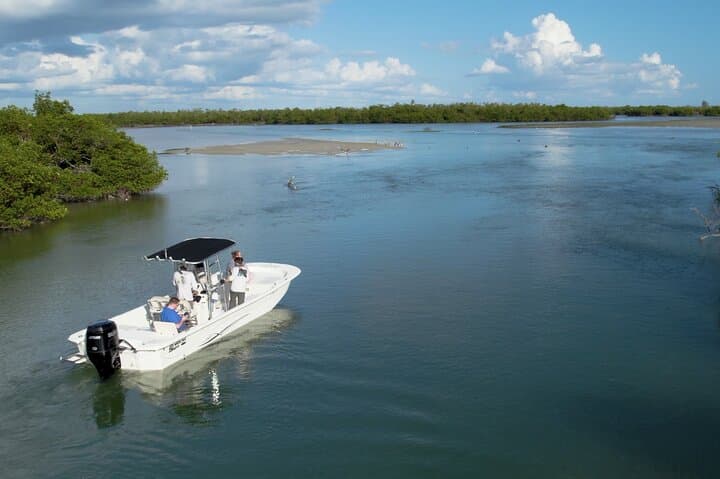
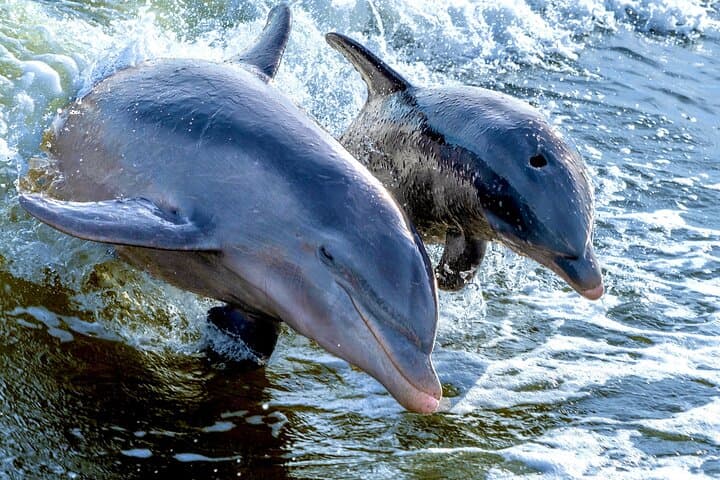
The boat slips away from Goodland Boat Park and the harbor noise thins to the soft clack of wake on mangrove roots. Pelicans eye the bow; a dolphin curved like a question mark arcs and answers, slipping through sun-silvered water. For two hours you ride a green corridor where channels thread between islands made of shell and mud, and the world feels made for small boats and quieter observation.
Verified experiences and guided adventures in the surrounding area.
Operated by Island Excursions · Goodland, Florida
The boat slips away from Goodland Boat Park and the harbor noise thins to the soft clack of wake on mangrove roots. Pelicans eye the bow; a dolphin curved like a question mark arcs and answers, slipping through sun-silvered water. For two hours you ride a green corridor where channels thread between islands made of shell and mud, and the world feels made for small boats and quieter observation.
This stretch of southwest Florida is part of the 10,000 Islands—an understated labyrinth of mangrove islets carved by tides and storms. Geologically young, the islands are accumulations of shell, sand and organic muck left behind as sea levels rose and fell. Human stories here run deep: millennia before modern settlements, the Calusa people fished these waters and built shell mounds that still punctuate the shorelines. Later, the area drew fishermen, shippers and the wealthy who built low-lying estates along Marco Island’s coastlines, their seawalls watching the same tides you’ll cross.
On this private sightseeing and dolphin tour you glide through the largest mangrove forest in the continental U.S., tracking pods of wild bottlenose dolphins and pulling up to small barrier islands strewn with exotic shells. The captain explains the local ecology—the nursery role mangroves play for fish and crustaceans, why certain islands accumulate shells, and the cultural history of shell middens. You’ll see luxury homes and historic markers along Marco Island’s coast, but the real attraction is the edge between land and sea: mudflats that shift color with the light, fiddler crabs waving from salt grass, and gulls sizing up your bucket.
Practical note: shell collecting is part of the fun, but leave live shells and don’t damage vegetation. Expect 2–2.5 hours on the water; distances vary with dolphin sightings and shelling stops but plan on moving across several miles of shallow bays and narrow channels. Sun is relentless—bring reef-safe sunscreen, a hat and a light windbreaker for the spray. If you’re prone to motion sickness, take medication ahead of time: close, calm waters still rock small boats.
This trip suits families and casual adventurers who want a hands-on taste of Southwest Florida’s coastal ecology without long hikes or strenuous effort. The captain provides bottled water, a cooler and buckets for shells—use them for sorting, then leave anything with living tissue behind. Timing matters: mornings tend to be calmer and are prime for dolphin activity; late afternoon softens light for photos. Above all, go curious: the 10,000 Islands reward slow observation more than speed, and every tide opens a slightly different doorway into this waterborne landscape.
easy.
2–2.5 hours.
Suitable for most fitness levels; requires short walks on sandy or shell-covered islands and steady balance while boarding.
Meet at Goodland Boat Park next to the flag pole in front of the Ship store—this is the tour’s boarding point for all departures.
You may collect empty, unoccupied shells; never remove live animals or disturb nesting birds and follow local rules on protected species.
There are no restrooms on the boat; use facilities at the meeting point before departure.
Yes—infants must sit on laps. The tour is family-friendly, but supervise children onshore and when near water.
Service animals are permitted; other pets should be discussed with the operator in advance.
Take preventive medication before boarding, sit mid-boat where motion is least, focus on the horizon, and stay hydrated.
The Calusa people inhabited these coasts for thousands of years, creating shell middens and sophisticated fishing techniques; remnants remain along shorelines and in museum collections.
Mangroves are protected for their role as nurseries and storm buffers—avoid trampling roots or disturbing vegetation and only take empty, uninhabited shells.
Island Excursions operates guided outdoor trips and adventures with an emphasis on safety, stewardship, and memorable experiences.
The boat slips away from Goodland Boat Park and the harbor noise thins to the soft clack of wake on mangrove roots. Pelicans eye the bow; a dolphin curved like a question mark arcs and answers, slipping through sun-silvered water. For two hours you ride a green corridor where channels thread between islands made of shell and mud, and the world feels made for small boats and quieter observation.
The boat slips away from Goodland Boat Park and the harbor noise thins to the soft clack of wake on mangrove roots. Pelicans eye the bow; a dolphin curved like a question mark arcs and answers, slipping through sun-silvered water. For two hours you ride a green corridor where channels thread between islands made of shell and mud, and the world feels made for small boats and quieter observation.
This stretch of southwest Florida is part of the 10,000 Islands—an understated labyrinth of mangrove islets carved by tides and storms. Geologically young, the islands are accumulations of shell, sand and organic muck left behind as sea levels rose and fell. Human stories here run deep: millennia before modern settlements, the Calusa people fished these waters and built shell mounds that still punctuate the shorelines. Later, the area drew fishermen, shippers and the wealthy who built low-lying estates along Marco Island’s coastlines, their seawalls watching the same tides you’ll cross.
On this private sightseeing and dolphin tour you glide through the largest mangrove forest in the continental U.S., tracking pods of wild bottlenose dolphins and pulling up to small barrier islands strewn with exotic shells. The captain explains the local ecology—the nursery role mangroves play for fish and crustaceans, why certain islands accumulate shells, and the cultural history of shell middens. You’ll see luxury homes and historic markers along Marco Island’s coast, but the real attraction is the edge between land and sea: mudflats that shift color with the light, fiddler crabs waving from salt grass, and gulls sizing up your bucket.
Practical note: shell collecting is part of the fun, but leave live shells and don’t damage vegetation. Expect 2–2.5 hours on the water; distances vary with dolphin sightings and shelling stops but plan on moving across several miles of shallow bays and narrow channels. Sun is relentless—bring reef-safe sunscreen, a hat and a light windbreaker for the spray. If you’re prone to motion sickness, take medication ahead of time: close, calm waters still rock small boats.
This trip suits families and casual adventurers who want a hands-on taste of Southwest Florida’s coastal ecology without long hikes or strenuous effort. The captain provides bottled water, a cooler and buckets for shells—use them for sorting, then leave anything with living tissue behind. Timing matters: mornings tend to be calmer and are prime for dolphin activity; late afternoon softens light for photos. Above all, go curious: the 10,000 Islands reward slow observation more than speed, and every tide opens a slightly different doorway into this waterborne landscape.