THE ADVENTURE COLLECTIVE® · Independent discovery and booking for outdoor travel

A three‑hour private walking tour that threads Manchester’s civic squares, canals and landmark buildings. Ideal for small groups who want focused history, architecture and local culture without the crowds.
A three‑hour private walking tour that threads Manchester’s civic squares, canals and landmark buildings. Ideal for small groups who want focused history, architecture and local culture without the crowds.
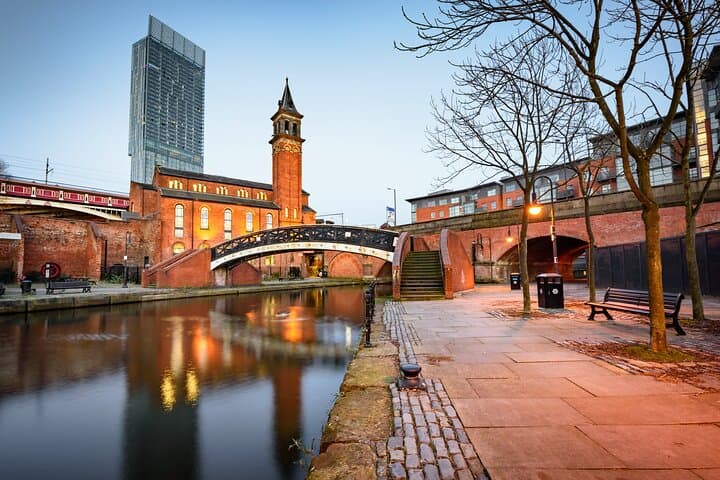
The tour begins in Piccadilly Gardens where traffic hums and tramlines slice through an open plaza; the guide leads the group away from the hub toward the narrower streets, and the city’s brickwork, canals and arches come into focus.
Verified experiences and guided adventures in the surrounding area.
Operated by Opatrip England · Manchester, England
The tour begins in Piccadilly Gardens where traffic hums and tramlines slice through an open plaza; the guide leads the group away from the hub toward the narrower streets, and the city’s brickwork, canals and arches come into focus.
Strolling through Canal Street and Manchester’s Chinatown, you encounter neighborhoods shaped by migration, commerce and late‑Victorian civic pride. The route traces Manchester’s role in the Industrial Revolution—textile warehouses and railway sheds repurposed into galleries and bars—then pauses at St. Peter’s Square and the Peterloo memorial, a quiet, modern sculpture that anchors a turbulent 1819 moment in Britain’s democratic history.
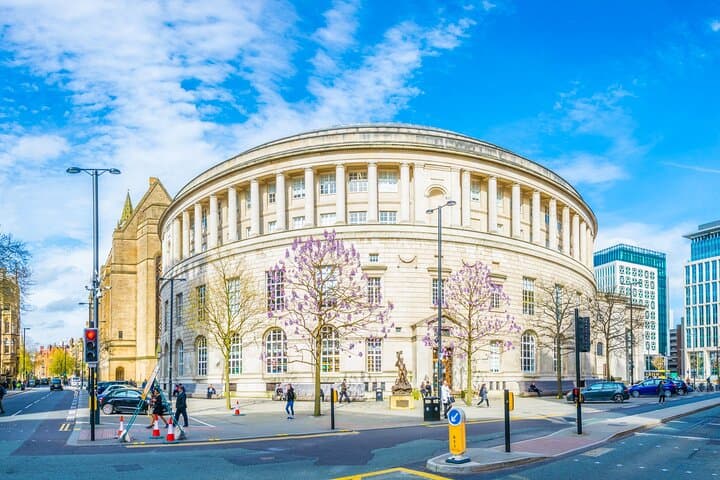
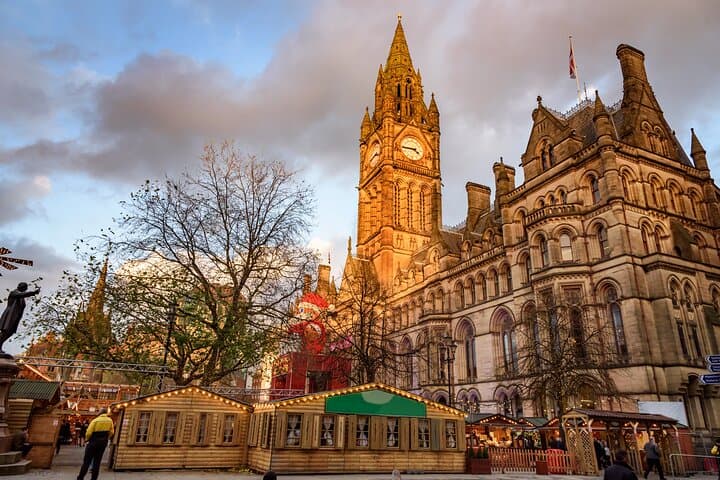
Geology here is understated: Pennine gritstone underlies the city, its red brick façades quarried and fired to withstand industrial smoke. Architecture carries the story—the neo‑classical sweep of the Central Library, the Gothic drama of John Rylands—while the canals still push and pull the memory of trade and transport.
Practical guidance is straightforward. This is a mostly flat, three‑hour urban walk with frequent stops; wear supportive shoes, carry water and a light rain layer. Expect intermittent tram and foot traffic, photographic moments at the ornate library façade, and a chance to step inside Chetham’s Library if time allows. Guides typically adapt pace and focus to the group—history, architecture or local culture—and finish with suggestions for nearby cafés or markets to continue exploring independently.
This private format removes crowd constraints, so it’s ideal for travelers who want focused interpretation of Manchester’s civic life without the hurry of a larger tour.
easy.
3 hours.
Suitable for all fitness levels; participants should be able to stand and walk for extended periods.
Most tours meet at Piccadilly Gardens near the central tram interchange; your confirmation will specify the exact meeting spot.
The route is mostly on flat, paved surfaces but some historic areas have cobbles—contact the operator in advance to confirm accessibility needs.
This listing is a private tour for your group only; capacity limits depend on the operator—confirm during booking if you have a large party.
Yes; guides typically tailor content to interests—history, architecture or local culture—if you request changes when booking.
Manchester grew rapidly during the Industrial Revolution and was a center of textile manufacturing; the 1819 Peterloo Massacre at St. Peter’s Field is a defining event in the city’s civic history.
Respect historic sites by staying on paved areas and avoid touching fragile stonework; support local conservation by choosing independent cafés and shops along the route.
Opatrip England operates guided outdoor trips and adventures with an emphasis on safety, stewardship, and memorable experiences.

The tour begins in Piccadilly Gardens where traffic hums and tramlines slice through an open plaza; the guide leads the group away from the hub toward the narrower streets, and the city’s brickwork, canals and arches come into focus.
The tour begins in Piccadilly Gardens where traffic hums and tramlines slice through an open plaza; the guide leads the group away from the hub toward the narrower streets, and the city’s brickwork, canals and arches come into focus.
Strolling through Canal Street and Manchester’s Chinatown, you encounter neighborhoods shaped by migration, commerce and late‑Victorian civic pride. The route traces Manchester’s role in the Industrial Revolution—textile warehouses and railway sheds repurposed into galleries and bars—then pauses at St. Peter’s Square and the Peterloo memorial, a quiet, modern sculpture that anchors a turbulent 1819 moment in Britain’s democratic history.
Geology here is understated: Pennine gritstone underlies the city, its red brick façades quarried and fired to withstand industrial smoke. Architecture carries the story—the neo‑classical sweep of the Central Library, the Gothic drama of John Rylands—while the canals still push and pull the memory of trade and transport.
Practical guidance is straightforward. This is a mostly flat, three‑hour urban walk with frequent stops; wear supportive shoes, carry water and a light rain layer. Expect intermittent tram and foot traffic, photographic moments at the ornate library façade, and a chance to step inside Chetham’s Library if time allows. Guides typically adapt pace and focus to the group—history, architecture or local culture—and finish with suggestions for nearby cafés or markets to continue exploring independently.
This private format removes crowd constraints, so it’s ideal for travelers who want focused interpretation of Manchester’s civic life without the hurry of a larger tour.