THE ADVENTURE COLLECTIVE® · Independent discovery and booking for outdoor travel

Take a private, full-day journey from Ollantaytambo to Machu Picchu by scenic train, then tour the Inca citadel with a bilingual guide. Expect high-altitude walking on uneven stone, early starts for the best light, and time to browse Aguas Calientes after lunch.
Take a private, full-day journey from Ollantaytambo to Machu Picchu by scenic train, then tour the Inca citadel with a bilingual guide. Expect high-altitude walking on uneven stone, early starts for the best light, and time to browse Aguas Calientes after lunch.
A damp mountain morning opens up on the train platform in Ollantaytambo: windows fog, cornfields slip by and the Urubamba River insists on keeping pace. The rail climbs a narrow valley, then the jungle leans in—by the time the valley exhales and Aguas Calientes appears, the citadel waits above like a carved memory.
Verified experiences and guided adventures in the surrounding area.
Operated by BARCELONA LANDS · Aguas Calientes, Cusco
A damp mountain morning opens up on the train platform in Ollantaytambo: windows fog, cornfields slip by and the Urubamba River insists on keeping pace. The rail climbs a narrow valley, then the jungle leans in—by the time the valley exhales and Aguas Calientes appears, the citadel waits above like a carved memory.
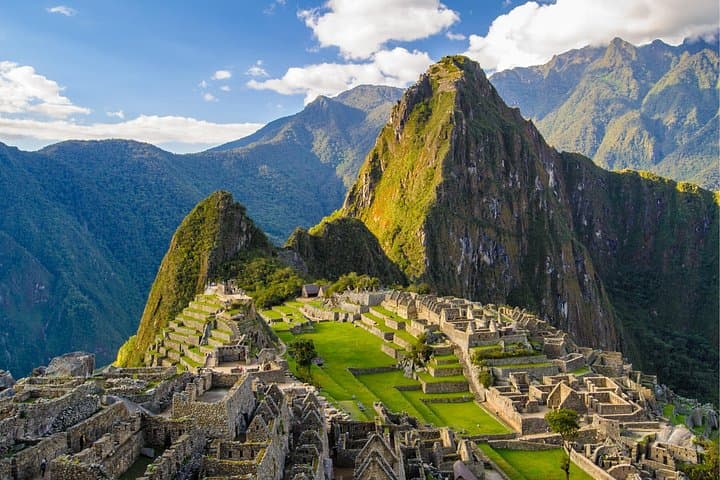
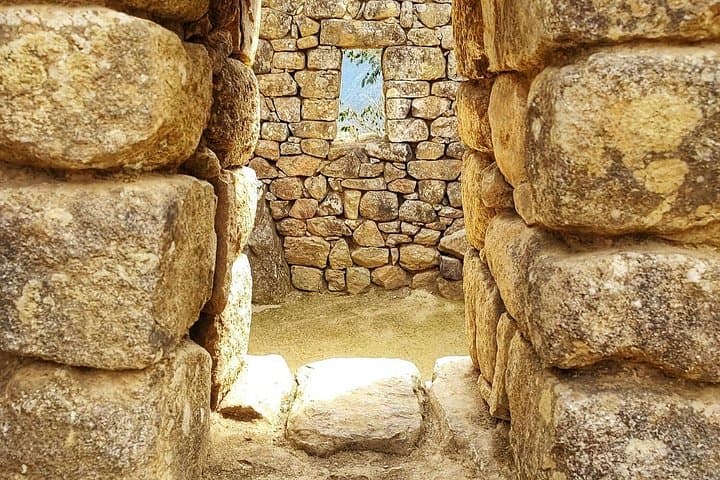
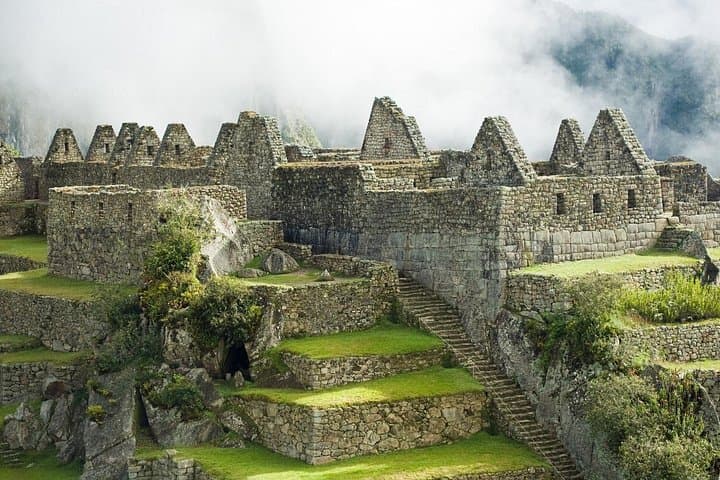
Machu Picchu sits at roughly 2,430 m on a ridge where geology and human labor meet—steep volcanic slopes shaped by tectonics, terraced by the Inca to hold soil and water. Built in the 15th century and rediscovered by Hiram Bingham in 1911, the citadel’s stone masonry, Intihuatana stone, Temple of the Sun and agricultural tiers reflect an engineering logic tied to Andean cosmology.
Cultural life centers in Aguas Calientes (Machu Picchu Pueblo) where market stalls sell woven hats and coca leaves, and guides carry forward oral histories of the site. Conservation rules are strict: stay on marked paths, keep to permitted circuits and respect daily visitor limits.
Practically, expect a full 12‑hour day: a 1.5–2 hour scenic train from Ollantaytambo, a bus ride to the entrance, and a 2–4 hour guided walk among uneven stone stairways and terraces. The climb between Aguas Calientes and the citadel is short but steep; altitude can make easy steps feel heavy. Bring layers for quick weather shifts, waterproofs in the rainy season, sturdy shoes for slippery steps and small bills for lunch or crafts in town. Aim for an early train to catch soft light on the ruins and fewer crowds—this is where orientation, pacing, and respect for the mountain produce the best memories.
moderate.
12 hours.
Suitable for people who can handle several hours of walking at altitude; basic cardiovascular fitness recommended and prior acclimatization advised
Expect roughly 1.5–2 hours of scenic travel depending on service and stops; schedules vary by operator.
Yes—the private tour includes official Machu Picchu entrance tickets and the hop-on/off bus from Aguas Calientes to the site.
No—those require separate timed tickets and are not included in this standard private tour, so book them well in advance if desired.
The guided circuit is moderate walking on uneven surfaces; altitude makes exertion harder so acclimatization and a measured pace are recommended.
Machu Picchu was a 15th‑century royal estate and ritual center of the Inca Empire, later brought to international attention in 1911 by Hiram Bingham and designated a UNESCO World Heritage Site.
Visitor numbers and routes are regulated to protect fragile stonework and endemic cloud‑forest; stick to paths, avoid touching masonry and pack out waste.
BARCELONA LANDS operates guided outdoor trips and adventures with an emphasis on safety, stewardship, and memorable experiences.
A damp mountain morning opens up on the train platform in Ollantaytambo: windows fog, cornfields slip by and the Urubamba River insists on keeping pace. The rail climbs a narrow valley, then the jungle leans in—by the time the valley exhales and Aguas Calientes appears, the citadel waits above like a carved memory.
A damp mountain morning opens up on the train platform in Ollantaytambo: windows fog, cornfields slip by and the Urubamba River insists on keeping pace. The rail climbs a narrow valley, then the jungle leans in—by the time the valley exhales and Aguas Calientes appears, the citadel waits above like a carved memory.
Machu Picchu sits at roughly 2,430 m on a ridge where geology and human labor meet—steep volcanic slopes shaped by tectonics, terraced by the Inca to hold soil and water. Built in the 15th century and rediscovered by Hiram Bingham in 1911, the citadel’s stone masonry, Intihuatana stone, Temple of the Sun and agricultural tiers reflect an engineering logic tied to Andean cosmology.
Cultural life centers in Aguas Calientes (Machu Picchu Pueblo) where market stalls sell woven hats and coca leaves, and guides carry forward oral histories of the site. Conservation rules are strict: stay on marked paths, keep to permitted circuits and respect daily visitor limits.
Practically, expect a full 12‑hour day: a 1.5–2 hour scenic train from Ollantaytambo, a bus ride to the entrance, and a 2–4 hour guided walk among uneven stone stairways and terraces. The climb between Aguas Calientes and the citadel is short but steep; altitude can make easy steps feel heavy. Bring layers for quick weather shifts, waterproofs in the rainy season, sturdy shoes for slippery steps and small bills for lunch or crafts in town. Aim for an early train to catch soft light on the ruins and fewer crowds—this is where orientation, pacing, and respect for the mountain produce the best memories.