THE ADVENTURE COLLECTIVE® · Independent discovery and booking for outdoor travel

Meet your guide in Aguas Calientes and walk Machu Picchu with a private local guide who places the Inca citadel in historical, geological and cultural context. Ideal for travelers who already hold entry tickets.
Meet your guide in Aguas Calientes and walk Machu Picchu with a private local guide who places the Inca citadel in historical, geological and cultural context. Ideal for travelers who already hold entry tickets.
A thin morning mist lifts off the Urubamba Gorge as a local guide waits in Aguas Calientes: the town’s narrow streets still damp from last night’s rain, steam rising from a row of cafes. From here a 25-minute bus climbs switchbacks and then the stone city appears — terraces gripping the slope, stairways folded into the mountain and cloud drifting through the plazas.
Verified experiences and guided adventures in the surrounding area.
Operated by MC Peru Expeditions · Aguas Calientes (Machu Picchu Pueblo), Cusco Region
A thin morning mist lifts off the Urubamba Gorge as a local guide waits in Aguas Calientes: the town’s narrow streets still damp from last night’s rain, steam rising from a row of cafes. From here a 25-minute bus climbs switchbacks and then the stone city appears — terraces gripping the slope, stairways folded into the mountain and cloud drifting through the plazas.
Machu Picchu was built by the Incas in the 15th century and abandoned in the 16th; archaeologists and local Quechua history bring its plazas and agricultural terraces back into focus. Geologically the citadel sits on river-cut granite and steep slopes shaped by Andean uplift and glacial erosion. Culturally, the site sits at a crossroads between living Quechua communities in the Sacred Valley and the global flow of travelers who arrive by train and shuttle bus.
On a private 2-hour guided walk a licensed local guide explains construction techniques, the site's solar alignments and the daily life that once echoed through the stone rooms. The route includes the main plaza, Temple of the Sun viewpoints and terrace systems; guides also time visits to reduce crowds and help with photos.
Practical notes: altitude demands slow movement and hydration, weather can shift quickly so layers and rain protection are mandatory, and entry tickets and bus passes are required ahead of time. Respect restricted areas, follow your guide’s route, and leave no trace — the site’s preservation depends on visitor discipline and local stewardship.
easy.
2–3 hours.
Basic walking fitness; must be able to climb uneven stone steps and walk for 2–3 hours at altitude
Yes. This guided service assumes you already hold a valid Machu Picchu entry for the scheduled time; guides do not include admission tickets.
You meet in Aguas Calientes (Machu Picchu Pueblo); the guide will typically wait at a designated meeting point agreed at booking and accompany you on the 25-minute bus to the citadel.
No. Those hikes require separate timed tickets and are not included in a standard 2-hour private Machu Picchu tour.
Machu Picchu has many steep, uneven steps and narrow paths; some viewpoints are reachable but full access is limited—discuss needs with your guide in advance.
Constructed in the 15th century by Pachacuti’s builders and later abandoned during the Spanish conquest, Machu Picchu was brought to international attention after 1911 explorations.
Visitor numbers are controlled and certain routes are restricted to protect fragile stonework and biodiversity; follow marked paths, avoid touching masonry and pack out all waste.
MC Peru Expeditions operates guided outdoor trips and adventures with an emphasis on safety, stewardship, and memorable experiences.
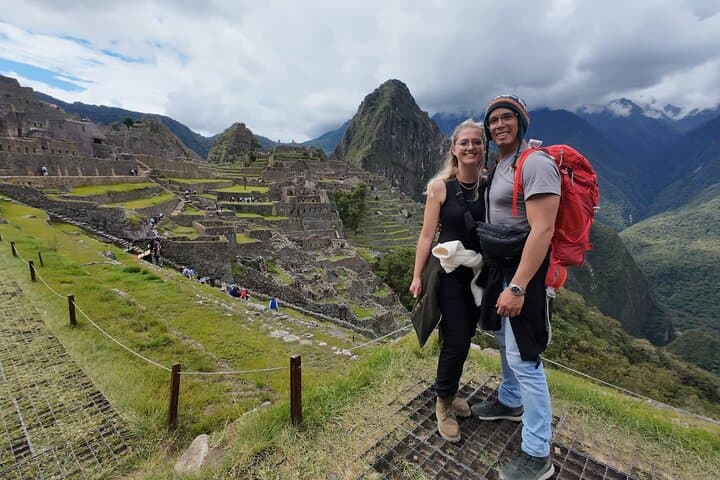
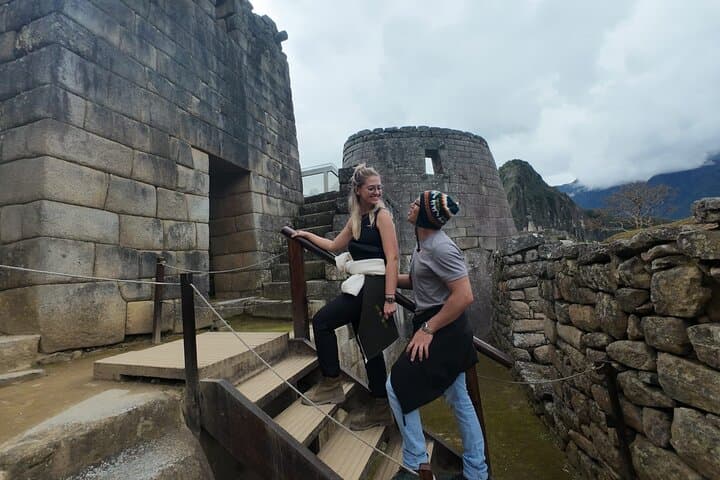
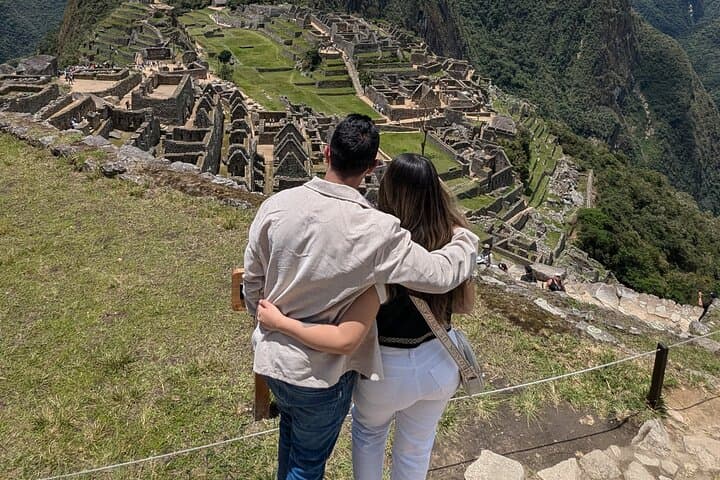

A thin morning mist lifts off the Urubamba Gorge as a local guide waits in Aguas Calientes: the town’s narrow streets still damp from last night’s rain, steam rising from a row of cafes. From here a 25-minute bus climbs switchbacks and then the stone city appears — terraces gripping the slope, stairways folded into the mountain and cloud drifting through the plazas.
A thin morning mist lifts off the Urubamba Gorge as a local guide waits in Aguas Calientes: the town’s narrow streets still damp from last night’s rain, steam rising from a row of cafes. From here a 25-minute bus climbs switchbacks and then the stone city appears — terraces gripping the slope, stairways folded into the mountain and cloud drifting through the plazas.
Machu Picchu was built by the Incas in the 15th century and abandoned in the 16th; archaeologists and local Quechua history bring its plazas and agricultural terraces back into focus. Geologically the citadel sits on river-cut granite and steep slopes shaped by Andean uplift and glacial erosion. Culturally, the site sits at a crossroads between living Quechua communities in the Sacred Valley and the global flow of travelers who arrive by train and shuttle bus.
On a private 2-hour guided walk a licensed local guide explains construction techniques, the site's solar alignments and the daily life that once echoed through the stone rooms. The route includes the main plaza, Temple of the Sun viewpoints and terrace systems; guides also time visits to reduce crowds and help with photos.
Practical notes: altitude demands slow movement and hydration, weather can shift quickly so layers and rain protection are mandatory, and entry tickets and bus passes are required ahead of time. Respect restricted areas, follow your guide’s route, and leave no trace — the site’s preservation depends on visitor discipline and local stewardship.