THE ADVENTURE COLLECTIVE® · Independent discovery and booking for outdoor travel

Board an early train from Ollantaytambo and spend a focused day exploring Machu Picchu with a professional guide. This private day trip combines doorstep pickup in Cusco, a 2.5-hour guided citadel tour and comfortable return transfers.
Board an early train from Ollantaytambo and spend a focused day exploring Machu Picchu with a professional guide. This private day trip combines doorstep pickup in Cusco, a 2.5-hour guided citadel tour and comfortable return transfers.
Morning light slices the cloud forest as a trimmed service van pulls away from a Cusco hotel and heads down through the Sacred Valley toward Ollantaytambo. The day begins with a crisp mountain train through steep terraces and river canyons; by the time the bus zigzags from Aguas Calientes up to the archaeological gate, Machu Picchu’s stonework rises from mist like a reclaimed city.
Verified experiences and guided adventures in the surrounding area.
Operated by Peru Private Tours · Aguas Calientes, Cusco
Morning light slices the cloud forest as a trimmed service van pulls away from a Cusco hotel and heads down through the Sacred Valley toward Ollantaytambo. The day begins with a crisp mountain train through steep terraces and river canyons; by the time the bus zigzags from Aguas Calientes up to the archaeological gate, Machu Picchu’s stonework rises from mist like a reclaimed city.
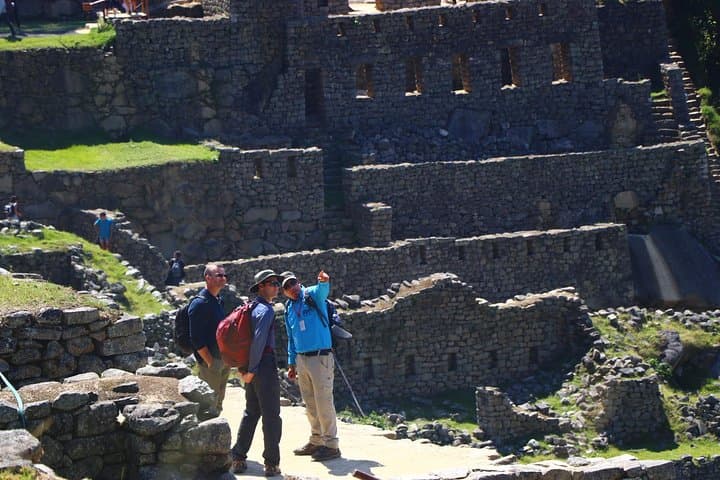
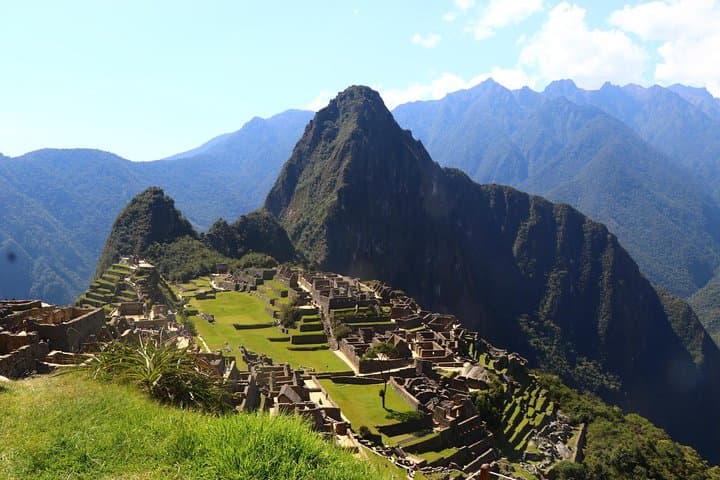
Built in the mid-15th century by the Inca and reintroduced to the world by Hiram Bingham in 1911, Machu Picchu sits at roughly 2,430 m (7,970 ft) on a granite ridge carved by the Urubamba River. The citadel’s engineered terraces, narrow stair ramps and trapezoidal doorways reflect seismic-aware masonry and an intimate relationship with the surrounding cloud forest. Local culture still threads the valley—small markets in Aguas Calientes sell weavings and coca leaf sachets, while llamas quietly occupy terraces inside the site.
Practically, this private day itinerary uses an early train from Ollantaytambo, a 25-minute bus climb to the entrance, and a 2.5-hour guided circuit that covers the main sectors—agricultural terraces, urban center and viewpoints—followed by afternoon return trains. Expect several kilometers of walking on uneven stone steps, short steep ascents if you choose viewpoints, and persistent altitude differences between Cusco (~3,400 m) and Machu Picchu (~2,430 m).
Bring layered clothing for sun and sudden showers, drink water, and carry your passport and entry ticket. Arrive early to avoid peak crowds and give yourself time to sit with the site’s scale—it's a long day, but one engineered to maximize access and minimize transit friction.
moderate.
12–14 hours.
Moderate fitness and basic mobility; ability to walk several kilometers on uneven stone steps and climb steep stairs is recommended. Acclimatization to high altitude (Cusco) is advised.
The included guided tour is approximately 2.5 hours and covers the main archaeological sectors—agricultural terraces, urban core and key viewpoints.
Yes—your passport must match the name used for the Machu Picchu ticket and is checked at entry.
Yes—the bus ascends roughly 400 meters via a steep, paved switchback road and takes about 20–25 minutes; the walk up is possible but strenuous.
Many travelers feel the difference moving between Cusco (~3,400 m) and Machu Picchu (~2,430 m); acclimatize in Cusco for a day or two if possible and avoid heavy exertion on arrival.
Machu Picchu was built by the Inca in the 15th century and reintroduced to global attention by Hiram Bingham in 1911; its layout reflects advanced Inca hydraulic and agricultural engineering.
Visitor numbers and routes are regulated to protect fragile stonework and terraces—stay on designated paths, obey guide instructions and avoid drones or feeding wildlife.
Peru Private Tours operates guided outdoor trips and adventures with an emphasis on safety, stewardship, and memorable experiences.
Morning light slices the cloud forest as a trimmed service van pulls away from a Cusco hotel and heads down through the Sacred Valley toward Ollantaytambo. The day begins with a crisp mountain train through steep terraces and river canyons; by the time the bus zigzags from Aguas Calientes up to the archaeological gate, Machu Picchu’s stonework rises from mist like a reclaimed city.
Morning light slices the cloud forest as a trimmed service van pulls away from a Cusco hotel and heads down through the Sacred Valley toward Ollantaytambo. The day begins with a crisp mountain train through steep terraces and river canyons; by the time the bus zigzags from Aguas Calientes up to the archaeological gate, Machu Picchu’s stonework rises from mist like a reclaimed city.
Built in the mid-15th century by the Inca and reintroduced to the world by Hiram Bingham in 1911, Machu Picchu sits at roughly 2,430 m (7,970 ft) on a granite ridge carved by the Urubamba River. The citadel’s engineered terraces, narrow stair ramps and trapezoidal doorways reflect seismic-aware masonry and an intimate relationship with the surrounding cloud forest. Local culture still threads the valley—small markets in Aguas Calientes sell weavings and coca leaf sachets, while llamas quietly occupy terraces inside the site.
Practically, this private day itinerary uses an early train from Ollantaytambo, a 25-minute bus climb to the entrance, and a 2.5-hour guided circuit that covers the main sectors—agricultural terraces, urban center and viewpoints—followed by afternoon return trains. Expect several kilometers of walking on uneven stone steps, short steep ascents if you choose viewpoints, and persistent altitude differences between Cusco (~3,400 m) and Machu Picchu (~2,430 m).
Bring layered clothing for sun and sudden showers, drink water, and carry your passport and entry ticket. Arrive early to avoid peak crowds and give yourself time to sit with the site’s scale—it's a long day, but one engineered to maximize access and minimize transit friction.