THE ADVENTURE COLLECTIVE® · Independent discovery and booking for outdoor travel

Experience Ninh Binh’s dramatic karst rivers and living craft heritage on a private day tour from Hanoi. Visit Quang Phu Cau’s incense workshops, glide through Tam Coc’s caves by sampan, and explore the ancient capital of Hoa Lu.
Experience Ninh Binh’s dramatic karst rivers and living craft heritage on a private day tour from Hanoi. Visit Quang Phu Cau’s incense workshops, glide through Tam Coc’s caves by sampan, and explore the ancient capital of Hoa Lu.
A morning in Ninh Binh begins with the scent of drying incense and the low hum of village life — bundles of reddish sticks stacked like miniature roofs, workers arranging strands with practiced hands. The tour moves from the photogenic rows of Quang Phu Cau to Tam Coc’s slow river, where a local rower guides a sampan under low cave mouths and along fields framed by sheer limestone towers. By late afternoon you stand amid the temple stones of Hoa Lu, where quiet courtyards recall a different Vietnam.
Verified experiences and guided adventures in the surrounding area.
Operated by Local Tours ASIA · Ninh Binh, Ninh Binh
A morning in Ninh Binh begins with the scent of drying incense and the low hum of village life — bundles of reddish sticks stacked like miniature roofs, workers arranging strands with practiced hands. The tour moves from the photogenic rows of Quang Phu Cau to Tam Coc’s slow river, where a local rower guides a sampan under low cave mouths and along fields framed by sheer limestone towers. By late afternoon you stand amid the temple stones of Hoa Lu, where quiet courtyards recall a different Vietnam.
Geology here is blunt and visible: karst limestone rose from an ancient seabed and has been carved into caves and cliffs that direct the river’s path and shelter rice terraces. Hoa Lu was Vietnam’s 10th–11th century capital under the Dinh and early Le dynasties — small, strategic, and chosen for its defensible valleys and river access. Quang Phu Cau’s craft practice links to regional worship traditions: incense remains integral to domestic and temple rites.
Practically, expect an 11-hour private day with air-conditioned transfer from Hanoi, a guided village walk, a 1–1.5 hour sampan ride, lunch at a local restaurant, and a short visit to Hoa Lu temples. Boat operators handle navigation; bring insect repellent, sun protection, and a camera with a fast shutter for low-light cave passages. Wear sturdy, slip-resistant shoes for riverside docks and uneven temple paths. Hydrate before and during the day — water is provided, but refillable bottles reduce plastic waste.
This itinerary balances cultural insight and low-impact outdoor time: photo-worthy landscapes, tactile craft demonstrations, and a compact historic site that rewards curiosity and sensible pacing.
easy.
11 hours.
Suitable for travelers in basic fitness—mostly seated transfers, gentle walking, and short steps on boats and temple grounds.
Pickup and drop-off are at your Hanoi hotel in an air-conditioned private vehicle; expect a full-day round trip (about 11 hours).
Yes—the sampan is piloted by an experienced local rower and is low-speed; however, passengers should be able to step into the boat from a dock and remain seated during the trip.
Yes — the tour includes all entrance fees and an authentic Vietnamese lunch at a local restaurant, with mineral water provided.
The operator can handle vegetarian, vegan, and common dietary restrictions if you indicate them when booking.
Hoa Lu served as Vietnam’s first stable capital in the 10th–11th centuries under the Dinh and early Le dynasties, chosen for its defensible river valleys.
Visitors should stick to marked paths and avoid littering; using refillable bottles and minimizing plastic helps protect river habitats and local fisheries.
Local Tours ASIA operates guided outdoor trips and adventures with an emphasis on safety, stewardship, and memorable experiences.
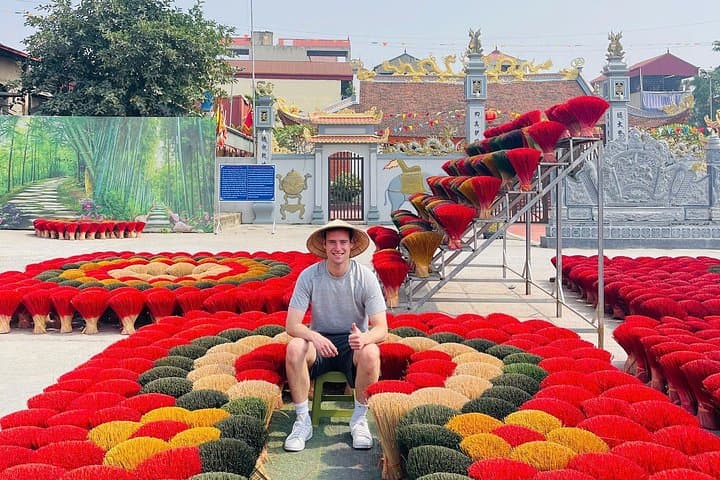
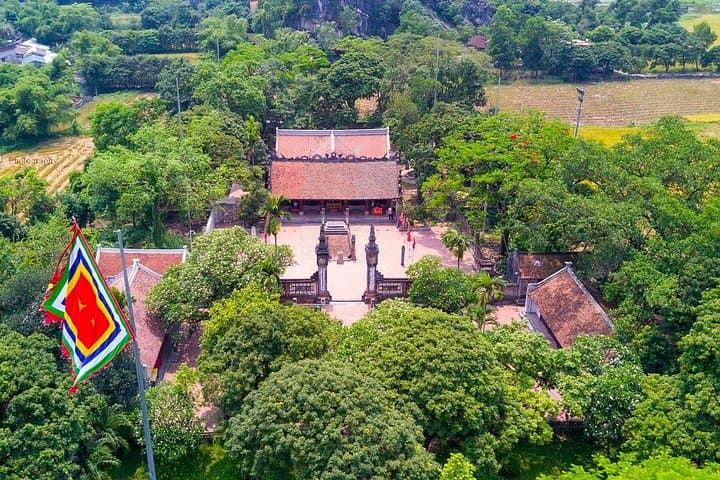

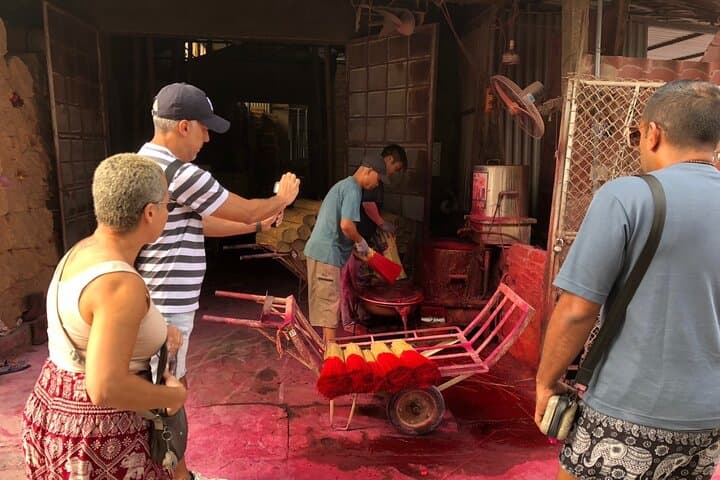
A morning in Ninh Binh begins with the scent of drying incense and the low hum of village life — bundles of reddish sticks stacked like miniature roofs, workers arranging strands with practiced hands. The tour moves from the photogenic rows of Quang Phu Cau to Tam Coc’s slow river, where a local rower guides a sampan under low cave mouths and along fields framed by sheer limestone towers. By late afternoon you stand amid the temple stones of Hoa Lu, where quiet courtyards recall a different Vietnam.
A morning in Ninh Binh begins with the scent of drying incense and the low hum of village life — bundles of reddish sticks stacked like miniature roofs, workers arranging strands with practiced hands. The tour moves from the photogenic rows of Quang Phu Cau to Tam Coc’s slow river, where a local rower guides a sampan under low cave mouths and along fields framed by sheer limestone towers. By late afternoon you stand amid the temple stones of Hoa Lu, where quiet courtyards recall a different Vietnam.
Geology here is blunt and visible: karst limestone rose from an ancient seabed and has been carved into caves and cliffs that direct the river’s path and shelter rice terraces. Hoa Lu was Vietnam’s 10th–11th century capital under the Dinh and early Le dynasties — small, strategic, and chosen for its defensible valleys and river access. Quang Phu Cau’s craft practice links to regional worship traditions: incense remains integral to domestic and temple rites.
Practically, expect an 11-hour private day with air-conditioned transfer from Hanoi, a guided village walk, a 1–1.5 hour sampan ride, lunch at a local restaurant, and a short visit to Hoa Lu temples. Boat operators handle navigation; bring insect repellent, sun protection, and a camera with a fast shutter for low-light cave passages. Wear sturdy, slip-resistant shoes for riverside docks and uneven temple paths. Hydrate before and during the day — water is provided, but refillable bottles reduce plastic waste.
This itinerary balances cultural insight and low-impact outdoor time: photo-worthy landscapes, tactile craft demonstrations, and a compact historic site that rewards curiosity and sensible pacing.