THE ADVENTURE COLLECTIVE® · Independent discovery and booking for outdoor travel

Spend a private full day on Luxor’s East Bank exploring Karnak and Luxor Temples, the Luxor Museum and the Mummification Museum. This guided route combines monumental architecture with focused museum displays — ideal for history-minded travelers who want context and comfort.
Spend a private full day on Luxor’s East Bank exploring Karnak and Luxor Temples, the Luxor Museum and the Mummification Museum. This guided route combines monumental architecture with focused museum displays — ideal for history-minded travelers who want context and comfort.
You step off the air-conditioned car onto a ribbon of Nile-side pavement and the heat hits like a living thing — warm, dry, insistent. To your left, the avenue of sphinxes leads toward Karnak’s colonnades where sunlight threads between columns; to your right, the corniche hums with cafes and felucca traffic, and the city’s age hangs visibly in stone.
Verified experiences and guided adventures in the surrounding area.
Operated by Egypt VIP Tours · Luxor, Luxor Governorate
You step off the air-conditioned car onto a ribbon of Nile-side pavement and the heat hits like a living thing — warm, dry, insistent. To your left, the avenue of sphinxes leads toward Karnak’s colonnades where sunlight threads between columns; to your right, the corniche hums with cafes and felucca traffic, and the city’s age hangs visibly in stone.
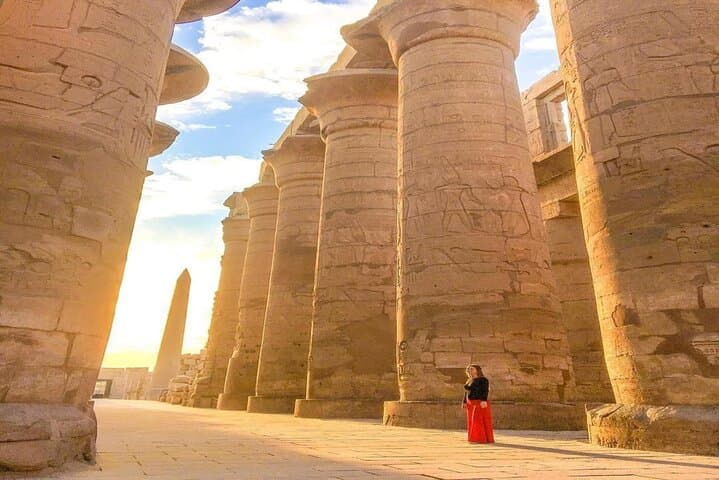
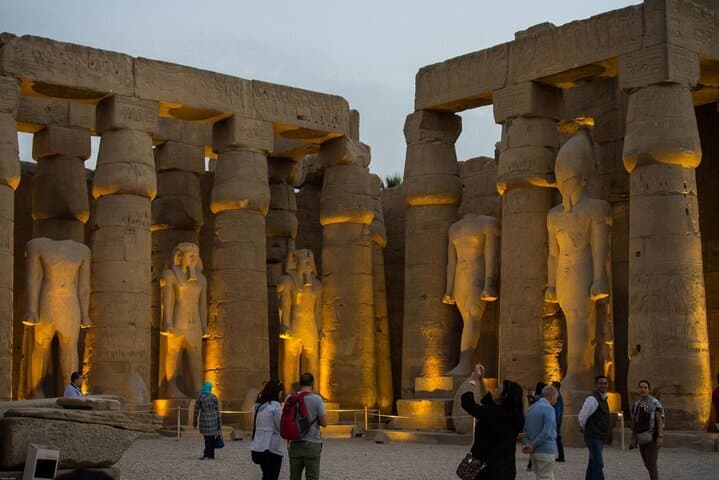
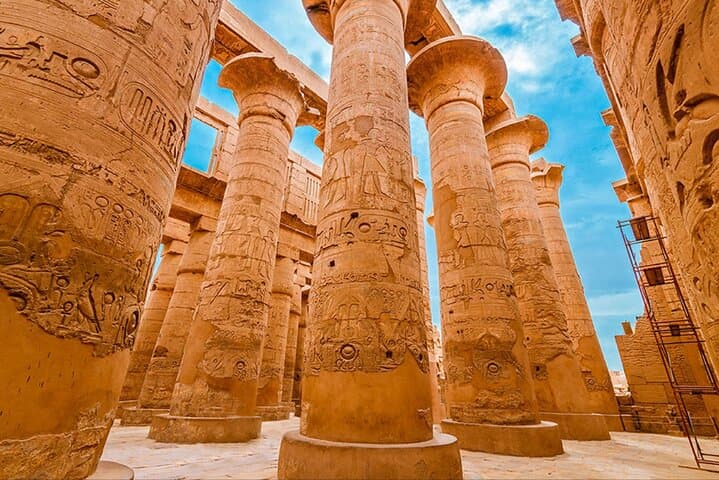
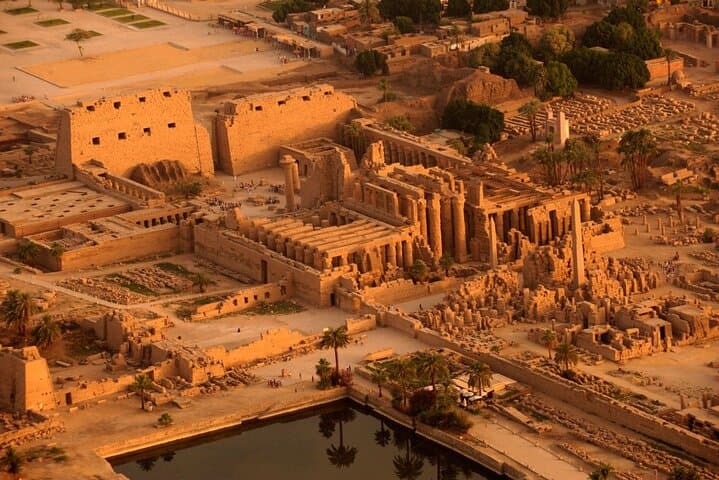
This full-day East Bank circuit moves from Luxor Temple’s intimate courtyards into Karnak’s monumental Hypostyle Hall, then to the compact, artifact-rich Luxor Museum and the focused Mummification Museum. Geology here is simple: Pliocene and Quaternary alluvium underlies the city, and the temples are built of sandstone and limestone hauled from nearby quarries — surfaces now softened by millennia of wind, sand, and human hands.
Culturally the day spans pharaonic ritual, New Kingdom statecraft, and modern Egyptian curation; expect hieroglyphic reliefs, seated gods, and display cases that bridge ancient mortuary practice with contemporary archaeological interpretation. Locals run cafes and craft stalls nearby, offering an immediate human contrast to the carved stone.
Practicalities shape the rhythm: the tour lasts about seven hours with short walks between stops and uneven ancient stone underfoot. Entrance fees are typically not included, so carry local currency or card. Wear closed-toe shoes with good soles, a hat, and sunscreen; drink often — the desert will demand it. Morning light gives the best photos at Karnak; late afternoon softens Luxor Temple’s carvings. Respect restricted areas, follow your guide, and keep to marked paths to help preserve fragile reliefs.
easy.
7 hours.
Light walking ability required — expect several hours on your feet with short distances between sites; comfortable for most fitness levels.
No — admissions to Karnak, Luxor Temple and museums are typically not included; bring cash or a card to purchase tickets on site.
Yes — the tour is classified as physically easy, but be mindful of long periods of standing and uneven walking surfaces; private transport reduces transfer strain.
Yes — the tour includes hotel pickup and return by a private air-conditioned vehicle as part of the service.
Morning (8–11am) at Karnak avoids peak heat and harsh light; Luxor Temple is especially photogenic in late afternoon when carvings take on warmer tones.
Luxor and Karnak formed the religious heart of ancient Thebes; much of what you see dates to the New Kingdom when pharaohs expanded temple precincts across centuries.
Ongoing conservation focuses on reducing wear from tourism and saline damage; visitors help by not touching reliefs, staying on marked paths, and following guide instructions.
Egypt VIP Tours operates guided outdoor trips and adventures with an emphasis on safety, stewardship, and memorable experiences.
You step off the air-conditioned car onto a ribbon of Nile-side pavement and the heat hits like a living thing — warm, dry, insistent. To your left, the avenue of sphinxes leads toward Karnak’s colonnades where sunlight threads between columns; to your right, the corniche hums with cafes and felucca traffic, and the city’s age hangs visibly in stone.
You step off the air-conditioned car onto a ribbon of Nile-side pavement and the heat hits like a living thing — warm, dry, insistent. To your left, the avenue of sphinxes leads toward Karnak’s colonnades where sunlight threads between columns; to your right, the corniche hums with cafes and felucca traffic, and the city’s age hangs visibly in stone.
This full-day East Bank circuit moves from Luxor Temple’s intimate courtyards into Karnak’s monumental Hypostyle Hall, then to the compact, artifact-rich Luxor Museum and the focused Mummification Museum. Geology here is simple: Pliocene and Quaternary alluvium underlies the city, and the temples are built of sandstone and limestone hauled from nearby quarries — surfaces now softened by millennia of wind, sand, and human hands.
Culturally the day spans pharaonic ritual, New Kingdom statecraft, and modern Egyptian curation; expect hieroglyphic reliefs, seated gods, and display cases that bridge ancient mortuary practice with contemporary archaeological interpretation. Locals run cafes and craft stalls nearby, offering an immediate human contrast to the carved stone.
Practicalities shape the rhythm: the tour lasts about seven hours with short walks between stops and uneven ancient stone underfoot. Entrance fees are typically not included, so carry local currency or card. Wear closed-toe shoes with good soles, a hat, and sunscreen; drink often — the desert will demand it. Morning light gives the best photos at Karnak; late afternoon softens Luxor Temple’s carvings. Respect restricted areas, follow your guide, and keep to marked paths to help preserve fragile reliefs.