THE ADVENTURE COLLECTIVE® · Independent discovery and booking for outdoor travel

Fly from Sharm El-Sheikh for a full-day private tour of Luxor's West and East Banks. Explore the Valley of the Kings, Hatshepsut's mortuary temple, the Colossi of Memnon, and the vast Karnak complex with an Egyptologist guide.
Fly from Sharm El-Sheikh for a full-day private tour of Luxor's West and East Banks. Explore the Valley of the Kings, Hatshepsut's mortuary temple, the Colossi of Memnon, and the vast Karnak complex with an Egyptologist guide.
You rise before dawn in Sharm El-Sheikh, the desert still cool and the airport lights a thin constellation. A short domestic hop carries you over ochre plateaus and the Nile ribbon until Luxor's temple silhouettes grow beneath the rising sun. On arrival the valley's cliffs and the broad sweep of the river set the stage: stone chambers cut into limestone, pillared halls hewn to honor gods, and a landscape shaped by flood and faith.
Verified experiences and guided adventures in the surrounding area.
Operated by Egypt Best Day Tours · Luxor, Luxor Governorate
You rise before dawn in Sharm El-Sheikh, the desert still cool and the airport lights a thin constellation. A short domestic hop carries you over ochre plateaus and the Nile ribbon until Luxor's temple silhouettes grow beneath the rising sun. On arrival the valley's cliffs and the broad sweep of the river set the stage: stone chambers cut into limestone, pillared halls hewn to honor gods, and a landscape shaped by flood and faith.
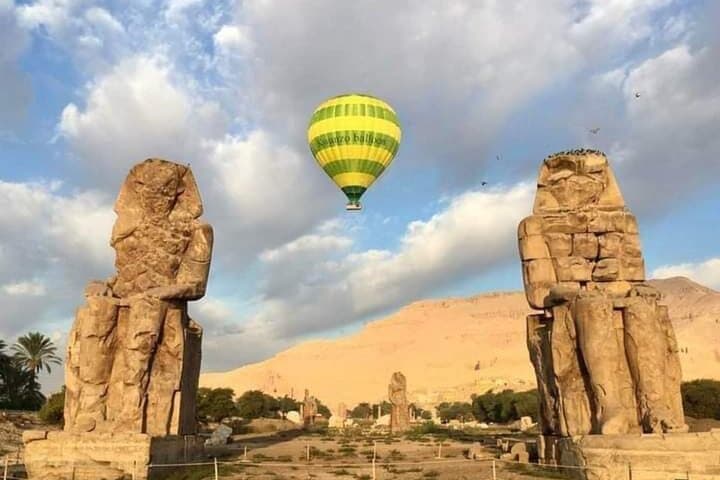
Luxor sits on the site of ancient Thebes, the New Kingdom capital where pharaohs built grand funerary complexes. The Valley of the Kings is a geological shelf of sedimentary rock that allowed artisans to carve deep tombs—many with painted scenes intended to guide the dead through the afterlife. On the west bank you'll see Queen Hatshepsut's mortuary temple clinging to a cliff, the Colossi of Memnon towering like weathered guardians, and across the Nile the forest of pillars at Karnak framing a sacred lake where priests once performed rites.
Practical guidance: this private day is long — expect 11–12 hours including flights, transfers, and walking on uneven ground. Bring a passport and tickets, sun protection and plenty of water, and wear shoes with good grip for stairs and sandy surfaces. Entrance fees, a qualified Egyptologist guide, lunch, and hotel transfers are typically included; cameras and flash rules vary by tomb. Pace yourself; tomb interiors are cool but confined. With a measured itinerary and the right kit, the day turns from a travel slog into a concentrated lesson in stone and river light.
moderate.
11–12 hours.
Good for travelers who can handle a long day of walking, stairs, and standing; not strenuous but requires stamina.
Expect about 11–12 hours from early morning pickup in Sharm El-Sheikh to hotel drop-off, including a roughly one-hour domestic flight each way.
Yes — this itinerary commonly includes entrance fees, a guided visit to three tombs, and lunch; confirm specifics with the operator at booking.
Some areas offer accessibility and transport is wheelchair-accessible, but many tombs and temples have stairs and uneven terrain; check in advance for site-by-site access options.
Photography rules vary by tomb; flash is often prohibited to protect pigments, so bring a camera with good low-light capability and follow guide instructions.
Luxor occupies the ancient city of Thebes, a political and religious capital of the New Kingdom where pharaohs constructed tombs and temples between the 16th and 11th centuries BCE.
Tomb paintings and papyrus surfaces are fragile; visitors are asked to avoid touching, to limit flash photography, and to stay on marked paths to reduce wear on archaeological sites.
Egypt Best Day Tours operates guided outdoor trips and adventures with an emphasis on safety, stewardship, and memorable experiences.

You rise before dawn in Sharm El-Sheikh, the desert still cool and the airport lights a thin constellation. A short domestic hop carries you over ochre plateaus and the Nile ribbon until Luxor's temple silhouettes grow beneath the rising sun. On arrival the valley's cliffs and the broad sweep of the river set the stage: stone chambers cut into limestone, pillared halls hewn to honor gods, and a landscape shaped by flood and faith.
You rise before dawn in Sharm El-Sheikh, the desert still cool and the airport lights a thin constellation. A short domestic hop carries you over ochre plateaus and the Nile ribbon until Luxor's temple silhouettes grow beneath the rising sun. On arrival the valley's cliffs and the broad sweep of the river set the stage: stone chambers cut into limestone, pillared halls hewn to honor gods, and a landscape shaped by flood and faith.
Luxor sits on the site of ancient Thebes, the New Kingdom capital where pharaohs built grand funerary complexes. The Valley of the Kings is a geological shelf of sedimentary rock that allowed artisans to carve deep tombs—many with painted scenes intended to guide the dead through the afterlife. On the west bank you'll see Queen Hatshepsut's mortuary temple clinging to a cliff, the Colossi of Memnon towering like weathered guardians, and across the Nile the forest of pillars at Karnak framing a sacred lake where priests once performed rites.
Practical guidance: this private day is long — expect 11–12 hours including flights, transfers, and walking on uneven ground. Bring a passport and tickets, sun protection and plenty of water, and wear shoes with good grip for stairs and sandy surfaces. Entrance fees, a qualified Egyptologist guide, lunch, and hotel transfers are typically included; cameras and flash rules vary by tomb. Pace yourself; tomb interiors are cool but confined. With a measured itinerary and the right kit, the day turns from a travel slog into a concentrated lesson in stone and river light.