THE ADVENTURE COLLECTIVE® · Independent discovery and booking for outdoor travel

Spend a private day exploring Dendera’s Hathor temple, the vast Karnak complex, and the layered history of Luxor Temple with an English-speaking local guide. Practical, customizable, and suited to families and small groups.
Spend a private day exploring Dendera’s Hathor temple, the vast Karnak complex, and the layered history of Luxor Temple with an English-speaking local guide. Practical, customizable, and suited to families and small groups.
Early light breaks over the Nile as a private vehicle eases out of Luxor toward the flat, ochre plain where Dendera sits — a compact complex of carved stone and quiet courtyards that rewards a slow, curious pace.
Verified experiences and guided adventures in the surrounding area.
Operated by Eyes of Egypt · Luxor, Luxor Governorate
Early light breaks over the Nile as a private vehicle eases out of Luxor toward the flat, ochre plain where Dendera sits — a compact complex of carved stone and quiet courtyards that rewards a slow, curious pace.
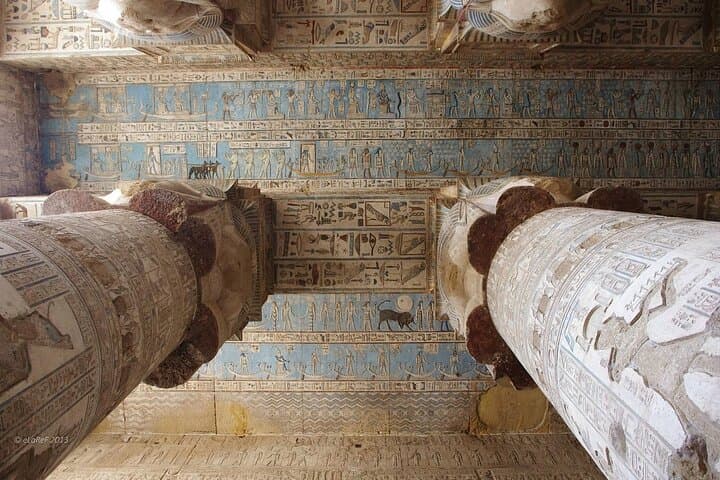
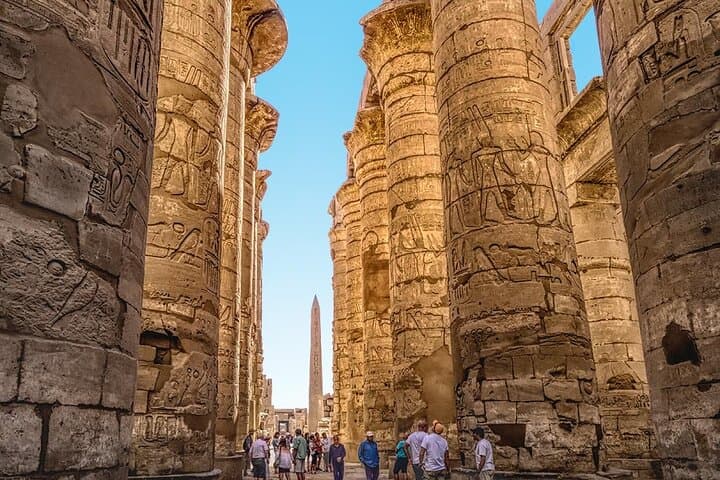
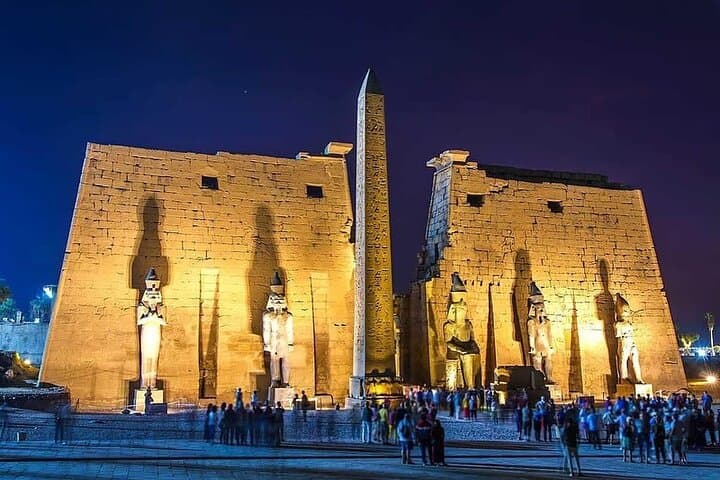
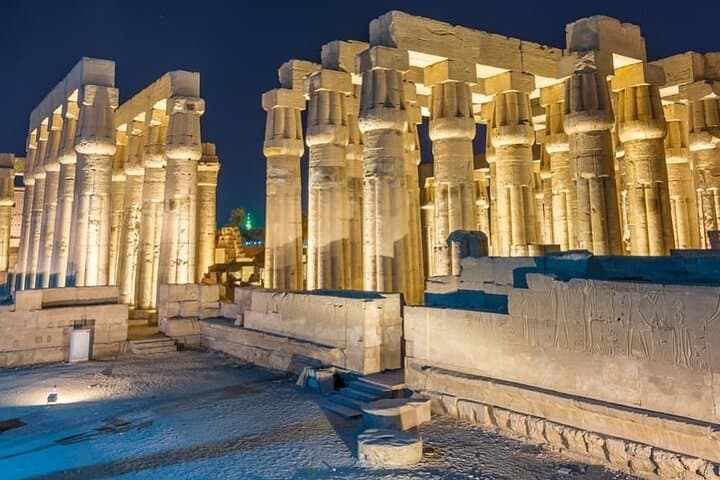
The day begins with the hour-plus drive to Dendera, where the Hathor temple’s painted ceiling and rooftop chapels read like a surviving chapter of Pharaonic astronomy. Returning to Luxor, the tour moves through Karnak’s vast avenues and columned Hypostyle Hall — generations of pharaohs layered in stone — and finishes at Luxor Temple where Roman and Islamic additions press close against ancient pylons.
These sites trace Upper Egypt’s long civic and religious landscape: limestone and sandstone quarried from nearby deserts, Nile-fed agriculture that sustained temple economies, and a cultural continuity expressed in ritual spaces and inscriptions. Local guides bring that context alive with stories of priestly rites, astronomical zodiacs, and the Avenue of Sphinxes that once connected Karnak and Luxor.
Practical notes: tickets are purchased at each temple ticket office, so carry Egyptian pounds or a card where accepted. Expect five to six hours on your feet with several uneven stone floors and stairways to rooftop chapels. Midday heat can be intense — the temples offer shade but little airflow.
Plan for light, respectful clothing, closed shoes for uneven surfaces, and a refillable water bottle. A private guide and transport make timing flexible: you can linger on a rooftop view or shorten an interior visit depending on your group's pace.
easy.
5–6 hours.
Light walking ability; comfortable standing and climbing short stair sections.
No — tickets are purchased at each temple’s ticket office; price varies and must be paid on site (cash or card where accepted).
Yes — private pickup and drop-off in Luxor or from your Nile cruise are included; confirm exact pickup details when booking.
Transport and many temple approaches are wheelchair accessible, but some interior areas and rooftop chapels have steps or uneven surfaces that may limit access.
Yes — the private format allows your guide to shorten visits, add rest stops, or adjust timing to suit children or slower walkers.
Karnak and Luxor form part of a continuous sacred precinct used across millennia; builders repeatedly reused and expanded earlier temples, leaving layers of historical architecture in one site.
Visitor pressure and rising groundwater affect painted reliefs; support conservation by following site rules, avoiding touching reliefs, and using local guides who promote respectful visitation.
Eyes of Egypt operates guided outdoor trips and adventures with an emphasis on safety, stewardship, and memorable experiences.
Early light breaks over the Nile as a private vehicle eases out of Luxor toward the flat, ochre plain where Dendera sits — a compact complex of carved stone and quiet courtyards that rewards a slow, curious pace.
Early light breaks over the Nile as a private vehicle eases out of Luxor toward the flat, ochre plain where Dendera sits — a compact complex of carved stone and quiet courtyards that rewards a slow, curious pace.
The day begins with the hour-plus drive to Dendera, where the Hathor temple’s painted ceiling and rooftop chapels read like a surviving chapter of Pharaonic astronomy. Returning to Luxor, the tour moves through Karnak’s vast avenues and columned Hypostyle Hall — generations of pharaohs layered in stone — and finishes at Luxor Temple where Roman and Islamic additions press close against ancient pylons.
These sites trace Upper Egypt’s long civic and religious landscape: limestone and sandstone quarried from nearby deserts, Nile-fed agriculture that sustained temple economies, and a cultural continuity expressed in ritual spaces and inscriptions. Local guides bring that context alive with stories of priestly rites, astronomical zodiacs, and the Avenue of Sphinxes that once connected Karnak and Luxor.
Practical notes: tickets are purchased at each temple ticket office, so carry Egyptian pounds or a card where accepted. Expect five to six hours on your feet with several uneven stone floors and stairways to rooftop chapels. Midday heat can be intense — the temples offer shade but little airflow.
Plan for light, respectful clothing, closed shoes for uneven surfaces, and a refillable water bottle. A private guide and transport make timing flexible: you can linger on a rooftop view or shorten an interior visit depending on your group's pace.