THE ADVENTURE COLLECTIVE® · Independent discovery and booking for outdoor travel

A full-day private drive from Luxor takes you to three of Upper Egypt’s most evocative temple sites—Edfu, Kom Ombo, and Esna—where Ptolemaic reliefs and Nile-side views bring ancient rituals into sharp focus. Practical tips on timing, gear, and site etiquette keep the day smooth and memorable.
A full-day private drive from Luxor takes you to three of Upper Egypt’s most evocative temple sites—Edfu, Kom Ombo, and Esna—where Ptolemaic reliefs and Nile-side views bring ancient rituals into sharp focus. Practical tips on timing, gear, and site etiquette keep the day smooth and memorable.
The morning air off the Nile sharpens as a small, air-conditioned van eases away from Luxor and into the wide, lowlands of Upper Egypt. Palms lean like old hands along the river; fishermen and feluccas punctuate the horizon while mudbrick villages watch the convoy pass. The day unfolds as a shuttle through time—Ptolemaic columns, carved reliefs, and temple courts that still hold the rhythm of ancient ritual.
Verified experiences and guided adventures in the surrounding area.
Operated by Goto Egypt Tours · Luxor, Luxor Governorate
The morning air off the Nile sharpens as a small, air-conditioned van eases away from Luxor and into the wide, lowlands of Upper Egypt. Palms lean like old hands along the river; fishermen and feluccas punctuate the horizon while mudbrick villages watch the convoy pass. The day unfolds as a shuttle through time—Ptolemaic columns, carved reliefs, and temple courts that still hold the rhythm of ancient ritual.
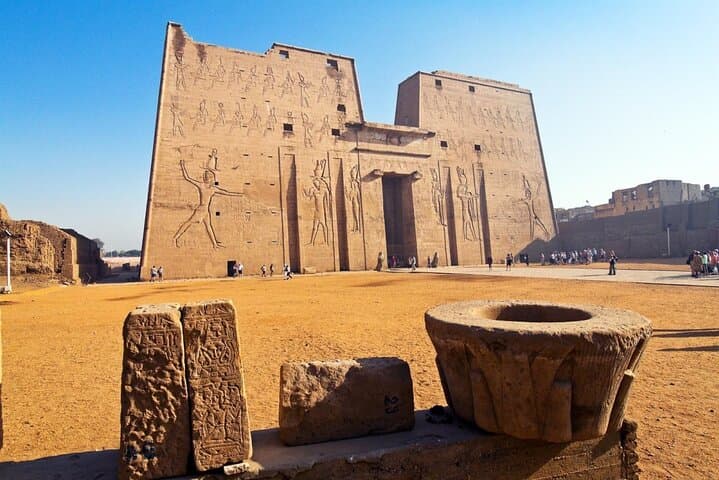
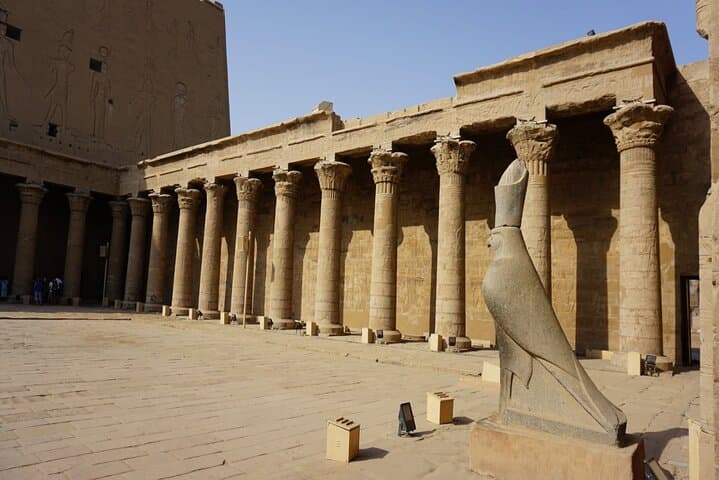
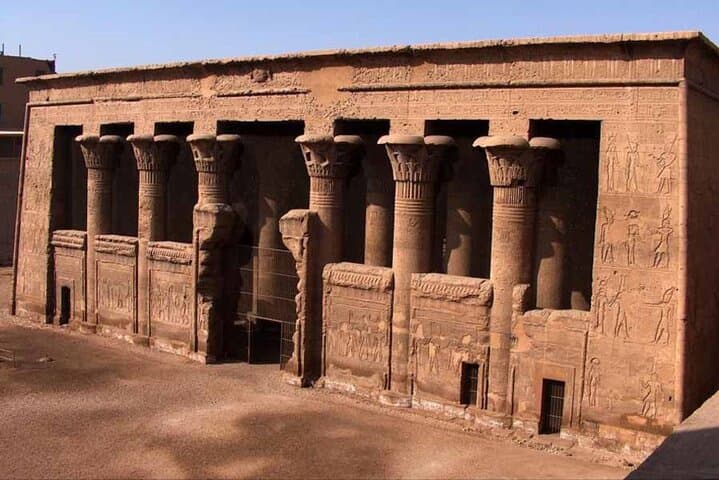
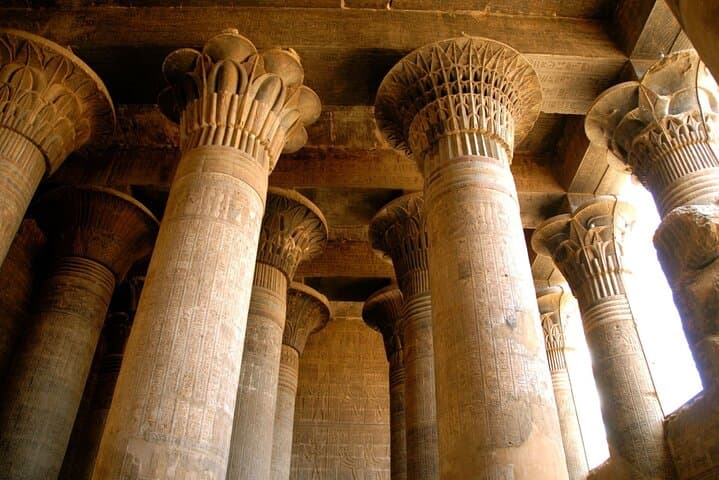
Edfu’s Temple of Horus is one of Egypt’s most complete cult temples, its reliefs narrating mythic contests between gods. Kom Ombo presents a rarer architectural choice: a double temple honoring Haroeris (Horus) and the crocodile god Sobek, with a small adjoining museum of mummified crocodiles and medical inscriptions. Esna’s hypostyle hall, later and Roman-influenced, shows the transition of temple practice and civic patronage along the Nile.
Geology here is desert plain and riverine silt—soft sandstone and mudbrick foundations tested by seasonal floods and millennia of wind. The local culture remains tied to the river: boat transport, sugarcane fields, and town markets that supply the temple communities.
Practically, expect a full-day circuit (about 6–8 hours) with several short walks and stair climbs inside temple courts. Comfortable walking shoes, sun protection, and a light layer for early-morning breeze are recommended. Guides typically handle tickets and logistics; bring cash for small museum fees or souvenirs, and plan for hot sun in peak months. Respect restricted areas, avoid touching carved surfaces, and allow time at each site to absorb the scale and detail—these temples ask for measured attention, not a rush.
easy.
6–8 hours.
Suitable for most fitness levels; requires short walks and climbing temple steps but no technical exertion
Most private tours price excludes official entrance fees; confirm with the operator whether admissions are prepaid or payable on the day.
Expect roughly 1–2 hours of driving total between Luxor, Edfu, Kom Ombo, and Esna depending on traffic and stops along the Nile.
Yes—operators note stroller accessibility for short distances, but temple interiors have steps and uneven surfaces where carriers may be needed.
Photography is generally allowed but flash may be restricted and some small museums charge extra for camera use; always follow the guide’s instructions.
Edfu, Kom Ombo and Esna reflect successive phases of Pharaonic and Greco-Roman temple-building: Horus’s Edfu is Ptolemaic in scale, Kom Ombo’s double plan reflects dual cult practice, and Esna’s hypostyle hall shows Roman-era patronage.
These sandstone and mudbrick sites are vulnerable to erosion and visitor wear; stay on marked paths, avoid touching reliefs, and support local conservation by following site rules.
Goto Egypt Tours operates guided outdoor trips and adventures with an emphasis on safety, stewardship, and memorable experiences.
The morning air off the Nile sharpens as a small, air-conditioned van eases away from Luxor and into the wide, lowlands of Upper Egypt. Palms lean like old hands along the river; fishermen and feluccas punctuate the horizon while mudbrick villages watch the convoy pass. The day unfolds as a shuttle through time—Ptolemaic columns, carved reliefs, and temple courts that still hold the rhythm of ancient ritual.
The morning air off the Nile sharpens as a small, air-conditioned van eases away from Luxor and into the wide, lowlands of Upper Egypt. Palms lean like old hands along the river; fishermen and feluccas punctuate the horizon while mudbrick villages watch the convoy pass. The day unfolds as a shuttle through time—Ptolemaic columns, carved reliefs, and temple courts that still hold the rhythm of ancient ritual.
Edfu’s Temple of Horus is one of Egypt’s most complete cult temples, its reliefs narrating mythic contests between gods. Kom Ombo presents a rarer architectural choice: a double temple honoring Haroeris (Horus) and the crocodile god Sobek, with a small adjoining museum of mummified crocodiles and medical inscriptions. Esna’s hypostyle hall, later and Roman-influenced, shows the transition of temple practice and civic patronage along the Nile.
Geology here is desert plain and riverine silt—soft sandstone and mudbrick foundations tested by seasonal floods and millennia of wind. The local culture remains tied to the river: boat transport, sugarcane fields, and town markets that supply the temple communities.
Practically, expect a full-day circuit (about 6–8 hours) with several short walks and stair climbs inside temple courts. Comfortable walking shoes, sun protection, and a light layer for early-morning breeze are recommended. Guides typically handle tickets and logistics; bring cash for small museum fees or souvenirs, and plan for hot sun in peak months. Respect restricted areas, avoid touching carved surfaces, and allow time at each site to absorb the scale and detail—these temples ask for measured attention, not a rush.