THE ADVENTURE COLLECTIVE® · Independent discovery and booking for outdoor travel

An interactive 2.5-hour treasure-hunt through the Louvre designed for teens and families. Solve clues with a licensed English guide, skip the lines with timed-entry, and learn to read masterpieces through puzzles and games.
An interactive 2.5-hour treasure-hunt through the Louvre designed for teens and families. Solve clues with a licensed English guide, skip the lines with timed-entry, and learn to read masterpieces through puzzles and games.
Under the glass pyramid the light tilts and refracts, throwing geometric shards across the stone courtyard as your group gathers at the carousel. The guide hands each teen the treasure-hunt kit and the game begins: clues, puzzles and quick studies of paintings and sculptures that change how you move through galleries once reserved for monarchs and ministers.
Verified experiences and guided adventures in the surrounding area.
Operated by Meet the Locals · Paris, Île-de-France
Under the glass pyramid the light tilts and refracts, throwing geometric shards across the stone courtyard as your group gathers at the carousel. The guide hands each teen the treasure-hunt kit and the game begins: clues, puzzles and quick studies of paintings and sculptures that change how you move through galleries once reserved for monarchs and ministers.
The Louvre began life as a 12th-century fortress on the Seine, evolved into a royal palace, and opened to the public as a museum after 1793; its wings record shifting French tastes from medieval masonry to 19th‑century neoclassical façades. The palace sits on Paris’s river terrace—sands and gravels deposited by the Seine shaped the land beneath the foundations centuries ago—while the glass pyramid by I.M. Pei announces modernity at the old court’s threshold.
Culturally, the Louvre is both classroom and crucible: French curatorial practice, colonial-era collecting histories, and conservation science meet everyday visitors. For teens, the treasure-hunt format turns masterpieces into puzzles rather than passive objects, prompting curiosity about artists, provenance and technique.
Practical guidance: meet at the carousel by the pyramid for a 2.5-hour private, licensed-English tour with timed-entry tickets included. The experience is wheelchair- and stroller-accessible; bring photo ID for under‑26 free-admission rules, wear comfortable shoes for gallery walking, and plan to move steadily—popular galleries can be dense. Book ahead for evening openings or to avoid Tuesday closures; cancelations are usually allowed up to 24 hours prior.
easy.
2–3 hours.
Light walking fitness; suitable for teens and adults comfortable standing and moving through galleries for 2–3 hours.
Timed-entry tickets to the museum (adult tickets where required) are included with the tour; free admission rules still require names and ID to be provided for eligible youth.
Designed for teens but suitable for family groups; the puzzles and pacing target roughly ages 10–17 and their accompanying adults.
Yes—meetings, paths and the itinerary are wheelchair- and stroller-accessible, but inform the operator of any needs at booking.
Non-flash photography is typically allowed in most rooms, but some exhibitions restrict photos—follow your guide and posted rules in specific galleries.
Originally a 12th-century fortress, the Louvre became a royal palace and was converted into a public museum after the French Revolution; its collections expanded through royal purchases and 19th-century acquisitions.
The museum enforces strict no‑touch and climate controls to protect artworks; group tours help manage visitor flow so conservation teams can maintain sensitive pieces.
Meet the Locals operates guided outdoor trips and adventures with an emphasis on safety, stewardship, and memorable experiences.
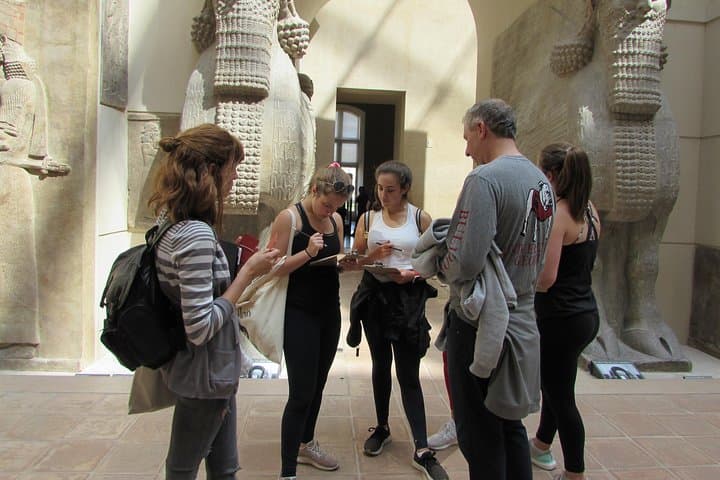


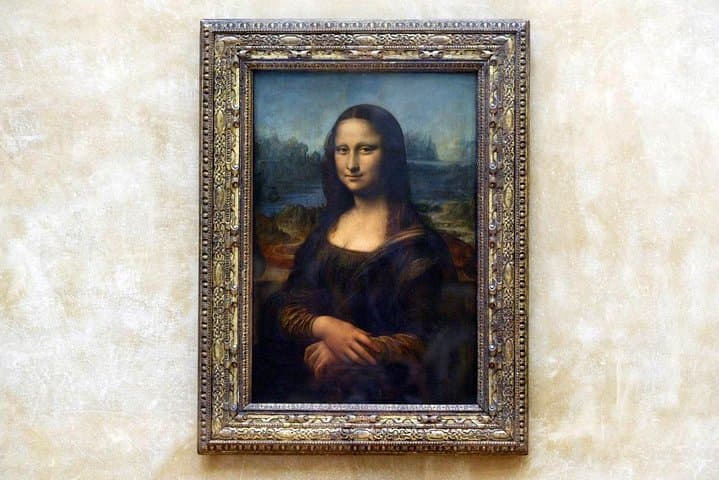
Under the glass pyramid the light tilts and refracts, throwing geometric shards across the stone courtyard as your group gathers at the carousel. The guide hands each teen the treasure-hunt kit and the game begins: clues, puzzles and quick studies of paintings and sculptures that change how you move through galleries once reserved for monarchs and ministers.
Under the glass pyramid the light tilts and refracts, throwing geometric shards across the stone courtyard as your group gathers at the carousel. The guide hands each teen the treasure-hunt kit and the game begins: clues, puzzles and quick studies of paintings and sculptures that change how you move through galleries once reserved for monarchs and ministers.
The Louvre began life as a 12th-century fortress on the Seine, evolved into a royal palace, and opened to the public as a museum after 1793; its wings record shifting French tastes from medieval masonry to 19th‑century neoclassical façades. The palace sits on Paris’s river terrace—sands and gravels deposited by the Seine shaped the land beneath the foundations centuries ago—while the glass pyramid by I.M. Pei announces modernity at the old court’s threshold.
Culturally, the Louvre is both classroom and crucible: French curatorial practice, colonial-era collecting histories, and conservation science meet everyday visitors. For teens, the treasure-hunt format turns masterpieces into puzzles rather than passive objects, prompting curiosity about artists, provenance and technique.
Practical guidance: meet at the carousel by the pyramid for a 2.5-hour private, licensed-English tour with timed-entry tickets included. The experience is wheelchair- and stroller-accessible; bring photo ID for under‑26 free-admission rules, wear comfortable shoes for gallery walking, and plan to move steadily—popular galleries can be dense. Book ahead for evening openings or to avoid Tuesday closures; cancelations are usually allowed up to 24 hours prior.