THE ADVENTURE COLLECTIVE® · Independent discovery and booking for outdoor travel

In four hours you’ll trade skyline overlooks at Griffith Observatory for modern sculptures and gardens at the Getty Center. This private drive-and-walk tour balances short hill climbs, iconic views and museum time — ideal for travelers who want efficient access to two of L.A.’s top cultural destinations.
In four hours you’ll trade skyline overlooks at Griffith Observatory for modern sculptures and gardens at the Getty Center. This private drive-and-walk tour balances short hill climbs, iconic views and museum time — ideal for travelers who want efficient access to two of L.A.’s top cultural destinations.
You arrive to a fringe of chaparral and eucalyptus where the city drops away — Griffith Observatory perches above the sprawl, its white dome catching late-afternoon sun while Los Angeles lays out like a living map below. The air on Mount Hollywood can feel cooler than the valley; the skyline and Hollywood Sign frame quick, cinematic views before your driver guides you west to the Getty Center’s terraces and sculpture garden, where concrete, lawn and sky meet the museum’s clean lines.
Verified experiences and guided adventures in the surrounding area.
Operated by Sea Pass Travel · Los Angeles, CA
You arrive to a fringe of chaparral and eucalyptus where the city drops away — Griffith Observatory perches above the sprawl, its white dome catching late-afternoon sun while Los Angeles lays out like a living map below. The air on Mount Hollywood can feel cooler than the valley; the skyline and Hollywood Sign frame quick, cinematic views before your driver guides you west to the Getty Center’s terraces and sculpture garden, where concrete, lawn and sky meet the museum’s clean lines.
Griffith opened in 1935 as a public observatory and public-facing science center; the Getty Center, completed in the late 1990s, houses J. Paul Getty’s collection and contemporary sculpture across terraced gardens. Geologically, you’re moving from the sandstone ridges of Griffith Park to the uplifted bluffs of the Santa Monica range — short climbs and paved overlooks, not technical hiking but terrain that rewards steady legs and wide eyes. Culturally this is L.A.: film history, civic philanthropy, and a city that reads itself in views and art.
Practical guidance: plan for traffic and limited parking windows at Griffith — mornings and late afternoons ease crowds. Bring layers; wind and shade at the observatory mean a light jacket feels essential even on warm days. Allow time for the Getty’s outdoor sculptures and orientation film; admission is free but parking and shuttle logistics vary. A quiet pace makes this a compact half-day that mixes short uphill strolls, bench stops, exhibits and skyline moments — accessible, photo-rich, and ideal for travelers who want urban viewpoints alongside museum calm.
easy.
4 hours.
Suitable for most fitness levels; requires short uphill walking at Griffith Observatory and paved walking between Getty terraces.
Both sites offer free general admission, but the Getty charges for parking; Griffith Observatory admission is free though some planetarium shows may require separate tickets.
Yes — the private tour includes pickup and drop-off; confirm your exact pickup time with the local provider in advance.
The tour is generally stroller-friendly; Griffith Observatory and the Getty have accessibility options and elevators, though some outdoor paths include steps or slopes.
The tour provides a driver-guide and private transportation; museum entry is free but special exhibitions or planetarium shows may require additional fees paid on-site.
Griffith Observatory opened in 1935 as a public science facility funded by Griffith J. Griffith; the Getty Center, completed in the 1990s, was designed to showcase the J. Paul Getty collection alongside expansive gardens and architecture.
Griffith Park is managed for urban habitat and recreation, with ongoing fuel-reduction and habitat restoration projects; the Getty emphasizes climate-controlled conservation and minimal-impact landscaping in its gardens.
Sea Pass Travel operates guided outdoor trips and adventures with an emphasis on safety, stewardship, and memorable experiences.
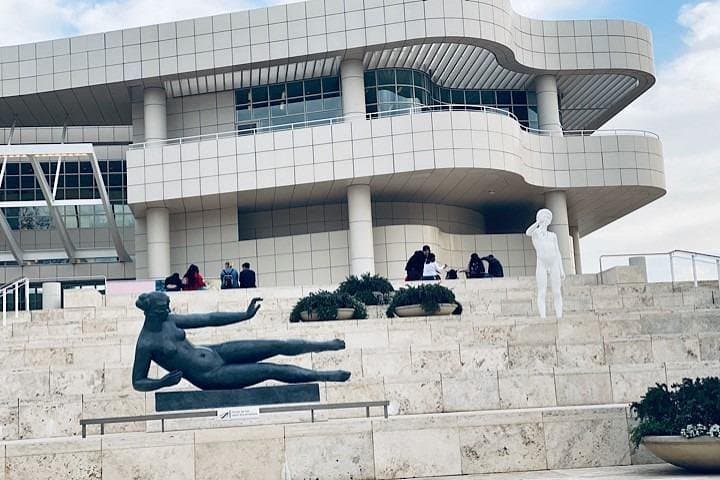
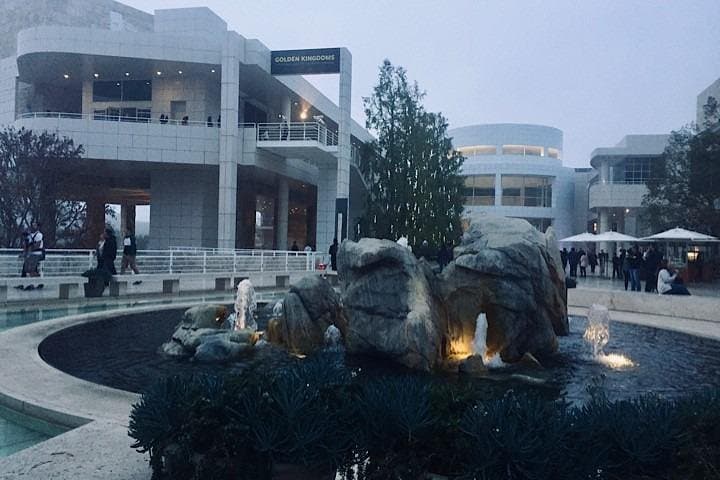
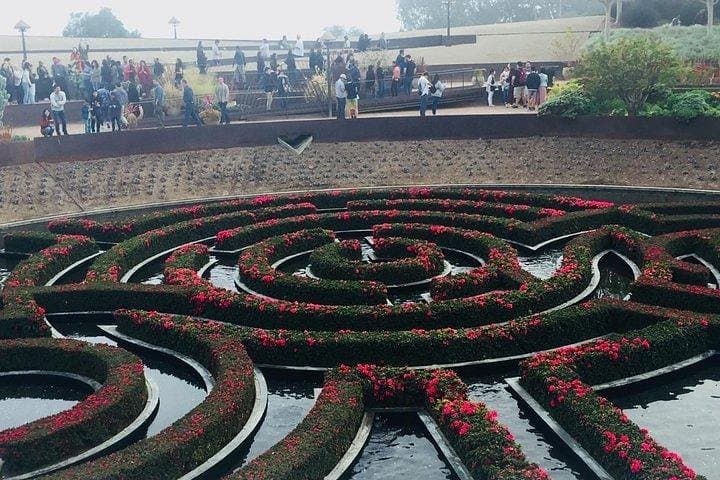
You arrive to a fringe of chaparral and eucalyptus where the city drops away — Griffith Observatory perches above the sprawl, its white dome catching late-afternoon sun while Los Angeles lays out like a living map below. The air on Mount Hollywood can feel cooler than the valley; the skyline and Hollywood Sign frame quick, cinematic views before your driver guides you west to the Getty Center’s terraces and sculpture garden, where concrete, lawn and sky meet the museum’s clean lines.
You arrive to a fringe of chaparral and eucalyptus where the city drops away — Griffith Observatory perches above the sprawl, its white dome catching late-afternoon sun while Los Angeles lays out like a living map below. The air on Mount Hollywood can feel cooler than the valley; the skyline and Hollywood Sign frame quick, cinematic views before your driver guides you west to the Getty Center’s terraces and sculpture garden, where concrete, lawn and sky meet the museum’s clean lines.
Griffith opened in 1935 as a public observatory and public-facing science center; the Getty Center, completed in the late 1990s, houses J. Paul Getty’s collection and contemporary sculpture across terraced gardens. Geologically, you’re moving from the sandstone ridges of Griffith Park to the uplifted bluffs of the Santa Monica range — short climbs and paved overlooks, not technical hiking but terrain that rewards steady legs and wide eyes. Culturally this is L.A.: film history, civic philanthropy, and a city that reads itself in views and art.
Practical guidance: plan for traffic and limited parking windows at Griffith — mornings and late afternoons ease crowds. Bring layers; wind and shade at the observatory mean a light jacket feels essential even on warm days. Allow time for the Getty’s outdoor sculptures and orientation film; admission is free but parking and shuttle logistics vary. A quiet pace makes this a compact half-day that mixes short uphill strolls, bench stops, exhibits and skyline moments — accessible, photo-rich, and ideal for travelers who want urban viewpoints alongside museum calm.