THE ADVENTURE COLLECTIVE® · Independent discovery and booking for outdoor travel

A private, two-hour walking tour through Chicago’s Loop highlighting the Rookery, Palmer House, Marquette Building and Federal Plaza. Expect close reading of façades, lively historical context, and tactical guidance for visiting landmark interiors.
A private, two-hour walking tour through Chicago’s Loop highlighting the Rookery, Palmer House, Marquette Building and Federal Plaza. Expect close reading of façades, lively historical context, and tactical guidance for visiting landmark interiors.
The group steps off by the Monadnock’s dark masonry and the Loop exhales: a river of commuters, a scatter of pigeons, and stone and steel rising like pages in an open book. On this private two-hour walk, the guide sets the tempo—measured, observant—so the façades and alleys have room to speak.
Verified experiences and guided adventures in the surrounding area.
Operated by Opatrip.com USA · Chicago, Illinois
The group steps off by the Monadnock’s dark masonry and the Loop exhales: a river of commuters, a scatter of pigeons, and stone and steel rising like pages in an open book. On this private two-hour walk, the guide sets the tempo—measured, observant—so the façades and alleys have room to speak.
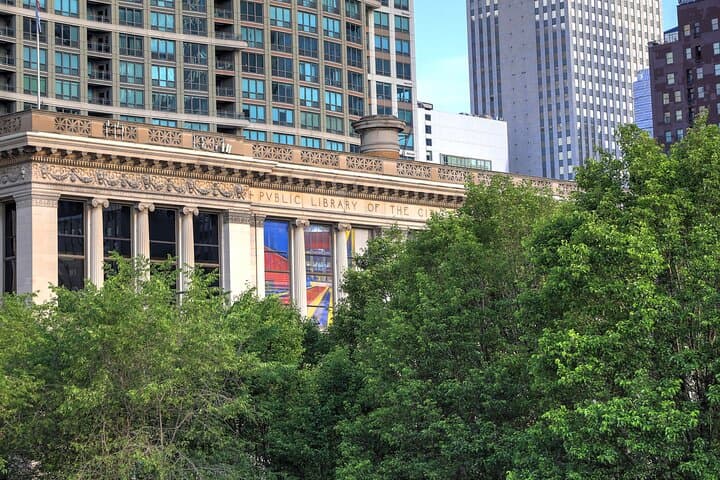
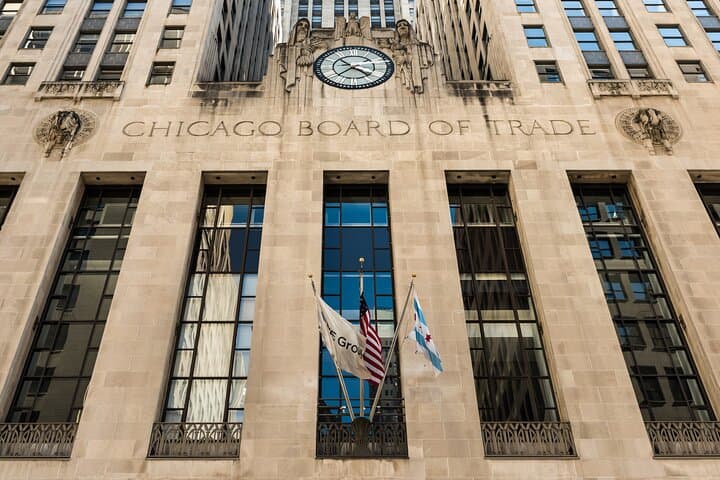
Chicago’s Loop is an architectural ledger: post-fire rebuilds, the Chicago School’s early steel frames and the gilded optimism of department-store palaces. You’ll pass the Rookery, where an iron skeleton meets ornate terra cotta; the Marquette and Board of Trade, where function and civic drama intersect; Federal Plaza, punctuated by Calder’s mobile that refuses to stay still; and the Palmer House, where hotel innovations once meant lightbulbs and elevators. The route threads transportation history and labor-era commerce, and brushes the Chicago River’s engineered channel — water that once pushed industry forward now frames skyline reflections.
Expect close-up study of façades, column orders, massing and ornament, plus anecdotes about builders, financiers and preservation fights that kept many of these buildings standing. The tour mixes measured history with practical orientation: where to duck inside for landmark interiors, which cornices are original, and how modern retrofits have altered circulation and sightlines.
Practicalities matter: wear stable walking shoes, allow time for photos and short interior stops, and plan around rush-hour crowds. For a focused, private look at how Chicago made modern skyscrapers, this Loop walk delivers concentrated context and clear direction for further exploration.
easy.
2 hours.
Suitable for most activity levels; requires standing and walking on city sidewalks for up to two hours.
Yes — the booking reserves the guide and experience for your group only, with no mixed guests.
The tour includes exterior and selective interior stops where public access permits; paid admissions are not covered unless specified.
Much of the route is on level sidewalks; accessibility of individual interiors varies—notify booking of requirements so the guide can adapt the route.
The meeting point sits within a short walk of multiple CTA lines and several bus routes, making access by transit straightforward.
The Loop grew rapidly after the Great Chicago Fire (1871); early steel-frame construction and the Chicago School set patterns for modern skyscrapers and commercial architecture.
Many Loop landmarks are protected through landmark designations and ongoing preservation programs; visitors can help by staying on sidewalks, respecting private property and supporting guided access that reduces interior wear.
Opatrip.com USA operates guided outdoor trips and adventures with an emphasis on safety, stewardship, and memorable experiences.

The group steps off by the Monadnock’s dark masonry and the Loop exhales: a river of commuters, a scatter of pigeons, and stone and steel rising like pages in an open book. On this private two-hour walk, the guide sets the tempo—measured, observant—so the façades and alleys have room to speak.
The group steps off by the Monadnock’s dark masonry and the Loop exhales: a river of commuters, a scatter of pigeons, and stone and steel rising like pages in an open book. On this private two-hour walk, the guide sets the tempo—measured, observant—so the façades and alleys have room to speak.
Chicago’s Loop is an architectural ledger: post-fire rebuilds, the Chicago School’s early steel frames and the gilded optimism of department-store palaces. You’ll pass the Rookery, where an iron skeleton meets ornate terra cotta; the Marquette and Board of Trade, where function and civic drama intersect; Federal Plaza, punctuated by Calder’s mobile that refuses to stay still; and the Palmer House, where hotel innovations once meant lightbulbs and elevators. The route threads transportation history and labor-era commerce, and brushes the Chicago River’s engineered channel — water that once pushed industry forward now frames skyline reflections.
Expect close-up study of façades, column orders, massing and ornament, plus anecdotes about builders, financiers and preservation fights that kept many of these buildings standing. The tour mixes measured history with practical orientation: where to duck inside for landmark interiors, which cornices are original, and how modern retrofits have altered circulation and sightlines.
Practicalities matter: wear stable walking shoes, allow time for photos and short interior stops, and plan around rush-hour crowds. For a focused, private look at how Chicago made modern skyscrapers, this Loop walk delivers concentrated context and clear direction for further exploration.