THE ADVENTURE COLLECTIVE® · Independent discovery and booking for outdoor travel

Experience Split through a local guide: walk through Diocletian’s Palace, visit the bustling Fish Market, and hear layered stories of Roman, Venetian, and Croatian life. This private 2.5-hour tour blends archaeology, urban geology, and practical tips for exploring on foot.
Experience Split through a local guide: walk through Diocletian’s Palace, visit the bustling Fish Market, and hear layered stories of Roman, Venetian, and Croatian life. This private 2.5-hour tour blends archaeology, urban geology, and practical tips for exploring on foot.
Morning on Split’s Riva begins with the sea nudging the quay and palm shadows slicing across cobblestones. A private guide leads a small group through narrow lanes where apartments and Roman walls share the same foundations—here, modern life threads through 1,700-year-old stone.
Verified experiences and guided adventures in the surrounding area.
Operated by Passepartours.com · Split, Split-Dalmatia County
Morning on Split’s Riva begins with the sea nudging the quay and palm shadows slicing across cobblestones. A private guide leads a small group through narrow lanes where apartments and Roman walls share the same foundations—here, modern life threads through 1,700-year-old stone.
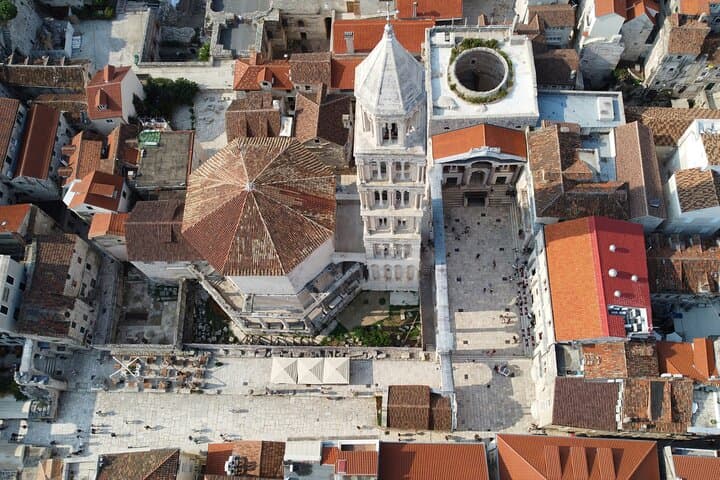
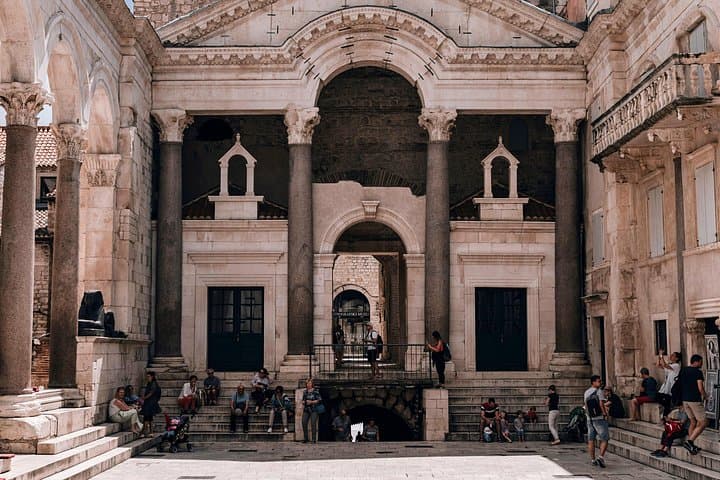
The core of the walk is Diocletian’s Palace, a fourth-century complex built as an imperial retirement residence that evolved into the living heart of Split. Visitors move from the open Peristyle to the vaulted cellars, observing how Roman masonry became medieval homes and Baroque facades. Geologically, the city sits on Dalmatian limestone; blocks quarried from nearby karst give buildings their pale, weathered look and create the sharp edges of the harbor and nearby Marjan Hill.
Culturally, the tour moves past the Fish Market in its Art Nouveau building and Marmontova’s cafés, where the sea and market voices shape daily rhythm. Local stories—Diocletian’s unusual abdication, Venetian and Austro-Hungarian layers—give context to what you see.
Practically, expect a 2.5-hour, mostly flat walking route with cobbles and short stair sections. The private format allows pacing for photos or accessibility needs; entrances to paid museums are optional. Morning departures avoid heat and crowds; light layers, solid shoes, and a water bottle improve comfort. Guides often point out quieter corners of Varoš and routes up Marjan for overview views. Respect the living city: keep noise low in residential alleys, avoid litter, and consider stopping at a local konoba to support neighborhood businesses.
easy.
2–2.5 hours.
Suitable for most fitness levels; requires standing and walking on uneven cobbles for the duration.
Most palace areas are public and free to explore; some specific attractions and museums inside the complex require separate tickets, which are not included in the standard private tour.
The tour notes stroller accessibility and can accommodate many mobility needs, though some narrow alleys and cellar areas may be challenging—confirm requirements with the operator when booking.
Private guides typically speak English and will tailor the route and storytelling to interests—history, architecture, or food-focused stops can be emphasized.
Tours run in light rain; guides can adapt the itinerary to include sheltered stops. For extreme weather, cancellation policies apply—check the operator’s terms for refunds.
Split grew out of Diocletian’s Palace, a fourth-century retirement complex that became the urban core when residents reused imperial buildings through the Middle Ages and beyond.
High visitor numbers stress narrow old-town streets and historic fabric—practice low-impact tourism, stick to paths, and support small local businesses to spread benefits.
Passepartours.com operates guided outdoor trips and adventures with an emphasis on safety, stewardship, and memorable experiences.
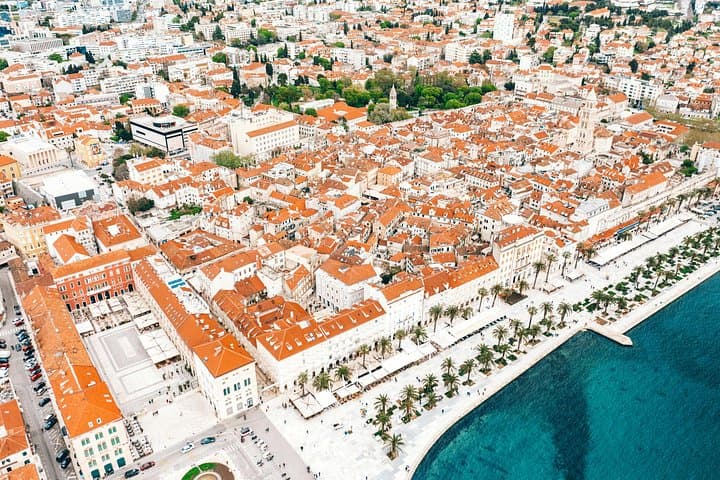
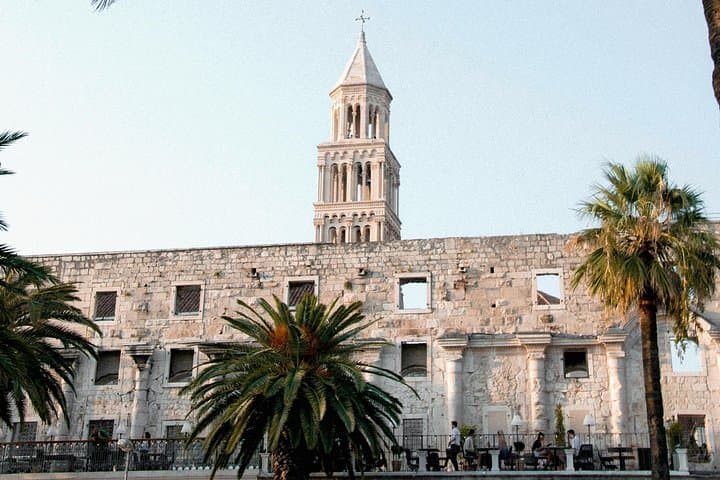
Morning on Split’s Riva begins with the sea nudging the quay and palm shadows slicing across cobblestones. A private guide leads a small group through narrow lanes where apartments and Roman walls share the same foundations—here, modern life threads through 1,700-year-old stone.
Morning on Split’s Riva begins with the sea nudging the quay and palm shadows slicing across cobblestones. A private guide leads a small group through narrow lanes where apartments and Roman walls share the same foundations—here, modern life threads through 1,700-year-old stone.
The core of the walk is Diocletian’s Palace, a fourth-century complex built as an imperial retirement residence that evolved into the living heart of Split. Visitors move from the open Peristyle to the vaulted cellars, observing how Roman masonry became medieval homes and Baroque facades. Geologically, the city sits on Dalmatian limestone; blocks quarried from nearby karst give buildings their pale, weathered look and create the sharp edges of the harbor and nearby Marjan Hill.
Culturally, the tour moves past the Fish Market in its Art Nouveau building and Marmontova’s cafés, where the sea and market voices shape daily rhythm. Local stories—Diocletian’s unusual abdication, Venetian and Austro-Hungarian layers—give context to what you see.
Practically, expect a 2.5-hour, mostly flat walking route with cobbles and short stair sections. The private format allows pacing for photos or accessibility needs; entrances to paid museums are optional. Morning departures avoid heat and crowds; light layers, solid shoes, and a water bottle improve comfort. Guides often point out quieter corners of Varoš and routes up Marjan for overview views. Respect the living city: keep noise low in residential alleys, avoid litter, and consider stopping at a local konoba to support neighborhood businesses.