THE ADVENTURE COLLECTIVE® · Independent discovery and booking for outdoor travel

Set out from Arugambay for a private half-day 4x4 safari into Kumana National Park, where lagoon channels, mangroves and sandflats host pelicans, painted storks and roaming elephants. Ideal for birders and wildlife photographers seeking intimate encounters with the east coast’s coastal wetlands.
Set out from Arugambay for a private half-day 4x4 safari into Kumana National Park, where lagoon channels, mangroves and sandflats host pelicans, painted storks and roaming elephants. Ideal for birders and wildlife photographers seeking intimate encounters with the east coast’s coastal wetlands.
Dawn rises over the eastern lagoon and the first light slashes across reedbeds; a 4x4 crunches away from the dust road and the park exhales—waterbirds lift in a slow, ragged flight and the mangrove channel seems to pull you deeper.
Verified experiences and guided adventures in the surrounding area.
Operated by Ceylon Travel Dream · Arugam Bay, Eastern Province
Dawn rises over the eastern lagoon and the first light slashes across reedbeds; a 4x4 crunches away from the dust road and the park exhales—waterbirds lift in a slow, ragged flight and the mangrove channel seems to pull you deeper.
Kumana National Park occupies the quieter eastern flank of Yala’s protected complex and centers on the 200-hectare Kumana Villu, a shallow swamp fed by the Kumbukkan Oya. Geologically the coastline here is a patchwork of sandbars, lagoons and mudflats formed by longshore currents; culturally the area has long supported coastal fishing communities whose seasonal rhythms still mark bird breeding and fish runs.
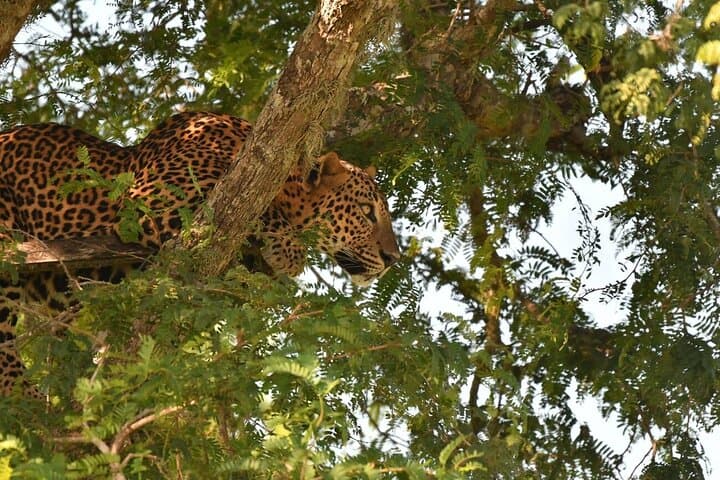
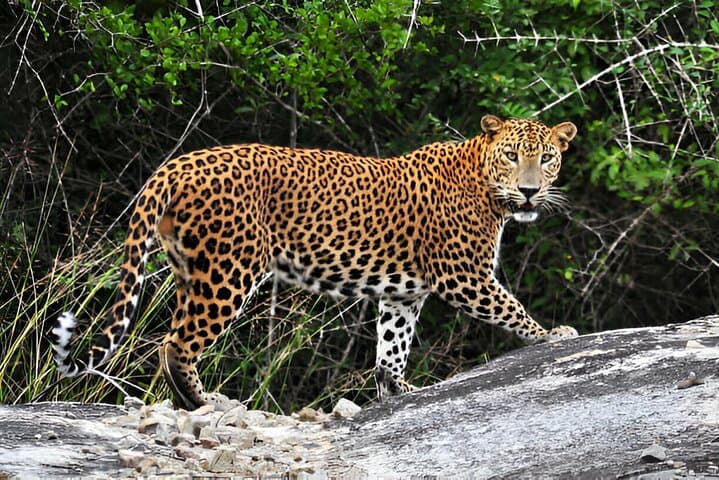
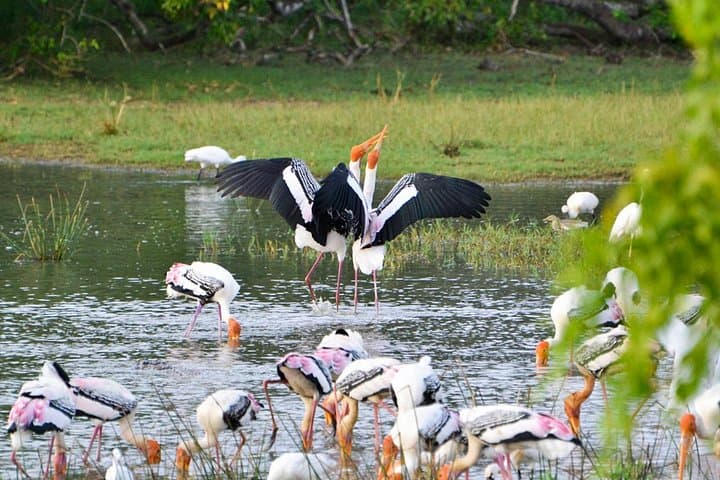
Expect concentrated birdlife—painted storks, pelicans, spoonbills and the black-necked stork—alongside larger mammals that move through shoreline forest and grassland: elephants cross tidal flats, and leopards are occasionally seen at the park’s edges. Guides point out nesting colonies, call out flightlines and read animal sign; the landscape feels alive, as if the lagoon itself nudges you toward its secrets.
Practical guidance: tours operate as morning or evening private safaris and typically run about 5–6 hours including transfers from Arugam Bay. Travel in a 4x4 A/C jeep with an English-speaking guide; bring binoculars, sun protection, insect repellent and a camera with a good zoom. Wear sturdy, closed-toe shoes for short walks and expect dusty, bumpy tracks—motion-sickness precautions help. Respect buffer distances at sightings, avoid loud noises, and leave no trace: these wetlands are fragile breeding grounds best viewed quietly. Book early for peak bird season (May–July) and plan arrival times to match low light when birds are most active.
moderate.
5–6 hours.
Moderate fitness: able to climb in/out of a jeep and walk short uneven trails; not strenuous but requires mobility.
This private half-day safari runs roughly 5–6 hours including transfers; ask your operator for exact pickup timing from Arugam Bay.
Kumana is best known for waterbirds (pelicans, painted storks, spoonbills, black-necked storks), plus possible elephant sightings and occasional leopard sightings at the park’s periphery.
Not recommended for pregnant travelers or those with serious back or heart conditions; children are allowed but should be supervised—ask the operator about age restrictions.
Most tours include pickup and drop-off from Arugam Bay in an A/C vehicle; the drive to the park takes around 1–1.5 hours depending on the route and season.
Kumana sits on the eastern migratory corridor and was historically an important coastal wetlands site later protected as the eastern sector of Yala National Park.
Breeding colonies rely on undisturbed mangrove and swamp habitat; stick to guided routes and avoid approaching nesting trees to reduce disturbance.
Ceylon Travel Dream operates guided outdoor trips and adventures with an emphasis on safety, stewardship, and memorable experiences.
Dawn rises over the eastern lagoon and the first light slashes across reedbeds; a 4x4 crunches away from the dust road and the park exhales—waterbirds lift in a slow, ragged flight and the mangrove channel seems to pull you deeper.
Dawn rises over the eastern lagoon and the first light slashes across reedbeds; a 4x4 crunches away from the dust road and the park exhales—waterbirds lift in a slow, ragged flight and the mangrove channel seems to pull you deeper.
Kumana National Park occupies the quieter eastern flank of Yala’s protected complex and centers on the 200-hectare Kumana Villu, a shallow swamp fed by the Kumbukkan Oya. Geologically the coastline here is a patchwork of sandbars, lagoons and mudflats formed by longshore currents; culturally the area has long supported coastal fishing communities whose seasonal rhythms still mark bird breeding and fish runs.
Expect concentrated birdlife—painted storks, pelicans, spoonbills and the black-necked stork—alongside larger mammals that move through shoreline forest and grassland: elephants cross tidal flats, and leopards are occasionally seen at the park’s edges. Guides point out nesting colonies, call out flightlines and read animal sign; the landscape feels alive, as if the lagoon itself nudges you toward its secrets.
Practical guidance: tours operate as morning or evening private safaris and typically run about 5–6 hours including transfers from Arugam Bay. Travel in a 4x4 A/C jeep with an English-speaking guide; bring binoculars, sun protection, insect repellent and a camera with a good zoom. Wear sturdy, closed-toe shoes for short walks and expect dusty, bumpy tracks—motion-sickness precautions help. Respect buffer distances at sightings, avoid loud noises, and leave no trace: these wetlands are fragile breeding grounds best viewed quietly. Book early for peak bird season (May–July) and plan arrival times to match low light when birds are most active.