THE ADVENTURE COLLECTIVE® · Independent discovery and booking for outdoor travel

Spend a full day off the Dalmatian coast visiting Krka National Park’s cascading travertine falls and the UNESCO town of Trogir. This private tour combines a scenic boat ride, easy boardwalk walks and a cultural stop in historic Trogir.
Spend a full day off the Dalmatian coast visiting Krka National Park’s cascading travertine falls and the UNESCO town of Trogir. This private tour combines a scenic boat ride, easy boardwalk walks and a cultural stop in historic Trogir.
You step out of an air-conditioned van onto a sun-bright quay in Skradin, the river hissing and boats lining up like patient ferries. The driver closes the door, points toward a wooden jetty and the sound changes—water over stone, frogs calling from reeds, then the distant roar of Skradinski Buk. A short boat ride threads the Krka River through reed beds, the current nudging you forward toward the park’s tiered cascades.
Verified experiences and guided adventures in the surrounding area.
Operated by Private Experience Croatia · Skradin, Split-Dalmatia County
You step out of an air-conditioned van onto a sun-bright quay in Skradin, the river hissing and boats lining up like patient ferries. The driver closes the door, points toward a wooden jetty and the sound changes—water over stone, frogs calling from reeds, then the distant roar of Skradinski Buk. A short boat ride threads the Krka River through reed beds, the current nudging you forward toward the park’s tiered cascades.
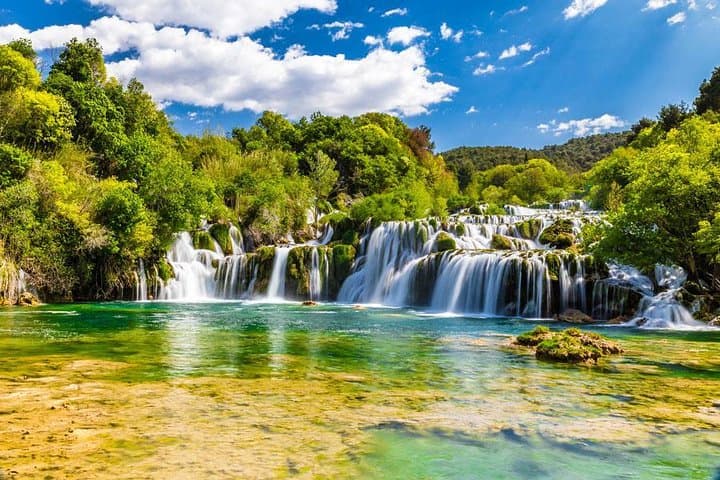
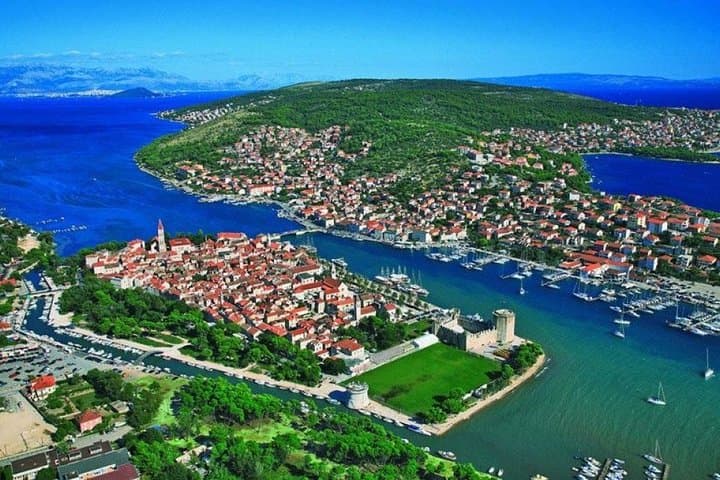
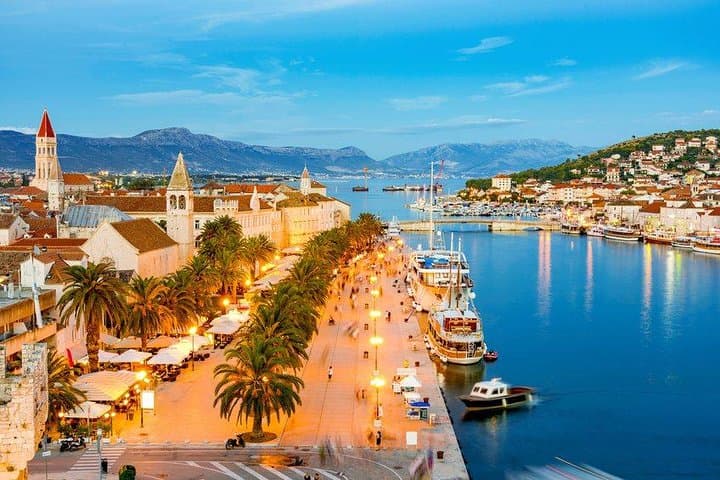
Krka National Park is carved from karst limestone; over millennia water has cut channels and built travertine barriers that catch moss and mineral, creating the low, broad falls that define the place. Nearby Trogir, a UNESCO-listed town, wears its history in fortified walls, Romanesque portals and narrow streets that open onto Adriatic views—a contrast of wilderness and cultivated maritime culture.
Expect easy walking: boardwalk loops around Skradinski Buk are roughly 1–2 km with minimal elevation gain under 50 m, while the boat crossing is typically 20–30 minutes. Summers bring warm swimming at designated spots (seasonal rules apply); spring and autumn have fresher water and fewer crowds. Photography windows are early morning and late afternoon when light slants across the white travertine.
Practical notes: bring water, sun protection and non-slip footwear—the paths can be wet. Tickets for park entry are usually purchased on arrival unless prearranged; confirm pickup location in Split and wear swimwear under clothes if you plan to enter the water. The tour pairs natural spectacle with UNESCO history, ideal for travelers seeking a compact, low-effort day that still feels elemental and distinctly Dalmatian.
easy.
8–10 hours.
Suitable for anyone in basic walking fitness; most time spent on short, flat boardwalks and seated travel.
This tour description states admission to the main Krka waterfalls is not included—confirm with the operator and be prepared to purchase tickets on arrival if needed.
Pickup locations are arranged at booking—many travelers start in Split; provide your preferred pickup point when you book.
Yes—infant seats are available and Skradin and the park's main boardwalks are stroller-accessible, though some paths have steps or uneven sections.
Swimming is permitted seasonally and only in designated areas; rules change, so check with the guide on the day of your visit before entering the water.
Trogir’s compact old town reflects centuries of Venetian, Roman and medieval influence; Krka’s travertine barriers are products of long-term karst processes unique to Dalmatia.
Krka National Park manages visitor flow and designated swimming zones to protect fragile travertine formations; stick to marked paths to avoid accelerating erosion.
Private Experience Croatia operates guided outdoor trips and adventures with an emphasis on safety, stewardship, and memorable experiences.

You step out of an air-conditioned van onto a sun-bright quay in Skradin, the river hissing and boats lining up like patient ferries. The driver closes the door, points toward a wooden jetty and the sound changes—water over stone, frogs calling from reeds, then the distant roar of Skradinski Buk. A short boat ride threads the Krka River through reed beds, the current nudging you forward toward the park’s tiered cascades.
You step out of an air-conditioned van onto a sun-bright quay in Skradin, the river hissing and boats lining up like patient ferries. The driver closes the door, points toward a wooden jetty and the sound changes—water over stone, frogs calling from reeds, then the distant roar of Skradinski Buk. A short boat ride threads the Krka River through reed beds, the current nudging you forward toward the park’s tiered cascades.
Krka National Park is carved from karst limestone; over millennia water has cut channels and built travertine barriers that catch moss and mineral, creating the low, broad falls that define the place. Nearby Trogir, a UNESCO-listed town, wears its history in fortified walls, Romanesque portals and narrow streets that open onto Adriatic views—a contrast of wilderness and cultivated maritime culture.
Expect easy walking: boardwalk loops around Skradinski Buk are roughly 1–2 km with minimal elevation gain under 50 m, while the boat crossing is typically 20–30 minutes. Summers bring warm swimming at designated spots (seasonal rules apply); spring and autumn have fresher water and fewer crowds. Photography windows are early morning and late afternoon when light slants across the white travertine.
Practical notes: bring water, sun protection and non-slip footwear—the paths can be wet. Tickets for park entry are usually purchased on arrival unless prearranged; confirm pickup location in Split and wear swimwear under clothes if you plan to enter the water. The tour pairs natural spectacle with UNESCO history, ideal for travelers seeking a compact, low-effort day that still feels elemental and distinctly Dalmatian.