THE ADVENTURE COLLECTIVE® · Independent discovery and booking for outdoor travel

Spend a day driving from Dubrovnik to Korčula and Pelješac for medieval streets, a short ferry hop, seaside lunch, and a Pelješac winery tasting. This private tour blends coastal scenery with hands-on cultural and wine experiences.
Spend a day driving from Dubrovnik to Korčula and Pelješac for medieval streets, a short ferry hop, seaside lunch, and a Pelješac winery tasting. This private tour blends coastal scenery with hands-on cultural and wine experiences.
A morning drive peels away from Dubrovnik’s stone walls and the coastline widens into a scatter of islands. The road to Ston curves past salt pans and fortified walls that rise like a low, deliberate spine; further on, the peninsula narrows and the ferry slip at Orebić gives way to the short boat hop across clear Adriatic water to Korčula.
Verified experiences and guided adventures in the surrounding area.
Operated by Elite Travel LTD · Dubrovnik, Dubrovnik-Neretva County
A morning drive peels away from Dubrovnik’s stone walls and the coastline widens into a scatter of islands. The road to Ston curves past salt pans and fortified walls that rise like a low, deliberate spine; further on, the peninsula narrows and the ferry slip at Orebić gives way to the short boat hop across clear Adriatic water to Korčula.
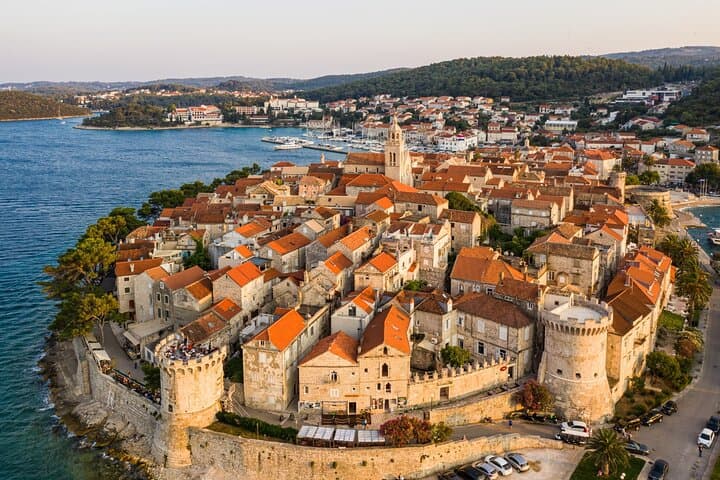
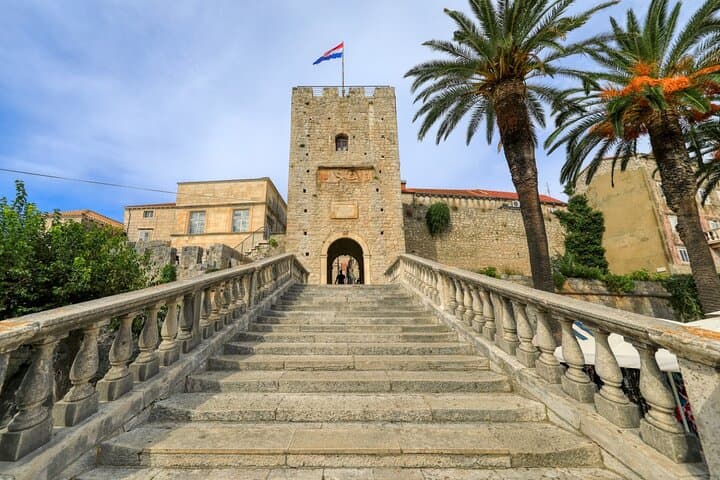
Korčula’s medieval streets are tight and axial, built for wind and community. Visitors trace the grid toward the cathedral and Bishop’s Palace, where Venetian Gothic details and local stone tell of centuries of seafaring trade and island agriculture. The island rests on limestone bedrock; terraces and vineyards on Pelješac take advantage of thinning soils and afternoon sun, producing the Plavac Mali grape—robust, tannic, and very much of the Dalmatian coast.
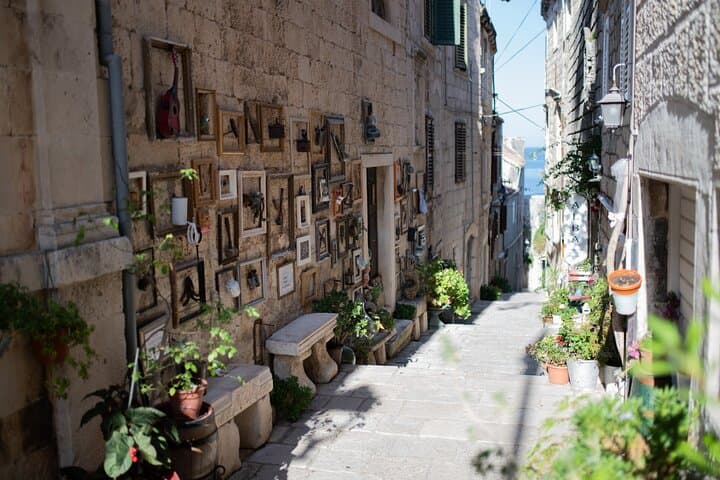
Culturally, this route stitches together small-town fishermen’s piers, fortified saltworks in Ston, and family-run cellars on Pelješac where tastings are informal and instructive. Expect cobbled lanes, steep steps, and short swims if time allows. The day balances sightseeing with open-air time: a 60–90 minute drive segments, 90–240 minutes on Korčula for walking and lunch, and a cellar visit for local varietals.
Practical guidance: wear sturdy shoes for uneven stone, bring sun protection and a light layer for sea breezes, and plan for brief boat transfers. Mobility is generally easy but requires navigating steps and ferry boarding. Bookings that include entrance fees and a guide streamline logistics; allow the fixed six-hour window for a relaxed pace.
easy.
6 hours.
Light fitness; able to walk 1–2 miles on cobblestones and climb short flights of steps without difficulty
The private tour runs about six hours round-trip, including driving, a short ferry crossing, time in Korčula, and a winery visit.
Yes; the itinerary includes the short boat ride from Orebić to Korčula as part of the tour logistics.
The tour lists entrance for the cathedral and Bishop’s Palace and a wine tasting at a local cellar as included items.
The tour is classified easy, but Korčula’s narrow streets and steps can be challenging for limited mobility; infant seats and family-friendly options are noted as available.
Ston’s defensive walls date to medieval times and were expanded under the Republic of Ragusa; Korčula’s urban grid reflects Venetian-era maritime prosperity.
Many vineyards on Pelješac use terraced cultivation to limit erosion; visitors are encouraged to respect private agricultural land and avoid trample of terraces.
Elite Travel LTD operates guided outdoor trips and adventures with an emphasis on safety, stewardship, and memorable experiences.
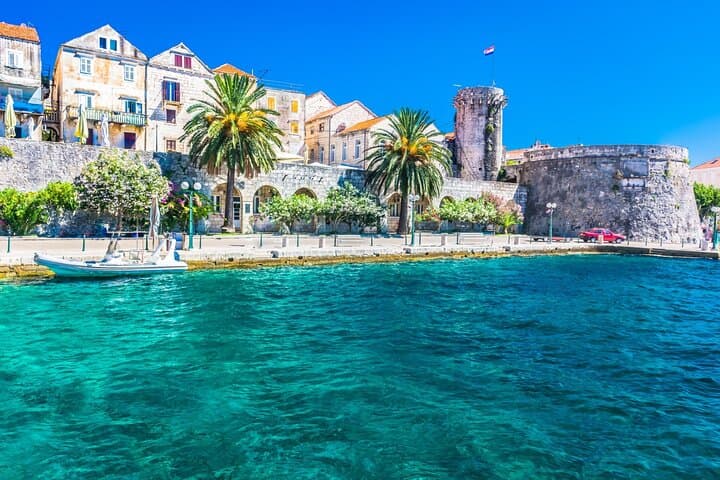
A morning drive peels away from Dubrovnik’s stone walls and the coastline widens into a scatter of islands. The road to Ston curves past salt pans and fortified walls that rise like a low, deliberate spine; further on, the peninsula narrows and the ferry slip at Orebić gives way to the short boat hop across clear Adriatic water to Korčula.
A morning drive peels away from Dubrovnik’s stone walls and the coastline widens into a scatter of islands. The road to Ston curves past salt pans and fortified walls that rise like a low, deliberate spine; further on, the peninsula narrows and the ferry slip at Orebić gives way to the short boat hop across clear Adriatic water to Korčula.
Korčula’s medieval streets are tight and axial, built for wind and community. Visitors trace the grid toward the cathedral and Bishop’s Palace, where Venetian Gothic details and local stone tell of centuries of seafaring trade and island agriculture. The island rests on limestone bedrock; terraces and vineyards on Pelješac take advantage of thinning soils and afternoon sun, producing the Plavac Mali grape—robust, tannic, and very much of the Dalmatian coast.
Culturally, this route stitches together small-town fishermen’s piers, fortified saltworks in Ston, and family-run cellars on Pelješac where tastings are informal and instructive. Expect cobbled lanes, steep steps, and short swims if time allows. The day balances sightseeing with open-air time: a 60–90 minute drive segments, 90–240 minutes on Korčula for walking and lunch, and a cellar visit for local varietals.
Practical guidance: wear sturdy shoes for uneven stone, bring sun protection and a light layer for sea breezes, and plan for brief boat transfers. Mobility is generally easy but requires navigating steps and ferry boarding. Bookings that include entrance fees and a guide streamline logistics; allow the fixed six-hour window for a relaxed pace.