THE ADVENTURE COLLECTIVE® · Independent discovery and booking for outdoor travel

Begin in pine forest and finish above the clouds: the Rongai route offers a quieter, gradual ascent of Kilimanjaro with reliable acclimatization and true wilderness days. This private 6-day trek from Moshi balances logistical support with tough summit night mileage.
Begin in pine forest and finish above the clouds: the Rongai route offers a quieter, gradual ascent of Kilimanjaro with reliable acclimatization and true wilderness days. This private 6-day trek from Moshi balances logistical support with tough summit night mileage.
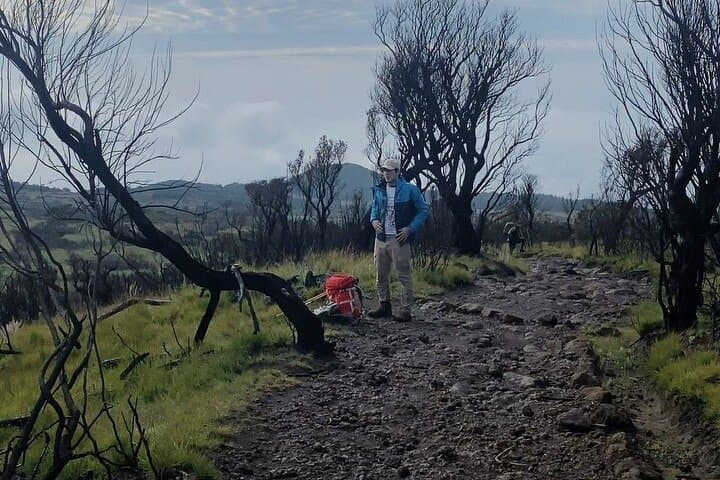
The morning air off Kilimanjaro tastes of cold iron and wet soil; pine trunks stand like old sentries as the Rongai trail eases out of cornfields and into montane forest. Climbers from Moshi step into a steady, deliberate rhythm—one foot, breath, encouraging word—while porters move like a practiced shadow ahead, pitching tents and boiling water long before the group finishes its day.
Verified experiences and guided adventures in the surrounding area.
Operated by Hillborn Organic Coffee · Moshi, Kilimanjaro Region
The morning air off Kilimanjaro tastes of cold iron and wet soil; pine trunks stand like old sentries as the Rongai trail eases out of cornfields and into montane forest. Climbers from Moshi step into a steady, deliberate rhythm—one foot, breath, encouraging word—while porters move like a practiced shadow ahead, pitching tents and boiling water long before the group finishes its day.
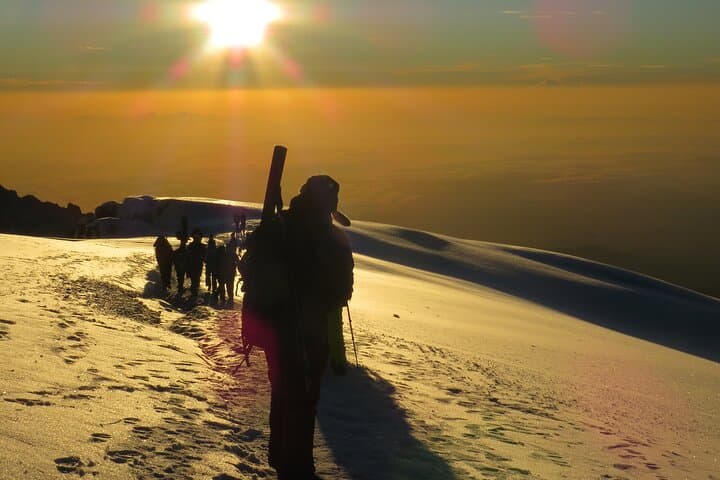
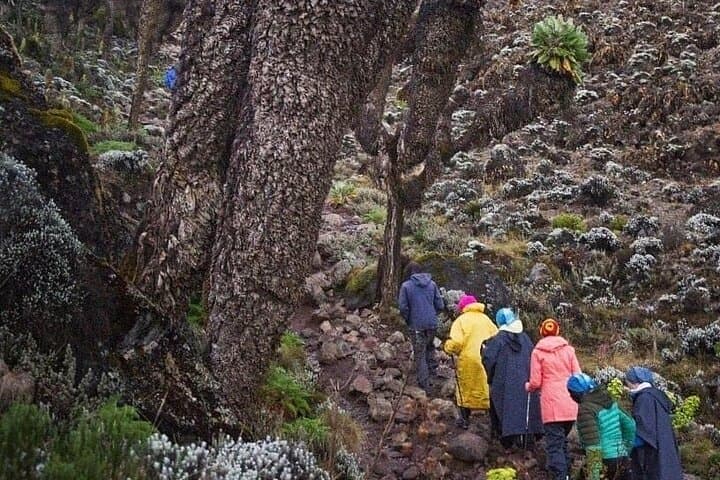
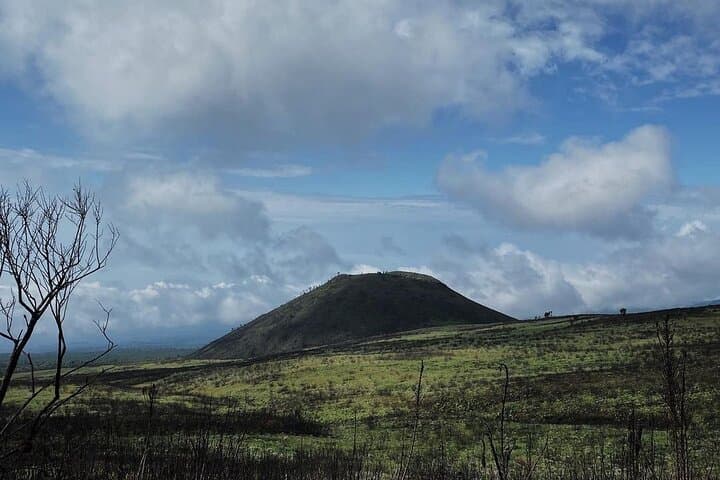
Rongai begins on Kilimanjaro’s northeastern flank, a quieter approach than the busier western paths. For three days the route threads true wilderness: moss-draped trees give way to moorland where giant lobelia and groundsel push skyward, then to the sterile “saddle” between Mawenzi and Kibo. The summit push leaves the shrubs behind; scree and wind sculpt every step toward Gillman’s Point and, if conditions allow, Uhuru Peak at 5,895 meters.
Geologically, Kilimanjaro is a stratovolcano built in layers—lava flows, ash and glacial scouring—that create the summit’s stark rim. Culturally, the mountain has been central to the Chagga people for centuries; its slopes supported farms and spiritual sites long before it drew international climbers. Today, Kilimanjaro is managed by Tanzania National Parks (TANAPA), and the mountain’s conservation is tied to local livelihoods through guiding and porter work.
The Rongai route is valued for gradual gradients and the way it conserves acclimatization. Typical itineraries follow a six-day pattern: Rongai Gate to First Caves (2,600m), onward to Kikelewa Cave (3,600m), Mawenzi Tarn (4,330m), then Kibo Hut in the saddle before a pre-dawn summit attempt and descent to Horombo Hut and Marangu Gate. Summit night is long and exacting—expect a 23:30 wake-up, tea, and a steady march across rock and occasional snow.
Practical edge: pack for wide temperature swings, respect pacing for altitude, and trust your guide’s judgment on turning around—summiting is a goal, but safety and acclimatization are first. Footwear should be broken-in boots with solid ankle support; poles help conserve knees on the long descent. Hydrate constantly at altitude and use layers: breathable base layers, an insulating midlayer, and a waterproof shell. For summit night, a reliable headlamp and spare batteries are as essential as the down jacket you’ll be glad to have when the wind pushes and the sky finally lightens.
Logistics are straightforward from Moshi: transfers to Rongai trailhead, TANAPA registration, and a crew that handles camp life. Porters and cooks make the route manageable, but remember to tip fairly—porter welfare is integral to sustainable climbing here. For those who approach with patience and respect, Rongai offers a climb that is both physically demanding and quietly rewarding.
challenging.
6 days.
Good aerobic fitness with endurance training for long days and altitude; regular hikers in strong shape will fare best.
Most itineraries are 6 days to allow for safer acclimatization: gate to summit and descent back to Marangu Gate.
No technical climbing skills are required for Rongai; crampons may be useful if there is significant summit snow.
Success depends on fitness, acclimatization, weather, and guide decisions—many reach the summit, but trained guides may recommend turning back for safety.
Temperatures can drop below –10°C to –20°C at higher elevations with wind chill; plan layers accordingly.
Yes—this private trip includes guides, porters, cook staff, and meals as stated in the itinerary inclusions.
TANAPA issues climb permits (handled during registration); check recommended vaccinations for Tanzania with your healthcare provider before travel.
Kilimanjaro has long been central to the Chagga people’s culture and agriculture; European climbing began in the late 19th century and the mountain is now a symbol of Tanzania’s natural heritage.
TANAPA enforces permits and waste rules; support local guides and tip porters fairly to sustain community-based conservation and reduce environmental impact.
Hillborn Organic Coffee operates guided outdoor trips and adventures with an emphasis on safety, stewardship, and memorable experiences.
The morning air off Kilimanjaro tastes of cold iron and wet soil; pine trunks stand like old sentries as the Rongai trail eases out of cornfields and into montane forest. Climbers from Moshi step into a steady, deliberate rhythm—one foot, breath, encouraging word—while porters move like a practiced shadow ahead, pitching tents and boiling water long before the group finishes its day.
The morning air off Kilimanjaro tastes of cold iron and wet soil; pine trunks stand like old sentries as the Rongai trail eases out of cornfields and into montane forest. Climbers from Moshi step into a steady, deliberate rhythm—one foot, breath, encouraging word—while porters move like a practiced shadow ahead, pitching tents and boiling water long before the group finishes its day.
Rongai begins on Kilimanjaro’s northeastern flank, a quieter approach than the busier western paths. For three days the route threads true wilderness: moss-draped trees give way to moorland where giant lobelia and groundsel push skyward, then to the sterile “saddle” between Mawenzi and Kibo. The summit push leaves the shrubs behind; scree and wind sculpt every step toward Gillman’s Point and, if conditions allow, Uhuru Peak at 5,895 meters.
Geologically, Kilimanjaro is a stratovolcano built in layers—lava flows, ash and glacial scouring—that create the summit’s stark rim. Culturally, the mountain has been central to the Chagga people for centuries; its slopes supported farms and spiritual sites long before it drew international climbers. Today, Kilimanjaro is managed by Tanzania National Parks (TANAPA), and the mountain’s conservation is tied to local livelihoods through guiding and porter work.
The Rongai route is valued for gradual gradients and the way it conserves acclimatization. Typical itineraries follow a six-day pattern: Rongai Gate to First Caves (2,600m), onward to Kikelewa Cave (3,600m), Mawenzi Tarn (4,330m), then Kibo Hut in the saddle before a pre-dawn summit attempt and descent to Horombo Hut and Marangu Gate. Summit night is long and exacting—expect a 23:30 wake-up, tea, and a steady march across rock and occasional snow.
Practical edge: pack for wide temperature swings, respect pacing for altitude, and trust your guide’s judgment on turning around—summiting is a goal, but safety and acclimatization are first. Footwear should be broken-in boots with solid ankle support; poles help conserve knees on the long descent. Hydrate constantly at altitude and use layers: breathable base layers, an insulating midlayer, and a waterproof shell. For summit night, a reliable headlamp and spare batteries are as essential as the down jacket you’ll be glad to have when the wind pushes and the sky finally lightens.
Logistics are straightforward from Moshi: transfers to Rongai trailhead, TANAPA registration, and a crew that handles camp life. Porters and cooks make the route manageable, but remember to tip fairly—porter welfare is integral to sustainable climbing here. For those who approach with patience and respect, Rongai offers a climb that is both physically demanding and quietly rewarding.