THE ADVENTURE COLLECTIVE® · Independent discovery and booking for outdoor travel

A full-day private excursion from Siem Reap visiting Kbal Spean’s carved riverbed, the delicate sandstone carvings of Banteay Srei and the wild corridors of Beng Mealea. Expect moderate hiking, knowledgeable local guides, and striking Angkorian stonework.
A full-day private excursion from Siem Reap visiting Kbal Spean’s carved riverbed, the delicate sandstone carvings of Banteay Srei and the wild corridors of Beng Mealea. Expect moderate hiking, knowledgeable local guides, and striking Angkorian stonework.
You leave Siem Reap before the heat climbs and the road narrows into emerald jungle. The morning air smells of damp leaf litter as you climb toward Kbal Spean, where the riverbed itself has been carved with lingas and deities—stone script under water that seems to push the current forward.
Verified experiences and guided adventures in the surrounding area.
Operated by Mak Adventure · Siem Reap, Siem Reap Province
You leave Siem Reap before the heat climbs and the road narrows into emerald jungle. The morning air smells of damp leaf litter as you climb toward Kbal Spean, where the riverbed itself has been carved with lingas and deities—stone script under water that seems to push the current forward.
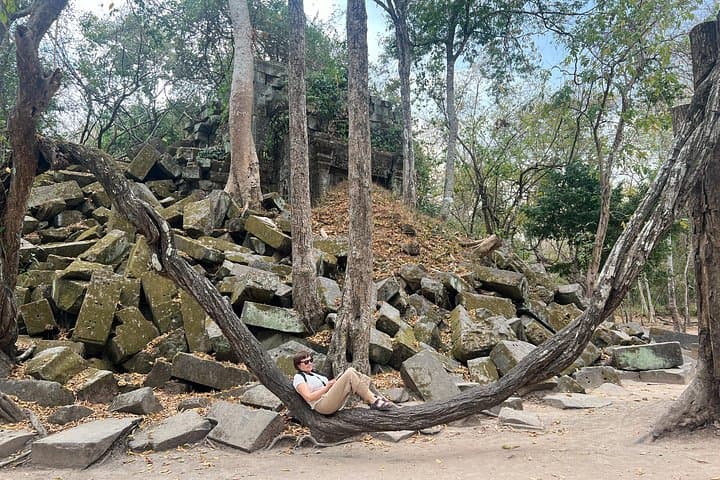
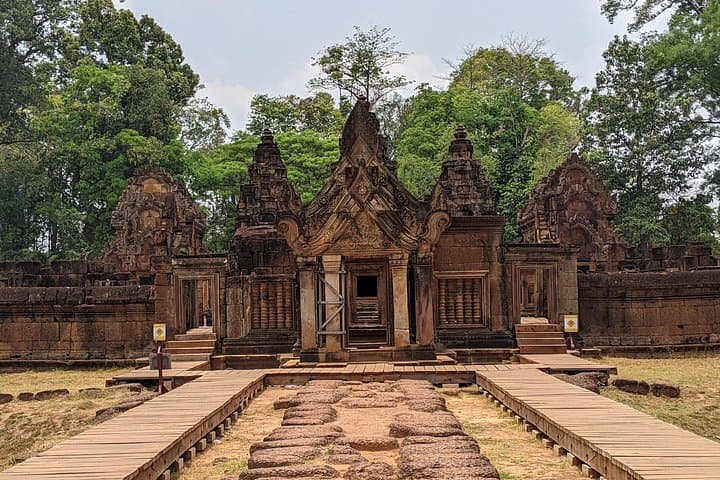
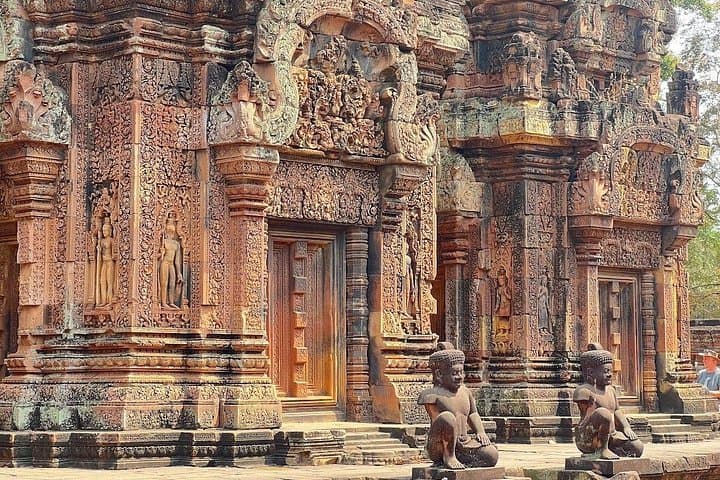
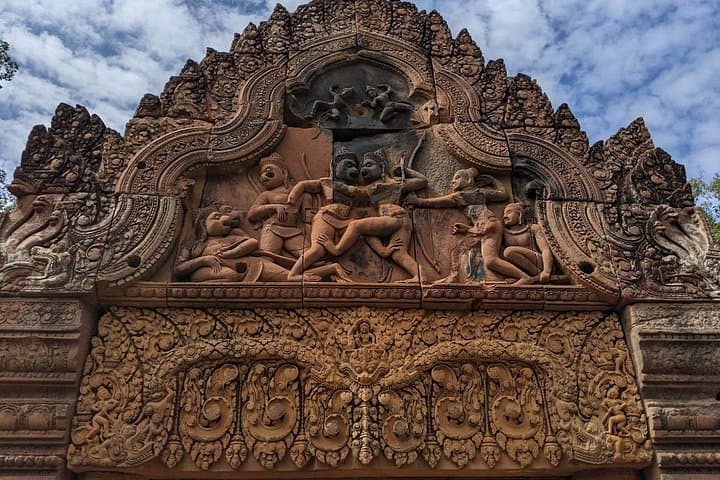
Banteay Srei follows: a compact temple of pink and yellow sandstone, its carvings small but razor-sharp, cut by hands in the 10th century and tended by local communities ever since. The complex’s scale contrasts with Beng Mealea, a sprawling ruin built on Angkor Wat’s floor plan where roots and collapsed galleries play tug-of-war with human-made walls. Together the three sites trace Angkorian craftsmanship, the geology of soft sandstone, and a culture that tied river, stone and kingship.
Expect light-to-moderate hiking: Kbal Spean’s river hike is 1–2 km with stairs and slick rocks; Beng Mealea’s exploration involves uneven rubble and low doorways. Guides explain the symbolism behind lingas, the Khmer Empire’s timeline and the practicalities of conservation—don’t touch carvings, stay on paths where marked.
Practical edge: bring sturdy shoes with grip, mosquito protection, sun layers and at least 2 liters of water. The operator includes private transport, a local English-speaking guide and bottled water; entrance tickets are purchased at the booth before starting. Start early to avoid midday heat and to let the jungle’s pace set yours—listen for gibbons and river stones daring you to look closer.
moderate.
7–8 hours.
Moderate fitness: comfortable walking for several hours, ability to manage uneven terrain and short stair sections.
No—entrance tickets (Angkor pass or individual site fees) are purchased at the ticket booth; the guide will escort you to buy them before departure.
Kbal Spean involves roughly 1–2 km of forest trail and riverbed scrambling with stair sections; allow about 60–90 minutes on-site depending on pace.
Children can enjoy Beng Mealea but watch for unstable rubble and low ceilings; supervised, steady-footed kids and parents are recommended.
Yes—expect forest birds, kingfishers near streams and macaques around temple ruins; sightings vary by season and time of day.
Banteay Srei dates from the 10th century and is famed for its intricate pink sandstone carvings; the lingas at Kbal Spean are part of Angkorian river cults tied to hydraulic ritual.
Soft sandstone and jungle growth make these sites fragile—stay on designated paths, avoid touching carvings and follow guide instructions to reduce wear and disturbance.
Mak Adventure operates guided outdoor trips and adventures with an emphasis on safety, stewardship, and memorable experiences.
You leave Siem Reap before the heat climbs and the road narrows into emerald jungle. The morning air smells of damp leaf litter as you climb toward Kbal Spean, where the riverbed itself has been carved with lingas and deities—stone script under water that seems to push the current forward.
You leave Siem Reap before the heat climbs and the road narrows into emerald jungle. The morning air smells of damp leaf litter as you climb toward Kbal Spean, where the riverbed itself has been carved with lingas and deities—stone script under water that seems to push the current forward.
Banteay Srei follows: a compact temple of pink and yellow sandstone, its carvings small but razor-sharp, cut by hands in the 10th century and tended by local communities ever since. The complex’s scale contrasts with Beng Mealea, a sprawling ruin built on Angkor Wat’s floor plan where roots and collapsed galleries play tug-of-war with human-made walls. Together the three sites trace Angkorian craftsmanship, the geology of soft sandstone, and a culture that tied river, stone and kingship.
Expect light-to-moderate hiking: Kbal Spean’s river hike is 1–2 km with stairs and slick rocks; Beng Mealea’s exploration involves uneven rubble and low doorways. Guides explain the symbolism behind lingas, the Khmer Empire’s timeline and the practicalities of conservation—don’t touch carvings, stay on paths where marked.
Practical edge: bring sturdy shoes with grip, mosquito protection, sun layers and at least 2 liters of water. The operator includes private transport, a local English-speaking guide and bottled water; entrance tickets are purchased at the booth before starting. Start early to avoid midday heat and to let the jungle’s pace set yours—listen for gibbons and river stones daring you to look closer.