THE ADVENTURE COLLECTIVE® · Independent discovery and booking for outdoor travel

Explore Karnak's vast columns and hidden sanctuaries on a private, customizable tour from Luxor. With transfer, optional tickets, and an Egyptologist guide you can move through history at your own pace — ideal for families and first-time visitors.
Explore Karnak's vast columns and hidden sanctuaries on a private, customizable tour from Luxor. With transfer, optional tickets, and an Egyptologist guide you can move through history at your own pace — ideal for families and first-time visitors.
You step from the shaded air of the van into a wide plaza where stone giants loom overhead — the columns of the Great Hypostyle Hall framing sky like a broken cathedral. Heat presses faintly, but the carved reliefs keep their cool; your guide's voice threads names and dates into the stone, turning hieroglyphs into people and power.
Verified experiences and guided adventures in the surrounding area.
Operated by Eyes of Egypt · Luxor, Luxor Governorate
You step from the shaded air of the van into a wide plaza where stone giants loom overhead — the columns of the Great Hypostyle Hall framing sky like a broken cathedral. Heat presses faintly, but the carved reliefs keep their cool; your guide's voice threads names and dates into the stone, turning hieroglyphs into people and power.
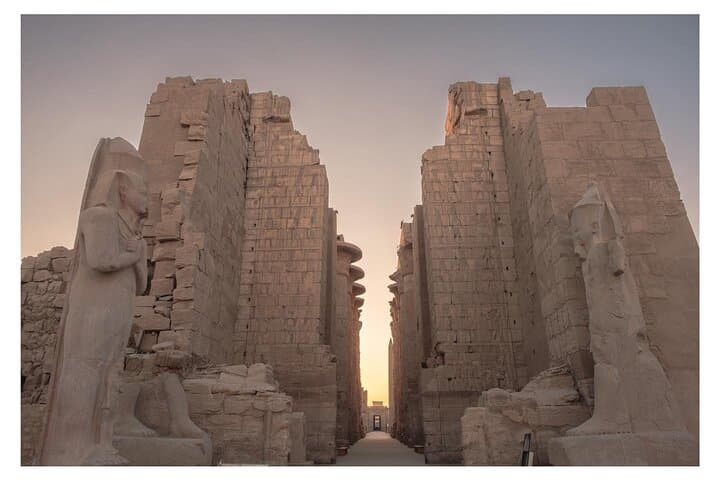
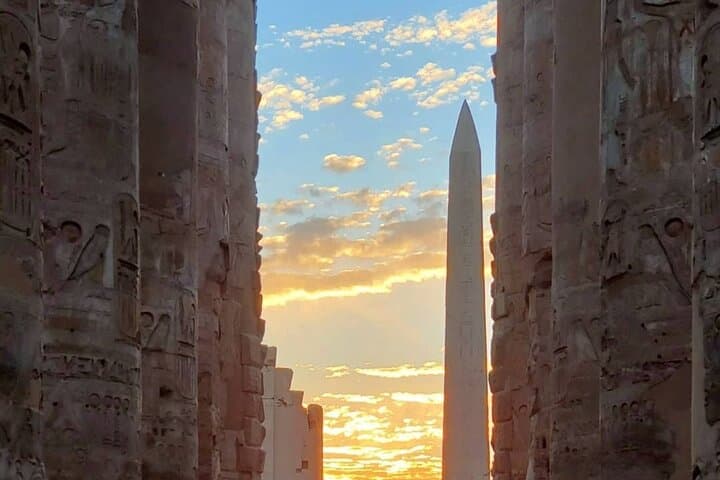
Karnak grew over 1,500 years. Kings added pylons, obelisks, and sanctuaries to honor Amun-Ra, layering styles from the Middle Kingdom to the Ptolemaic era. Geologically, much of the complex sits on Nile-deposited sediments and sandstone blocks, so weathering and rising groundwater are constant conservation challenges. Culturally, Karnak was the religious heart of Thebes (modern Luxor) — processions marched from the Avenue of Sphinxes to temples that still hold echoes of ritual.
On a private tour you can linger: read the worn cartouches on pillar bases, peer into quiet chapels devoted to lesser gods, and watch afternoon light pick out raised reliefs.
Practical guidance: allow 2–3 hours for the main circuit; choose a morning or late-afternoon slot to avoid peak sun. Wear closed-toe shoes — surfaces are uneven and sandy — and bring a refillable water bottle, sun protection, and modest clothing for respect and comfort. If you add tickets, your guide will streamline entry; wheelchair access exists for parts of the site but expect steps and loose terrain in older sections. Consider the optional Sound & Light show for evening context, but daytime visits reveal the site's scale best.
A private Egyptologist-led visit makes Karnak's vast timeline legible while letting you set the pace of discovery.
easy.
2–3 hours.
Suitable for most fitness levels; expect walking on uneven surfaces and short stair sections.
This private offering is flexible: you can book transfer-only, add a guide, or include entrance tickets; confirm at booking which option you selected.
Parts of the site are wheelchair accessible and the tour lists accessibility, but expect uneven surfaces and steps in older areas — contact the operator to plan routes.
Most private visits run 2–3 hours, which covers the Hypostyle Hall, obelisks, Sacred Lake, and the Open Air Museum at a comfortable pace.
The evening Sound & Light show is optional and not automatically included — add it when booking if you want a nighttime narrative experience.
Karnak evolved as a major cult center for Amun-Ra; successive pharaohs expanded the complex, producing a palimpsest of architectural styles across millennia.
Rising groundwater and tourism cause erosion on carved surfaces; guided visits and managed pathways help limit wear while supporting local conservation efforts.
Eyes of Egypt operates guided outdoor trips and adventures with an emphasis on safety, stewardship, and memorable experiences.
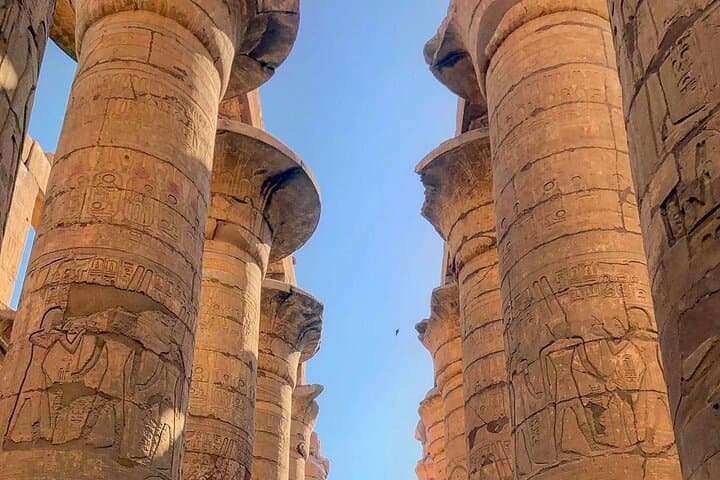
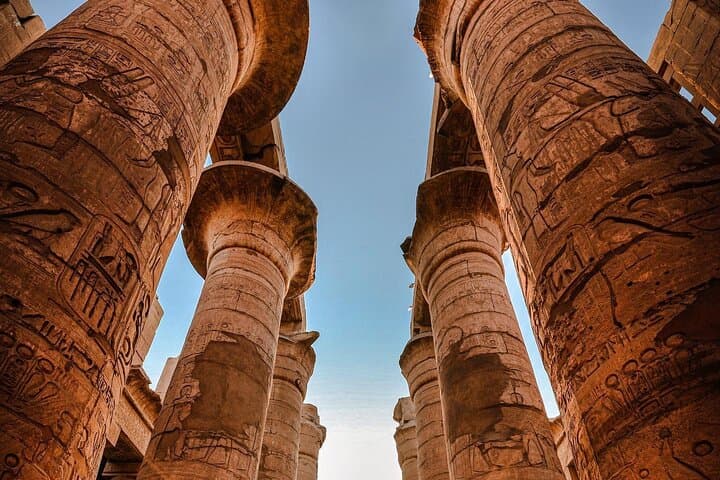
You step from the shaded air of the van into a wide plaza where stone giants loom overhead — the columns of the Great Hypostyle Hall framing sky like a broken cathedral. Heat presses faintly, but the carved reliefs keep their cool; your guide's voice threads names and dates into the stone, turning hieroglyphs into people and power.
You step from the shaded air of the van into a wide plaza where stone giants loom overhead — the columns of the Great Hypostyle Hall framing sky like a broken cathedral. Heat presses faintly, but the carved reliefs keep their cool; your guide's voice threads names and dates into the stone, turning hieroglyphs into people and power.
Karnak grew over 1,500 years. Kings added pylons, obelisks, and sanctuaries to honor Amun-Ra, layering styles from the Middle Kingdom to the Ptolemaic era. Geologically, much of the complex sits on Nile-deposited sediments and sandstone blocks, so weathering and rising groundwater are constant conservation challenges. Culturally, Karnak was the religious heart of Thebes (modern Luxor) — processions marched from the Avenue of Sphinxes to temples that still hold echoes of ritual.
On a private tour you can linger: read the worn cartouches on pillar bases, peer into quiet chapels devoted to lesser gods, and watch afternoon light pick out raised reliefs.
Practical guidance: allow 2–3 hours for the main circuit; choose a morning or late-afternoon slot to avoid peak sun. Wear closed-toe shoes — surfaces are uneven and sandy — and bring a refillable water bottle, sun protection, and modest clothing for respect and comfort. If you add tickets, your guide will streamline entry; wheelchair access exists for parts of the site but expect steps and loose terrain in older sections. Consider the optional Sound & Light show for evening context, but daytime visits reveal the site's scale best.
A private Egyptologist-led visit makes Karnak's vast timeline legible while letting you set the pace of discovery.