THE ADVENTURE COLLECTIVE® · Independent discovery and booking for outdoor travel

A private full-day transfer that pairs Luxor’s Karnak and Luxor Temples with the double sanctuary of Kom Ombo, ending with a drop-off in Aswan. Ideal for travelers who want focused temple visits with door-to-door convenience along the Nile Valley.
A private full-day transfer that pairs Luxor’s Karnak and Luxor Temples with the double sanctuary of Kom Ombo, ending with a drop-off in Aswan. Ideal for travelers who want focused temple visits with door-to-door convenience along the Nile Valley.
You step out of a cool car into a shaft of heat and history: rows of sandstone columns loom above, hieroglyphs carved into their flanks as the Nile valley stretches southward. The day begins in Luxor with the monumental Karnak complex—its Great Hypostyle Hall makes people small—and moves through the compact, human-scale Luxor Temple before a relaxed drive along palm-lined fields to Kom Ombo and onward to Aswan.
Verified experiences and guided adventures in the surrounding area.
Operated by Eyes of Egypt · Luxor, Luxor Governorate
You step out of a cool car into a shaft of heat and history: rows of sandstone columns loom above, hieroglyphs carved into their flanks as the Nile valley stretches southward. The day begins in Luxor with the monumental Karnak complex—its Great Hypostyle Hall makes people small—and moves through the compact, human-scale Luxor Temple before a relaxed drive along palm-lined fields to Kom Ombo and onward to Aswan.
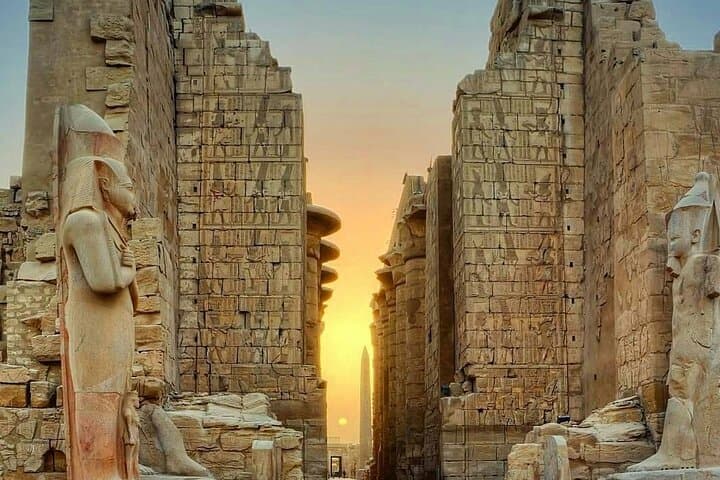
Karnak and Luxor trace Egypt’s New Kingdom faith and royal spectacle; Pharaohs added pylons, obelisks, and chapels over centuries. Geologically, the temples sit on alluvial flats deposited by the Nile, their sandstone blocks quarried and shifted into place by ancient logistics now echoed in modern roads. Kom Ombo is unusual: a mirrored temple honoring both Sobek, the crocodile god, and Horus, the falcon—an architectural double act topped by a small museum of crocodile mummies that speaks to local cult practice.
Culturally, the route crosses Upper Egypt’s agricultural fringe—villages, date palms, and seasonal felucca traffic—so expect a changing human landscape as much as the monuments themselves.
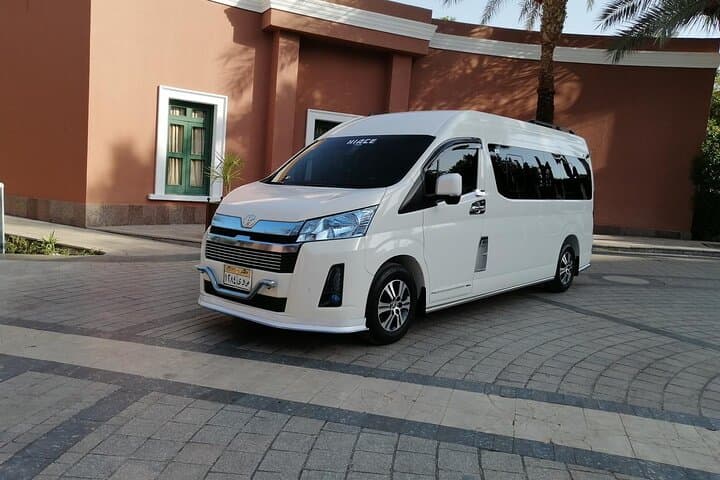
Practical guidance: this is an 8–9 hour private transfer with short, guided stops; entrance fees are typically not included, so carry cash and a copy of your passport. Temperatures can spike—plan early starts in summer, wear sun protection, and bring comfortable shoes for uneven stone steps. The private vehicle makes the day flexible: request extra time at any temple if you prefer photography or a slower pace.
easy.
8–9 hours.
Suitable for most travelers; requires short to moderate walking and negotiating temple steps and uneven surfaces.
Admission is typically not included in this private transfer—bring sufficient local currency to buy tickets onsite or confirm inclusion when booking.
Yes; the operator provides private pickup from hotels, cruise boats, and the airport—confirm your exact pickup location at booking.
Vehicles and many approaches are wheelchair accessible, but some temple areas have steps or uneven ground—check specific accessibility needs with the operator ahead of time.
Typical stops are 60–90 minutes at Karnak and 45–60 minutes at Kom Ombo and Luxor Temple, but the private format allows flexible timing on request.
Karnak grew across pharaonic centuries; successive rulers added pylons and chapels, turning it into one of the largest religious complexes of the ancient world.
High visitor numbers and river-side erosion are managed through controlled access and site conservation; travelers help by staying on marked paths and not touching reliefs.
Eyes of Egypt operates guided outdoor trips and adventures with an emphasis on safety, stewardship, and memorable experiences.
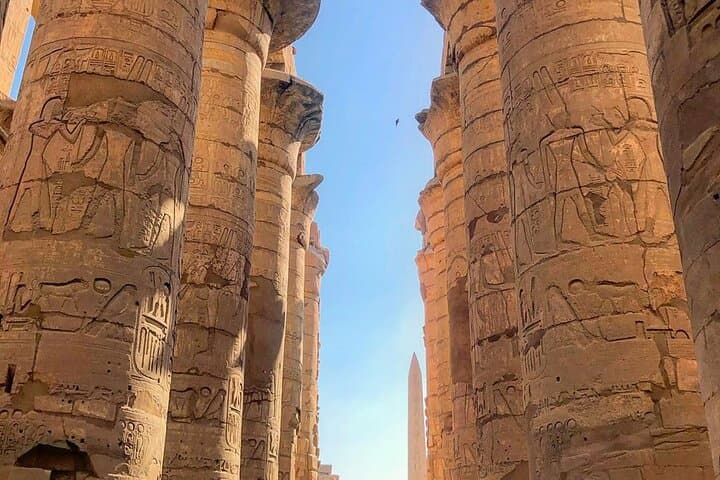
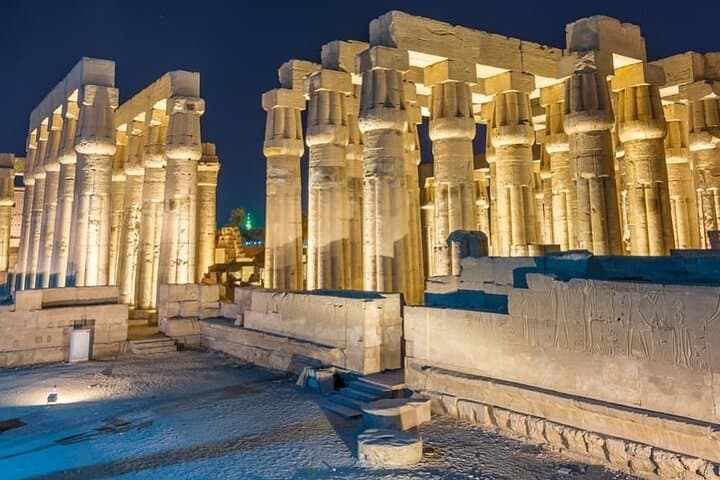
You step out of a cool car into a shaft of heat and history: rows of sandstone columns loom above, hieroglyphs carved into their flanks as the Nile valley stretches southward. The day begins in Luxor with the monumental Karnak complex—its Great Hypostyle Hall makes people small—and moves through the compact, human-scale Luxor Temple before a relaxed drive along palm-lined fields to Kom Ombo and onward to Aswan.
You step out of a cool car into a shaft of heat and history: rows of sandstone columns loom above, hieroglyphs carved into their flanks as the Nile valley stretches southward. The day begins in Luxor with the monumental Karnak complex—its Great Hypostyle Hall makes people small—and moves through the compact, human-scale Luxor Temple before a relaxed drive along palm-lined fields to Kom Ombo and onward to Aswan.
Karnak and Luxor trace Egypt’s New Kingdom faith and royal spectacle; Pharaohs added pylons, obelisks, and chapels over centuries. Geologically, the temples sit on alluvial flats deposited by the Nile, their sandstone blocks quarried and shifted into place by ancient logistics now echoed in modern roads. Kom Ombo is unusual: a mirrored temple honoring both Sobek, the crocodile god, and Horus, the falcon—an architectural double act topped by a small museum of crocodile mummies that speaks to local cult practice.
Culturally, the route crosses Upper Egypt’s agricultural fringe—villages, date palms, and seasonal felucca traffic—so expect a changing human landscape as much as the monuments themselves.
Practical guidance: this is an 8–9 hour private transfer with short, guided stops; entrance fees are typically not included, so carry cash and a copy of your passport. Temperatures can spike—plan early starts in summer, wear sun protection, and bring comfortable shoes for uneven stone steps. The private vehicle makes the day flexible: request extra time at any temple if you prefer photography or a slower pace.