THE ADVENTURE COLLECTIVE® · Independent discovery and booking for outdoor travel

Spend a full day tracing the Death Railway from Bangkok to Kanchanaburi: visit the JEATH Museum, the War Cemetery, ride the historic train and pause at the Bridge over the River Kwai. This private tour balances history with accessible, riverside scenery.
Spend a full day tracing the Death Railway from Bangkok to Kanchanaburi: visit the JEATH Museum, the War Cemetery, ride the historic train and pause at the Bridge over the River Kwai. This private tour balances history with accessible, riverside scenery.
Dawn from Bangkok thins into river mist as a private van pushes west toward the Kwae Noi. The road opens to low hills and the slow curve of the River Kwai, where concrete and rail meet jungle and river smoke.
Verified experiences and guided adventures in the surrounding area.
Operated by My Trip Maker · Kanchanaburi, Kanchanaburi Province
Dawn from Bangkok thins into river mist as a private van pushes west toward the Kwae Noi. The road opens to low hills and the slow curve of the River Kwai, where concrete and rail meet jungle and river smoke.
This full-day private tour threads together the plain facts of history and the scale of loss: the Burma Railway—nicknamed the Death Railway—was built in 1942–43 using forced labor and POWs, and the sites here hold that legacy in graves, photos and rusting rails. Geologically the valley is a shallow alluvial corridor cut by seasonal floods; the line clings to bluffs and tunnels where engineers forced a route through sandstone and laterite.
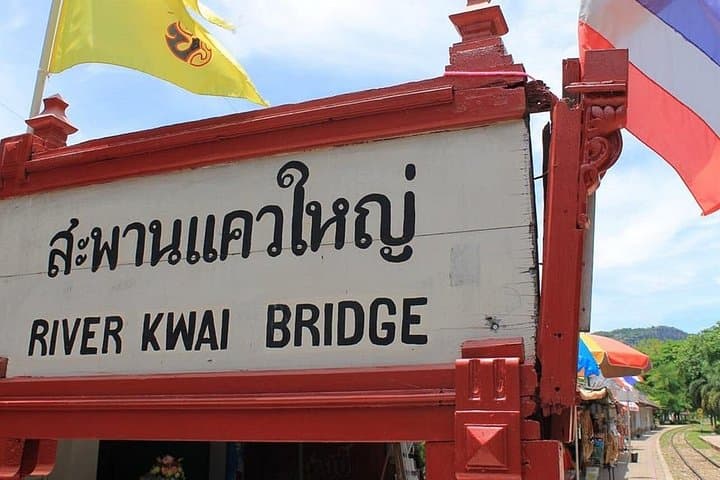
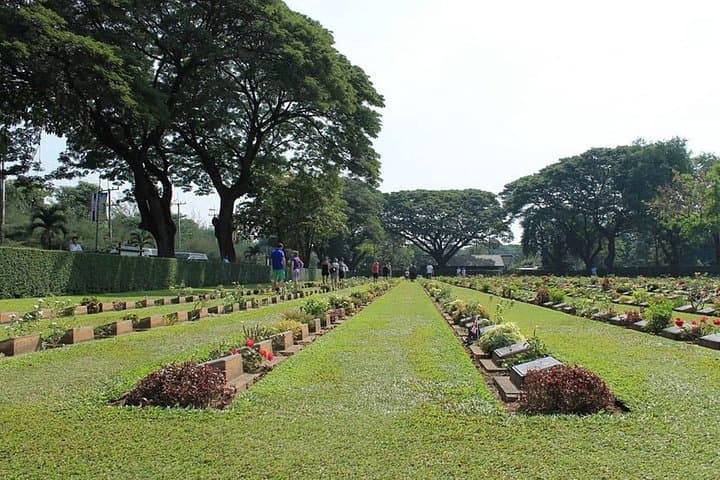
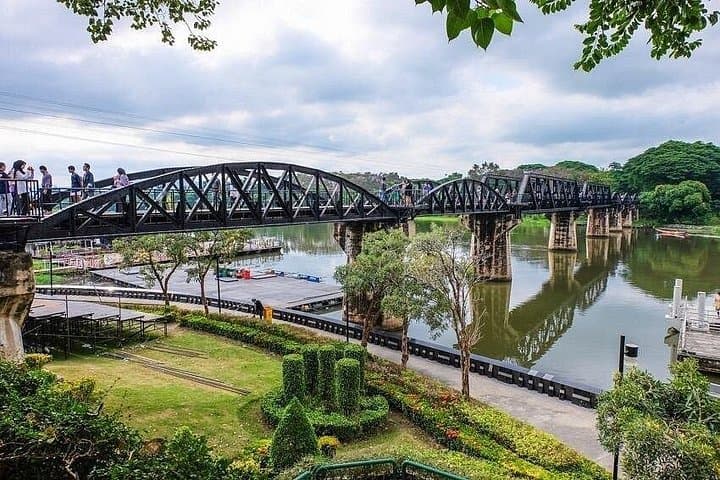
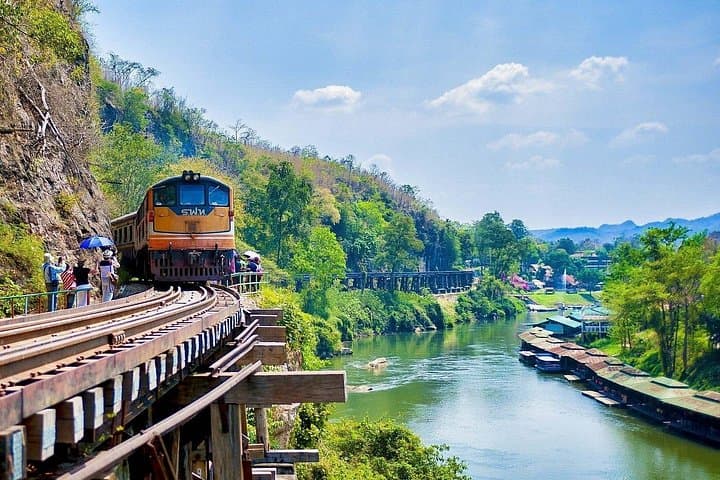
Visitors move from the quiet rows of the Kanchanaburi War Cemetery to the reconstructed POW camp at the JEATH Museum, then onto the iconic iron bridge where the river dares you to stand still and look back at history. A scenic local train ride follows the original route, skirting cliffs and the Tham Krasae cave where prisoners once rested.
Practical guidance: wear sturdy, closed shoes for uneven platforms and short boardwalks; dress respectfully for the cemetery and religious stops (shoulders and knees covered). Bring a refillable water bottle and sun protection—shade is patchy along the riverbanks. Expect a long but accessible day: minimal hiking, mostly walking and standing, with a chance to sit on the slow train.
Timing is everything—mornings are cooler and quieter; late afternoon light sharpens the bridge’s ironwork for photographs. Keep cash for small vendors and be prepared for emotional moments; these are living memorials, not just photo stops.
easy.
11–12 hours.
Suitable for most fitness levels; involves extended periods of walking, standing, and getting on/off trains and low platforms.
Yes—this private tour includes roundtrip transfers from Bangkok and entrance tickets as specified in the itinerary.
The tour runs about 11–12 hours with pickup from Bangkok between 06:30–07:00; you return around 19:00–20:00.
Yes—the scenic local train follows sections of the original Thailand–Burma Railway and offers river-side views; expect a slow, bumpy ride.
The tour is generally suitable for most ages, but it involves standing, stairs and uneven surfaces; travelers with serious mobility issues should check specifics with the operator.
The Thailand–Burma Railway was built in 1942–43 by forced labor and POWs under Japanese occupation; thousands died during its construction, and many are buried at Kanchanaburi War Cemetery.
Sites are maintained by local and international groups; visitors should avoid touching exhibits, stay on marked paths and support local vendors to help sustain preservation efforts.
My Trip Maker operates guided outdoor trips and adventures with an emphasis on safety, stewardship, and memorable experiences.
Dawn from Bangkok thins into river mist as a private van pushes west toward the Kwae Noi. The road opens to low hills and the slow curve of the River Kwai, where concrete and rail meet jungle and river smoke.
Dawn from Bangkok thins into river mist as a private van pushes west toward the Kwae Noi. The road opens to low hills and the slow curve of the River Kwai, where concrete and rail meet jungle and river smoke.
This full-day private tour threads together the plain facts of history and the scale of loss: the Burma Railway—nicknamed the Death Railway—was built in 1942–43 using forced labor and POWs, and the sites here hold that legacy in graves, photos and rusting rails. Geologically the valley is a shallow alluvial corridor cut by seasonal floods; the line clings to bluffs and tunnels where engineers forced a route through sandstone and laterite.
Visitors move from the quiet rows of the Kanchanaburi War Cemetery to the reconstructed POW camp at the JEATH Museum, then onto the iconic iron bridge where the river dares you to stand still and look back at history. A scenic local train ride follows the original route, skirting cliffs and the Tham Krasae cave where prisoners once rested.
Practical guidance: wear sturdy, closed shoes for uneven platforms and short boardwalks; dress respectfully for the cemetery and religious stops (shoulders and knees covered). Bring a refillable water bottle and sun protection—shade is patchy along the riverbanks. Expect a long but accessible day: minimal hiking, mostly walking and standing, with a chance to sit on the slow train.
Timing is everything—mornings are cooler and quieter; late afternoon light sharpens the bridge’s ironwork for photographs. Keep cash for small vendors and be prepared for emotional moments; these are living memorials, not just photo stops.