THE ADVENTURE COLLECTIVE® · Independent discovery and booking for outdoor travel

Glide through Kampong Phluk by wooden boat and see how life adapts to the Tonle Sap's dramatic seasonal pulse. This private, low-impact tour from Siem Reap gives cultural context and close-up views of a working floating village.
Glide through Kampong Phluk by wooden boat and see how life adapts to the Tonle Sap's dramatic seasonal pulse. This private, low-impact tour from Siem Reap gives cultural context and close-up views of a working floating village.
You push off from the muddy bank and the river takes over—slow, persuasive, daring you to watch the village wake. Wooden oars chisel quiet lines through brown water as stilt houses tilt on their piles, children wave from shaded balconies and nets hang like household flags. Morning light spills across floating gardens; in the afternoon the same water-bright surface mirrors a sky that looks ready to move.
Verified experiences and guided adventures in the surrounding area.
Operated by Angkor Focus Travel · Siem Reap, Siem Reap Province
You push off from the muddy bank and the river takes over—slow, persuasive, daring you to watch the village wake. Wooden oars chisel quiet lines through brown water as stilt houses tilt on their piles, children wave from shaded balconies and nets hang like household flags. Morning light spills across floating gardens; in the afternoon the same water-bright surface mirrors a sky that looks ready to move.
Kampong Phluk sits on the floodplain of the Tonle Sap, a lake-river system that swells many meters between dry and wet seasons. The village's raised homes and walkways are responses to that annual pulse; livelihoods are tied to fishing, freshwater prawn farming and seasonal trade. Geologically, the area is flat alluvium—silt carried from upstream—so pathways follow wooden planks, boats and the rhythm of the water rather than roads.
A Khmer guide points out local practices: floating vegetable racks, community wells on stilts and the social life that happens on the water. The tour emphasizes low-impact transport—wooden row boats that are quieter and shallower than motors—letting you watch birds and monitor lizards without disturbing the flow.
Practical guidance: arrive early for softer light and less heat, wear quick-dry clothing and insect repellent, and bring small bills for community purchases. Expect limited walking and many low, duck-under doorways when disembarking. Respect private spaces—these are working homes. With a four-hour private transfer and boat ride from Siem Reap, the trip is an efficient look at the Tonle Sap’s living landscape—hands-on, tactile, and quietly insistent that you move with the water, not against it.
easy.
3–4 hours.
Suitable for most fitness levels; minimal walking and short, low-stepping disembarkations from boats.
The full private tour lasts about 3–4 hours including hotel transfer and time on the water; the boat portion is typically 60–90 minutes depending on itinerary.
Yes—activity is low-impact with short, supervised boardings; however, there are low thresholds and no formal ramps, so assistance may be needed.
Dry season (November–April) offers easier access to sites and clearer conditions; wet season shows the dramatic flood levels and floating infrastructure but can limit some shore access.
Basic restroom facilities exist at village stops and there are small food stalls; plan accordingly if you need specific dietary options or facilities.
Kampong Phluk developed in direct response to the Tonle Sap’s annual flood pulse; generations have adapted housing and livelihoods around shifting water levels and seasonal fisheries.
Low-impact boating and respecting private property help reduce strain on waterways; avoid single-use plastics and follow guide instructions to support local stewardship.
Angkor Focus Travel operates guided outdoor trips and adventures with an emphasis on safety, stewardship, and memorable experiences.
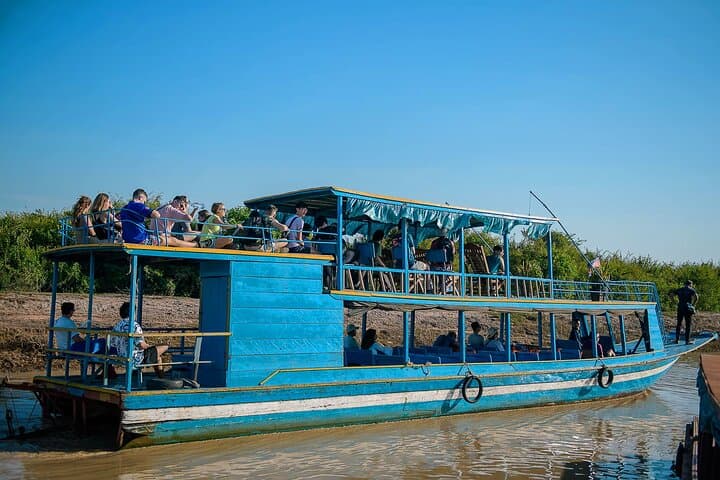
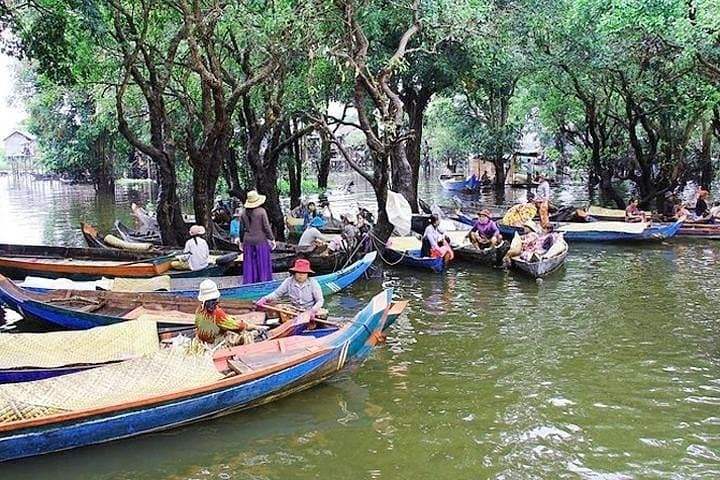
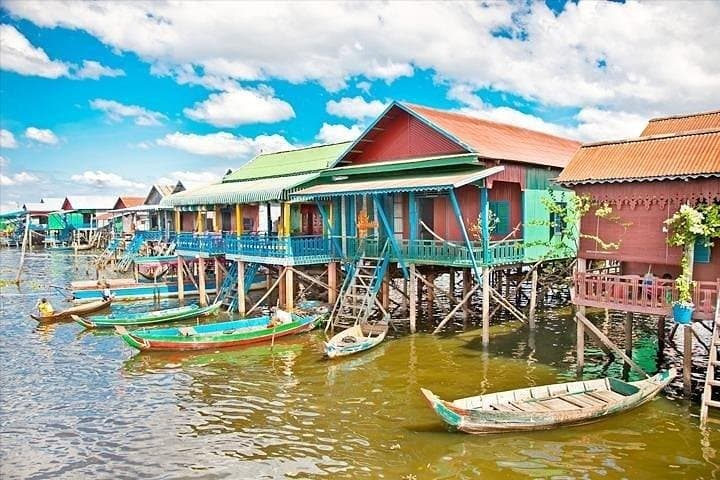
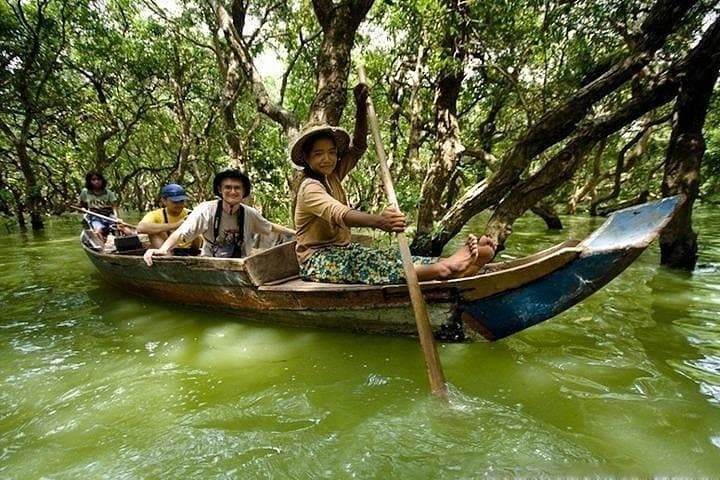
You push off from the muddy bank and the river takes over—slow, persuasive, daring you to watch the village wake. Wooden oars chisel quiet lines through brown water as stilt houses tilt on their piles, children wave from shaded balconies and nets hang like household flags. Morning light spills across floating gardens; in the afternoon the same water-bright surface mirrors a sky that looks ready to move.
You push off from the muddy bank and the river takes over—slow, persuasive, daring you to watch the village wake. Wooden oars chisel quiet lines through brown water as stilt houses tilt on their piles, children wave from shaded balconies and nets hang like household flags. Morning light spills across floating gardens; in the afternoon the same water-bright surface mirrors a sky that looks ready to move.
Kampong Phluk sits on the floodplain of the Tonle Sap, a lake-river system that swells many meters between dry and wet seasons. The village's raised homes and walkways are responses to that annual pulse; livelihoods are tied to fishing, freshwater prawn farming and seasonal trade. Geologically, the area is flat alluvium—silt carried from upstream—so pathways follow wooden planks, boats and the rhythm of the water rather than roads.
A Khmer guide points out local practices: floating vegetable racks, community wells on stilts and the social life that happens on the water. The tour emphasizes low-impact transport—wooden row boats that are quieter and shallower than motors—letting you watch birds and monitor lizards without disturbing the flow.
Practical guidance: arrive early for softer light and less heat, wear quick-dry clothing and insect repellent, and bring small bills for community purchases. Expect limited walking and many low, duck-under doorways when disembarking. Respect private spaces—these are working homes. With a four-hour private transfer and boat ride from Siem Reap, the trip is an efficient look at the Tonle Sap’s living landscape—hands-on, tactile, and quietly insistent that you move with the water, not against it.