THE ADVENTURE COLLECTIVE® · Independent discovery and booking for outdoor travel

Spend a private day in Kamikōchi’s vehicle‑free alpine valley, walking riverside trails, spotting serow and macaques, and photographing 3,000 m peaks. This guided summer escape pairs quiet routes with insider timing and a personalized pace.
Spend a private day in Kamikōchi’s vehicle‑free alpine valley, walking riverside trails, spotting serow and macaques, and photographing 3,000 m peaks. This guided summer escape pairs quiet routes with insider timing and a personalized pace.
A morning in Kamikōchi begins with the hush of pine and alder, the Azusa River daring you forward with cold, clear water. At 1,500 m the valley opens between 3,000 m peaks; the trail is mostly flat and framed by snow-scoured cliffs that still hold late-season snowfields. Walkers pass the iconic Kappa Bridge and small wooden boardwalks, while a guide points out a furtive Japanese serow on a distant talus slope or troops of macaques near the river.
Verified experiences and guided adventures in the surrounding area.
Operated by Omotenashi Travel Nagano · Matsumoto, Nagano
A morning in Kamikōchi begins with the hush of pine and alder, the Azusa River daring you forward with cold, clear water. At 1,500 m the valley opens between 3,000 m peaks; the trail is mostly flat and framed by snow-scoured cliffs that still hold late-season snowfields. Walkers pass the iconic Kappa Bridge and small wooden boardwalks, while a guide points out a furtive Japanese serow on a distant talus slope or troops of macaques near the river.
Kamikōchi sits in Chūbu-Sangaku National Park, founded in the 1930s as Japan formalized protection for its high Alps. Geology here is young, uplifted granite and metamorphic ridges carved by glaciers; ponds like Myōjin mirror the peaks. Local culture blends mountain worship and modest ryokan hospitality — expect soba and river trout prepared simply, rooted in alpine tradition.
Practically, this is an easy, low‑elevation‑gain day made private by vehicle restrictions that limit cars inside the reserve. A guide handles transfers to the park entrance and chooses quieter loops, timing light for wildlife and photographic windows. Prepare for sharp sun, sudden showers, and cool evenings despite summer warmth. Keep distance from animals, stay on boardwalks to protect wetlands, and bring cash for small eateries and souvenirs. With modest walking and generous views, Kamikōchi rewards patience: the valley doesn’t rush, and neither should you. A private guide turns that patience into a carefully paced day of nature, stories, and takeaway photos that catalog the subtle drama of the Northern Japan Alps.
easy.
6–10 hours.
Suitable for people who can walk 3–8 miles on mostly flat, groomed trails; minimal elevation gain.
Private cars are restricted; most visitors use park shuttles. This tour delivers you to the park entrance in a private vehicle and the guide arranges permitted transfers so you can explore comfortably.
Common sightings include Japanese macaques, river birds, and occasionally the endemic Japanese serow; sightings are never guaranteed and are more likely in quieter hours.
No; main routes are well‑graded riverside trails with minimal elevation change, suitable for most fitness levels, though some uneven boardwalks and roots exist.
Bring some cash; small mountain eateries and souvenir stalls often prefer cash, though larger establishments may accept cards.
Kamikōchi was incorporated into Chūbu-Sangaku National Park in the 1930s as Japan expanded formal protections for its alpine landscapes, and its valley has long cultural ties to mountain worship and seasonal pilgrimage.
Vehicle limits, strict trail rules, and protected wetlands help preserve fragile alpine habitats; visitors should stay on paths, pack out trash, and never feed wildlife.
Omotenashi Travel Nagano operates guided outdoor trips and adventures with an emphasis on safety, stewardship, and memorable experiences.
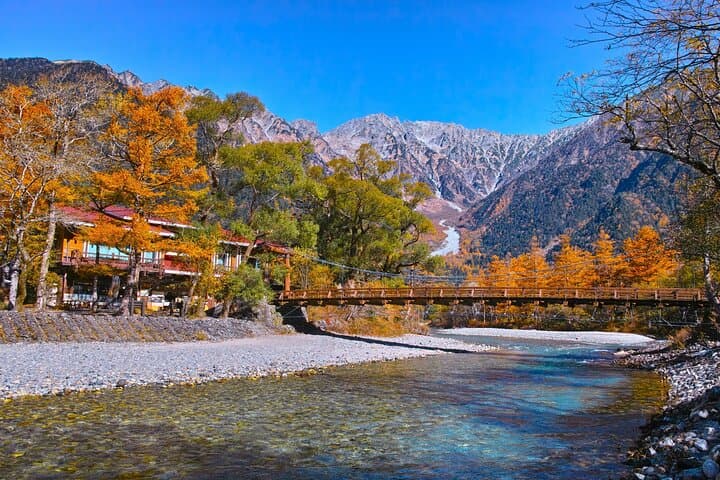
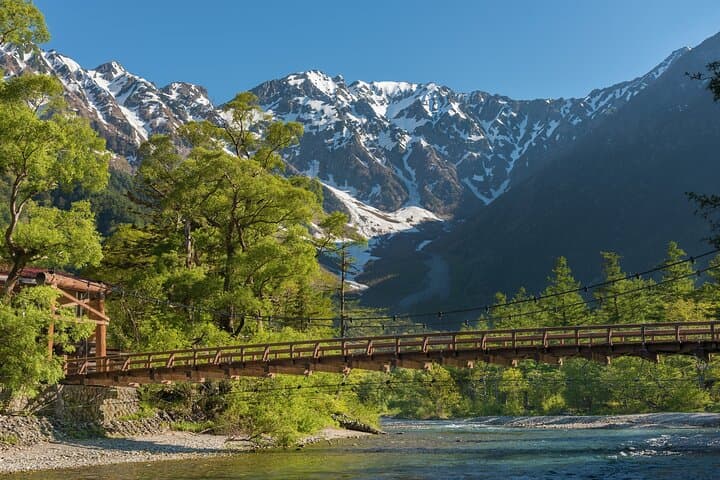
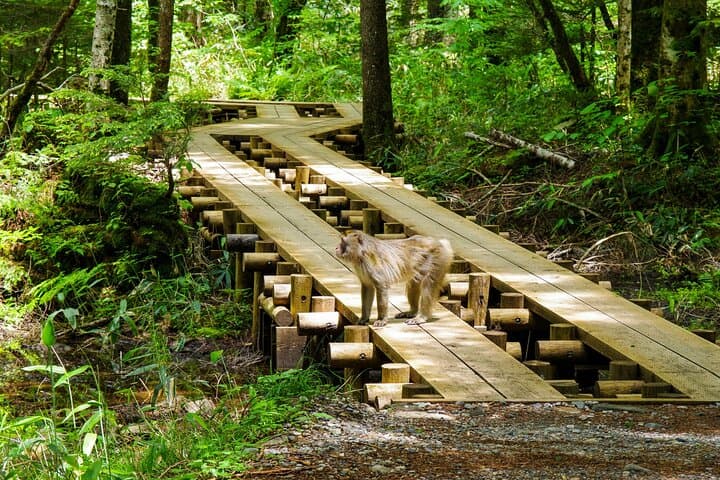
A morning in Kamikōchi begins with the hush of pine and alder, the Azusa River daring you forward with cold, clear water. At 1,500 m the valley opens between 3,000 m peaks; the trail is mostly flat and framed by snow-scoured cliffs that still hold late-season snowfields. Walkers pass the iconic Kappa Bridge and small wooden boardwalks, while a guide points out a furtive Japanese serow on a distant talus slope or troops of macaques near the river.
A morning in Kamikōchi begins with the hush of pine and alder, the Azusa River daring you forward with cold, clear water. At 1,500 m the valley opens between 3,000 m peaks; the trail is mostly flat and framed by snow-scoured cliffs that still hold late-season snowfields. Walkers pass the iconic Kappa Bridge and small wooden boardwalks, while a guide points out a furtive Japanese serow on a distant talus slope or troops of macaques near the river.
Kamikōchi sits in Chūbu-Sangaku National Park, founded in the 1930s as Japan formalized protection for its high Alps. Geology here is young, uplifted granite and metamorphic ridges carved by glaciers; ponds like Myōjin mirror the peaks. Local culture blends mountain worship and modest ryokan hospitality — expect soba and river trout prepared simply, rooted in alpine tradition.
Practically, this is an easy, low‑elevation‑gain day made private by vehicle restrictions that limit cars inside the reserve. A guide handles transfers to the park entrance and chooses quieter loops, timing light for wildlife and photographic windows. Prepare for sharp sun, sudden showers, and cool evenings despite summer warmth. Keep distance from animals, stay on boardwalks to protect wetlands, and bring cash for small eateries and souvenirs. With modest walking and generous views, Kamikōchi rewards patience: the valley doesn’t rush, and neither should you. A private guide turns that patience into a carefully paced day of nature, stories, and takeaway photos that catalog the subtle drama of the Northern Japan Alps.