THE ADVENTURE COLLECTIVE® · Independent discovery and booking for outdoor travel

Explore Mehrangarh Fort, an 18th-century stepwell and the bustling Sardar Market on a private 3–4 hour walking tour of Jodhpur. Expect stairs, narrow alleys, marble memorials and local stories brought to life by a dedicated guide.
Explore Mehrangarh Fort, an 18th-century stepwell and the bustling Sardar Market on a private 3–4 hour walking tour of Jodhpur. Expect stairs, narrow alleys, marble memorials and local stories brought to life by a dedicated guide.
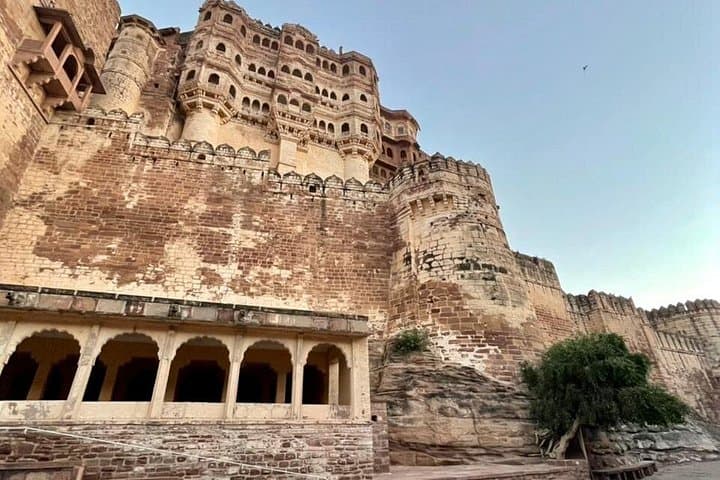
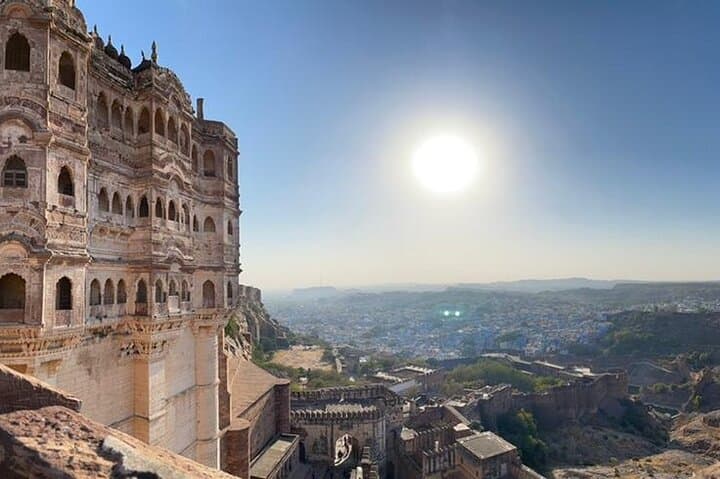
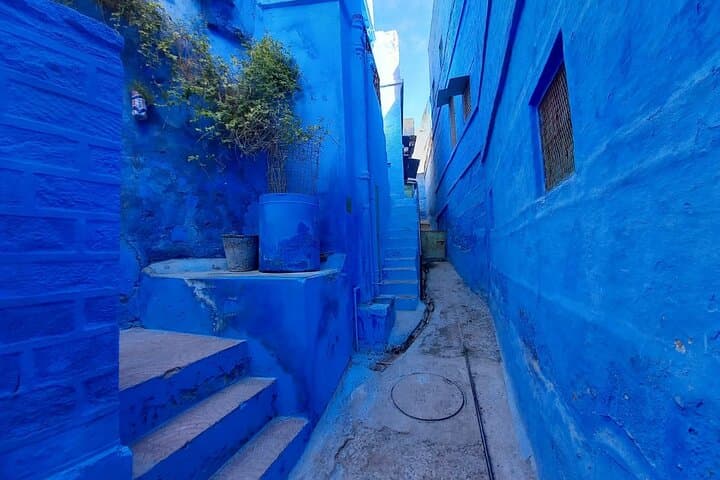
A dry wind pushes dust along the fort walls as you approach Mehrangarh’s gate, the city unfolding in bands of blue below. A private guide meets you at the base and leads up stone steps where courtyards open like rooms in a living museum; every doorway frames a slice of Rajasthan light.
Verified experiences and guided adventures in the surrounding area.
Operated by Walk in Blue City · Jodhpur, Rajasthan
A dry wind pushes dust along the fort walls as you approach Mehrangarh’s gate, the city unfolding in bands of blue below. A private guide meets you at the base and leads up stone steps where courtyards open like rooms in a living museum; every doorway frames a slice of Rajasthan light.
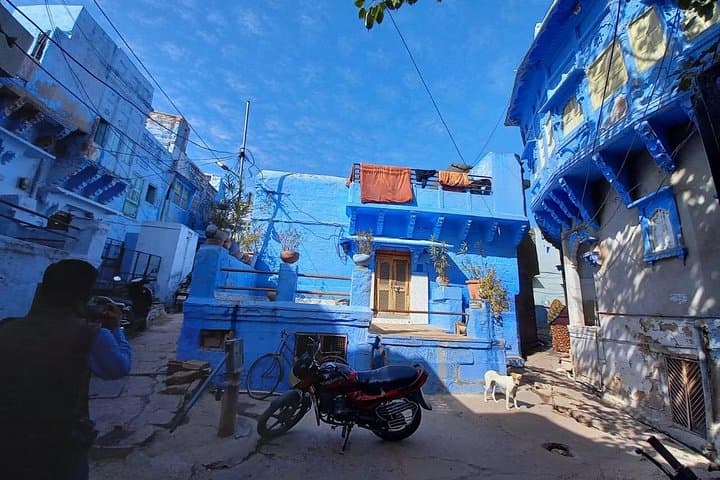
Mehrangarh, raised by Rao Jodha in 1459, anchors the route — its ramparts and museum collections map Marwar’s royal life. Nearby, an 18th-century stepwell (a main urban water source) reveals carved stone terraces where water once gathered and community life happened. The walk continues through Sardar Market and alleys where spices, textiles and household brass call out, then past Rao Jodha Park’s basalt outcrops to Jaswant Thada, the white-marble memorial built in 1894.
Geology is plain underfoot: compacted sandstone and basalt shaped the city’s architecture, while wells and tanks speak to centuries of water management. Culture is tactile — haggling in a market stall, the clack of metalwork, the quiet of a cenotaph.
Practical notes: this 3–4 hour private tour covers short climbs and many stairs; wear stable shoes and bring sun protection and at least 1 L of water. Admission to some sites is typically paid on arrival — guides can advise timing to avoid the hottest midday sun. Mobile tickets and a bottled water are usually provided by the operator; check language options if you need an Italian-speaking guide. Aim for early morning or late afternoon for cooler light and fewer crowds.
easy.
3–4 hours.
Light walking and stair-climbing; suitable for most fitness levels comfortable with short uphill sections.
Admissions are typically paid on arrival; the itinerary notes that some sites do not include admission in the tour price.
This is a private tour with tickets per booking covering the booked party; confirm maximum group size when booking.
The tour is rated ‘easy’ and suitable for most ages, but it involves stairs and uneven surfaces — those with mobility issues should check in advance.
Provider listings show an Italian-speaking option for some departures; ask the operator about language needs when booking.
Mehrangarh Fort was founded in 1459 by Rao Jodha; Jaswant Thada was erected in 1894 as a royal memorial, and stepwells served as vital water-harvesting systems for the city.
Mehrangarh Museum Trust runs preservation and community programs; visitors can support conservation by staying on paths, avoiding graffiti and minimizing single-use plastics.
Walk in Blue City operates guided outdoor trips and adventures with an emphasis on safety, stewardship, and memorable experiences.
A dry wind pushes dust along the fort walls as you approach Mehrangarh’s gate, the city unfolding in bands of blue below. A private guide meets you at the base and leads up stone steps where courtyards open like rooms in a living museum; every doorway frames a slice of Rajasthan light.
A dry wind pushes dust along the fort walls as you approach Mehrangarh’s gate, the city unfolding in bands of blue below. A private guide meets you at the base and leads up stone steps where courtyards open like rooms in a living museum; every doorway frames a slice of Rajasthan light.
Mehrangarh, raised by Rao Jodha in 1459, anchors the route — its ramparts and museum collections map Marwar’s royal life. Nearby, an 18th-century stepwell (a main urban water source) reveals carved stone terraces where water once gathered and community life happened. The walk continues through Sardar Market and alleys where spices, textiles and household brass call out, then past Rao Jodha Park’s basalt outcrops to Jaswant Thada, the white-marble memorial built in 1894.
Geology is plain underfoot: compacted sandstone and basalt shaped the city’s architecture, while wells and tanks speak to centuries of water management. Culture is tactile — haggling in a market stall, the clack of metalwork, the quiet of a cenotaph.
Practical notes: this 3–4 hour private tour covers short climbs and many stairs; wear stable shoes and bring sun protection and at least 1 L of water. Admission to some sites is typically paid on arrival — guides can advise timing to avoid the hottest midday sun. Mobile tickets and a bottled water are usually provided by the operator; check language options if you need an Italian-speaking guide. Aim for early morning or late afternoon for cooler light and fewer crowds.