THE ADVENTURE COLLECTIVE® · Independent discovery and booking for outdoor travel

A two-day private tour that threads through Jaipur’s royal palaces, hilltop forts and lively bazaars. Expect guided insight, short walks between iconic monuments, and practical tips for timing, attire and local shopping.
A two-day private tour that threads through Jaipur’s royal palaces, hilltop forts and lively bazaars. Expect guided insight, short walks between iconic monuments, and practical tips for timing, attire and local shopping.
You arrive into Jaipur and the city opens like a map of carved stone and color — sandstone facades catching morning light, the Aravalli hills holding watch on the skyline. The tour moves at a measured pace: palace courtyards, a colossal sundial, a stepwell’s geometry, and hilltop forts with wind that seems to carry old courtly conversations.
Verified experiences and guided adventures in the surrounding area.
Operated by Rajasthan Car Hire · Jaipur, Rajasthan
You arrive into Jaipur and the city opens like a map of carved stone and color — sandstone facades catching morning light, the Aravalli hills holding watch on the skyline. The tour moves at a measured pace: palace courtyards, a colossal sundial, a stepwell’s geometry, and hilltop forts with wind that seems to carry old courtly conversations.
Jaipur was planned in 1727 by Maharaja Sawai Jai Singh II; its streets and monuments reflect Rajput and Mughal influences, plus the scientific curiosity of Jantar Mantar’s instruments. Geologically, the surrounding Aravalli Range is among the oldest fold mountains on Earth, its ochre flanks framing forts like Jaigarh and Nahargarh. Culturally, bazaars such as Bapu Bazaar pulse with textile dye, block prints and the rhythm of bargaining; temples like Galtaji mix ritual, rock pools and resident monkeys.
Practical guidance is straightforward: this private tour is vehicle-supported with multiple short walks — expect paved lanes, palace staircases and uneven stone steps at forts. Carry cash for small purchases and tipping; bring sunscreen and a hat for exposed ramps and courtyards. Mornings are best for photography and cooler temperatures; late afternoons offer golden light from Nahargarh’s ramparts. Accessibility is generally good, but some sites have steps and elevated viewpoints that require mobility.
A guided, private pace gives time to ask questions about local crafts, astronomy and palace life while minimizing crowd timing. Plan for two full days to cover the itinerary comfortably and leave space for a market stroll or a quiet cup of chai by Jal Mahal’s lakeshore.
easy.
2 days (approx. 8–9 hours per day).
Light to moderate walking; comfortable for most travelers but expect uneven steps and short climbs.
Most admissions are not included in the tour price; expect to pay on-site for entry to certain palaces, forts and observatories.
Yes — the tour includes hotel/airport/railway station pickup and drop-off with an air-conditioned vehicle.
The tour and transport are wheelchair accessible, but some historic sites have steps or uneven surfaces; check with the operator about specific site access.
Each day includes short, guided walks around monuments and bazaars; plan on several hours on foot with frequent vehicle transfers between sites.
Jaipur was founded in 1727 by Maharaja Sawai Jai Singh II as a planned capital blending Rajput and Mughal design; Jantar Mantar reflects the city’s early scientific ambitions.
Man Sagar Lake (Jal Mahal) has undergone restoration and conservation efforts to manage siltation and urban runoff; visitors are encouraged to minimize litter and respect protected areas.
Rajasthan Car Hire operates guided outdoor trips and adventures with an emphasis on safety, stewardship, and memorable experiences.
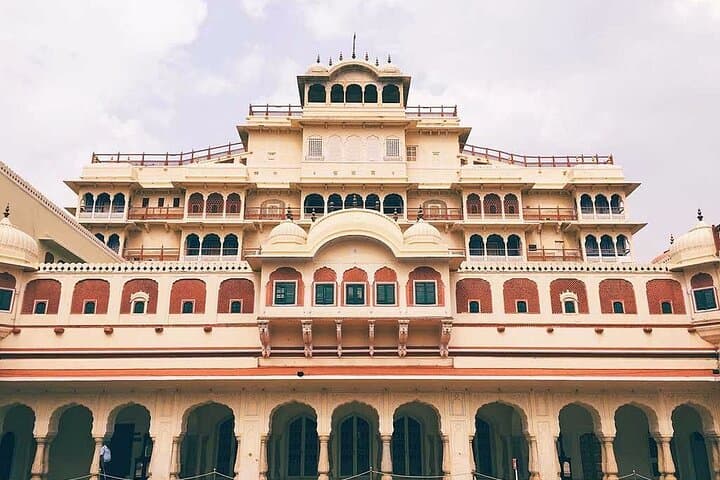

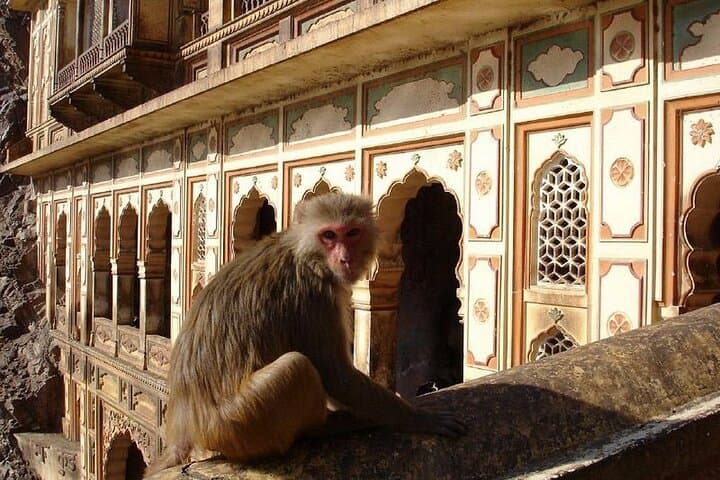

You arrive into Jaipur and the city opens like a map of carved stone and color — sandstone facades catching morning light, the Aravalli hills holding watch on the skyline. The tour moves at a measured pace: palace courtyards, a colossal sundial, a stepwell’s geometry, and hilltop forts with wind that seems to carry old courtly conversations.
You arrive into Jaipur and the city opens like a map of carved stone and color — sandstone facades catching morning light, the Aravalli hills holding watch on the skyline. The tour moves at a measured pace: palace courtyards, a colossal sundial, a stepwell’s geometry, and hilltop forts with wind that seems to carry old courtly conversations.
Jaipur was planned in 1727 by Maharaja Sawai Jai Singh II; its streets and monuments reflect Rajput and Mughal influences, plus the scientific curiosity of Jantar Mantar’s instruments. Geologically, the surrounding Aravalli Range is among the oldest fold mountains on Earth, its ochre flanks framing forts like Jaigarh and Nahargarh. Culturally, bazaars such as Bapu Bazaar pulse with textile dye, block prints and the rhythm of bargaining; temples like Galtaji mix ritual, rock pools and resident monkeys.
Practical guidance is straightforward: this private tour is vehicle-supported with multiple short walks — expect paved lanes, palace staircases and uneven stone steps at forts. Carry cash for small purchases and tipping; bring sunscreen and a hat for exposed ramps and courtyards. Mornings are best for photography and cooler temperatures; late afternoons offer golden light from Nahargarh’s ramparts. Accessibility is generally good, but some sites have steps and elevated viewpoints that require mobility.
A guided, private pace gives time to ask questions about local crafts, astronomy and palace life while minimizing crowd timing. Plan for two full days to cover the itinerary comfortably and leave space for a market stroll or a quiet cup of chai by Jal Mahal’s lakeshore.