THE ADVENTURE COLLECTIVE® · Independent discovery and booking for outdoor travel

Experience the Icelandic horse on a private 50‑minute ride tailored to your ability. Set just outside Reykjavík, rides traverse lava fields, green slopes and compact riding paths with helmets and weather gear provided.
Experience the Icelandic horse on a private 50‑minute ride tailored to your ability. Set just outside Reykjavík, rides traverse lava fields, green slopes and compact riding paths with helmets and weather gear provided.
A cold wind from the nearby lava fields pushes at your jacket as the horse lifts into a steady, sure pace. The animal’s coat gleams; its tölt — a smooth, four-beat gait unique to Icelandic horses — carries you past black rock and sudden green slopes with Reykjavík’s skyline shrinking behind you.
Verified experiences and guided adventures in the surrounding area.
Operated by Ishestar · Reykjavík, Capital Region
A cold wind from the nearby lava fields pushes at your jacket as the horse lifts into a steady, sure pace. The animal’s coat gleams; its tölt — a smooth, four-beat gait unique to Icelandic horses — carries you past black rock and sudden green slopes with Reykjavík’s skyline shrinking behind you.
These horses are descendants of animals brought by Norse settlers in the 9th century and protected by law from outside bloodlines since the 10th century, so riders today meet animals with a long cultural lineage. Geology dominates the view: recently cooled lava flows, basalt outcrops and patches of moss that seem to stitch the rough ground together. Guides point out subtle signs of geothermal activity and explain how past eruptions shaped the trails you follow.
Culturally, horses remain woven into local life and literature; many farms still host small studs and riders who remember traditional tack and tactics. On this private, 50-minute tour just outside Reykjavík, trained guides match horses to riders — from calm mounts for nervous beginners and children to spirited rides for experienced equestrians — and provide helmets, rubber boots and weather gear.
Practical notes: arrive 30 minutes early for fitting and safety briefing; weight limit is 110 kg (240 lbs). Trails are mostly flat to rolling with compact dirt and some rocky lava sections — good footwear and layered, waterproof clothing matter. Rides run year-round but change character by season: spring’s thaw, summer’s long light, autumn’s wind and winter’s stark contrasts. Follow guide instructions, carry a small daypack for layers and camera, and expect hands-on, personalized horsemanship rather than a large group pace.
easy.
50 minutes.
Suitable for riders of most fitness levels; you should be able to mount/dismount unaided and maintain basic balance for the duration.
No—rides are tailored to skill level; beginners get calm horses and a slower pace while experienced riders can request a livelier mount.
The maximum rider weight is 110 kg (240 lbs); riders must be able to mount/dismount independently.
Yes—riding helmets, rubber boots and rain/warm overalls are included in the tour price.
The operator may cancel for severe weather; full refunds are available if cancelled at least 24 hours before departure and in unsafe conditions.
Icelandic horses descend from Norse imports around the 9th century and have been bred in isolation by law since the 10th century, preserving unique gaits like the tölt.
Operators emphasize leave-no-trace across fragile moss and lava fields; stick to established riding paths to avoid damaging slow-growing vegetation.
Ishestar operates guided outdoor trips and adventures with an emphasis on safety, stewardship, and memorable experiences.
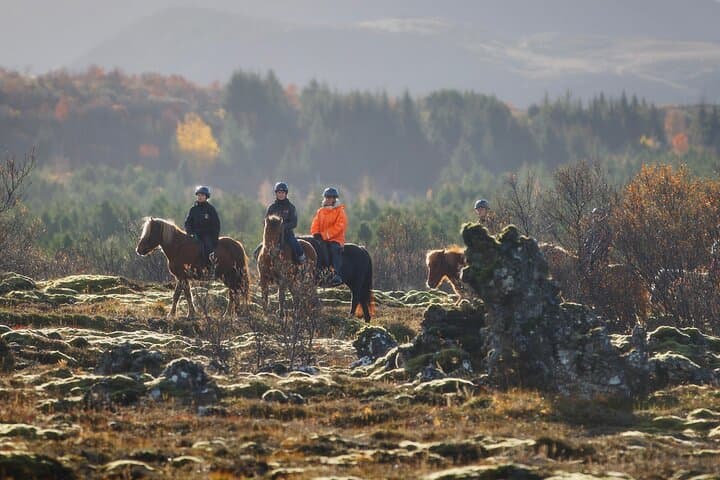
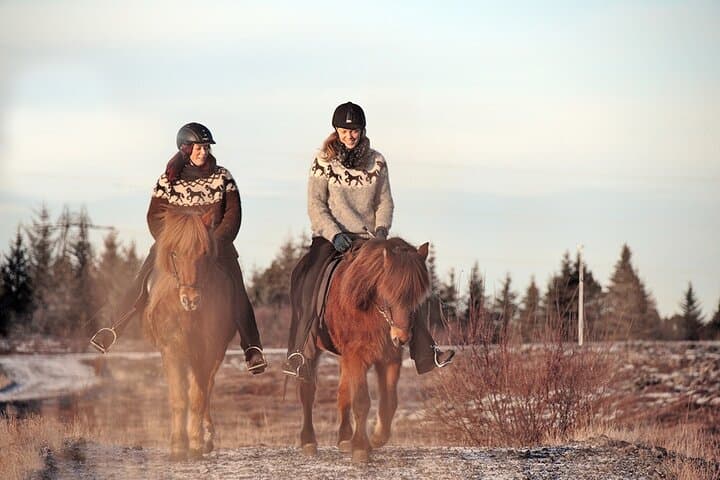
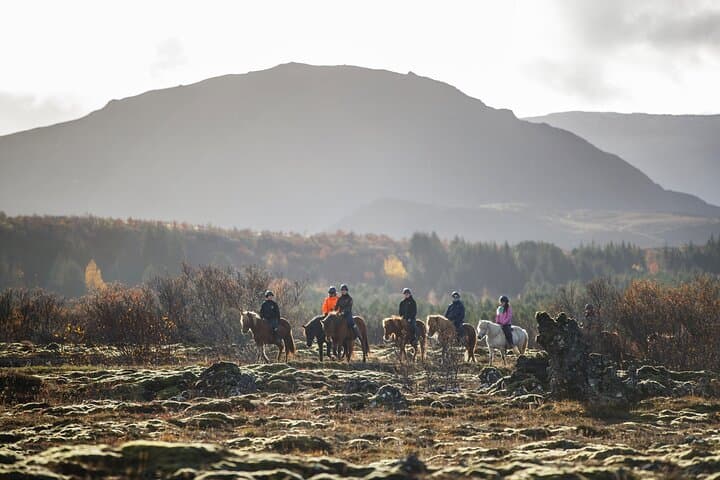
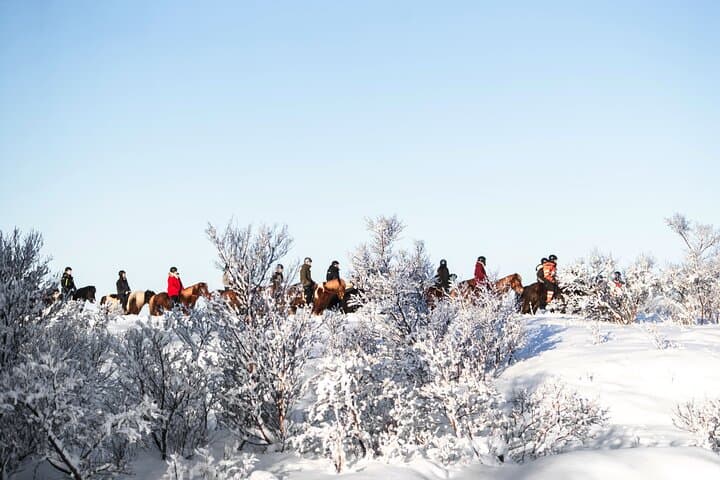
A cold wind from the nearby lava fields pushes at your jacket as the horse lifts into a steady, sure pace. The animal’s coat gleams; its tölt — a smooth, four-beat gait unique to Icelandic horses — carries you past black rock and sudden green slopes with Reykjavík’s skyline shrinking behind you.
A cold wind from the nearby lava fields pushes at your jacket as the horse lifts into a steady, sure pace. The animal’s coat gleams; its tölt — a smooth, four-beat gait unique to Icelandic horses — carries you past black rock and sudden green slopes with Reykjavík’s skyline shrinking behind you.
These horses are descendants of animals brought by Norse settlers in the 9th century and protected by law from outside bloodlines since the 10th century, so riders today meet animals with a long cultural lineage. Geology dominates the view: recently cooled lava flows, basalt outcrops and patches of moss that seem to stitch the rough ground together. Guides point out subtle signs of geothermal activity and explain how past eruptions shaped the trails you follow.
Culturally, horses remain woven into local life and literature; many farms still host small studs and riders who remember traditional tack and tactics. On this private, 50-minute tour just outside Reykjavík, trained guides match horses to riders — from calm mounts for nervous beginners and children to spirited rides for experienced equestrians — and provide helmets, rubber boots and weather gear.
Practical notes: arrive 30 minutes early for fitting and safety briefing; weight limit is 110 kg (240 lbs). Trails are mostly flat to rolling with compact dirt and some rocky lava sections — good footwear and layered, waterproof clothing matter. Rides run year-round but change character by season: spring’s thaw, summer’s long light, autumn’s wind and winter’s stark contrasts. Follow guide instructions, carry a small daypack for layers and camera, and expect hands-on, personalized horsemanship rather than a large group pace.