THE ADVENTURE COLLECTIVE® · Independent discovery and booking for outdoor travel

Ride an authentic Icelandic horse from a small farm minutes from Reykjavík to the shores of Lake Hafravatn. This private, guided loop suits beginners and experienced riders who want calm gaits, volcanic scenery, and close-up time with hardy local horses.
Ride an authentic Icelandic horse from a small farm minutes from Reykjavík to the shores of Lake Hafravatn. This private, guided loop suits beginners and experienced riders who want calm gaits, volcanic scenery, and close-up time with hardy local horses.
You arrive at a small farm on the eastern edge of Reykjavík and the city’s noise falls away—replaced by the soft breaths of Icelandic horses and a wide northern sky. Guides fit helmets and check tack while the animals, compact and sure-footed, flick their manes. The trail slips through lava-scoured fields and low scrub toward Lake Hafravatn; the water calls like a quiet promise, and distant ridgelines of the Capital Region outline the horizon.
Verified experiences and guided adventures in the surrounding area.
Operated by Icelandic Riding · Reykjavík, Capital Region
You arrive at a small farm on the eastern edge of Reykjavík and the city’s noise falls away—replaced by the soft breaths of Icelandic horses and a wide northern sky. Guides fit helmets and check tack while the animals, compact and sure-footed, flick their manes. The trail slips through lava-scoured fields and low scrub toward Lake Hafravatn; the water calls like a quiet promise, and distant ridgelines of the Capital Region outline the horizon.
This ride sits where recent volcanic geology meets long-settled pastureland. The Icelandic horse itself is central to local culture: a breed brought by early Norse settlers and preserved here for centuries. Along the route you’ll pass pillow lavas, mossy outcrops, and drainage ditches carved by glacial melt—reminders that the landscape is young and active.
Expect an experience tuned for riders of varying skill: mounts are steady, guides adapt pace, and the loop focuses on steady gaits and lake views rather than technical riding. Practicalities matter—total visit time is roughly three hours including briefing; maximum rider weight is about 105 kg and minimum age is 12. Public bus 15 serves the area, and helmets are supplied.
Bring layered, waterproof outerwear, closed-toe shoes with a modest heel or short riding boot, and a small daypack for snacks and a camera. Hydrate before you mount and speak up if you’re unsure—guides tailor the ride to your comfort. The payoff is immediate: a slow, human-paced way to read Iceland’s geology and history under an open sky.
moderate.
2–3 hours riding time; ~3 hours total at stable.
Moderate fitness—able to mount/dismount independently and maintain balance at walking/trotting paces
No—guides adapt the pace to riders. Basic confidence mounting and following instructions is helpful; beginners are welcome.
Minimum age is 12; maximum rider weight is approximately 105 kg due to horse welfare and tack limits.
Public bus no. 15 reaches the area; operators also provide meeting instructions—confirm pickup details when booking.
Tours can operate in light rain with proper gear; full refunds require 24+ hour cancellation. Guides may cancel if riders’ safety or horses’ welfare is at risk.
Icelandic horses descend from early Norse stock brought during settlement; horseback travel has been a practical part of rural life here for centuries.
Respect pasture boundaries and avoid bringing unwashed riding gear into Iceland; horse welfare rules limit rider weight and group sizes to protect animals and fragile turf.
Icelandic Riding operates guided outdoor trips and adventures with an emphasis on safety, stewardship, and memorable experiences.
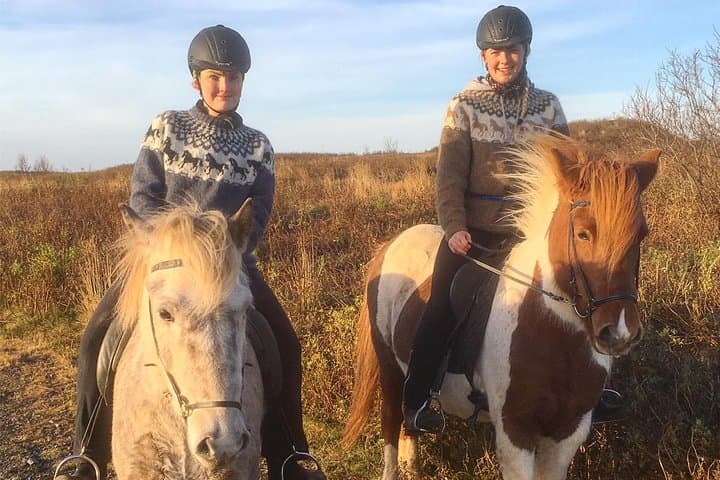
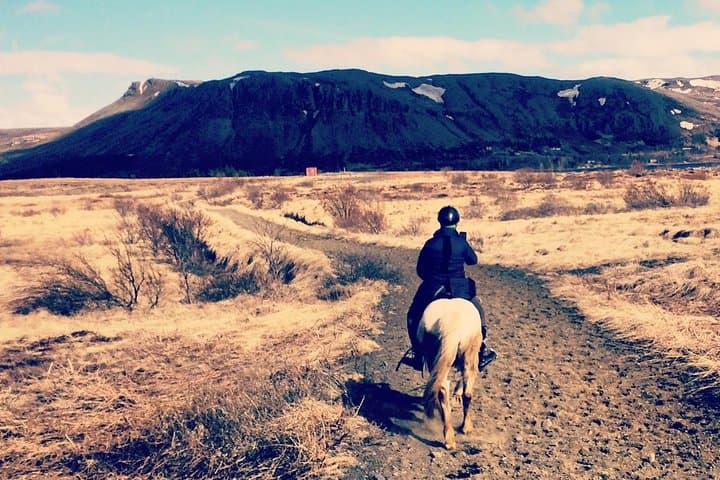
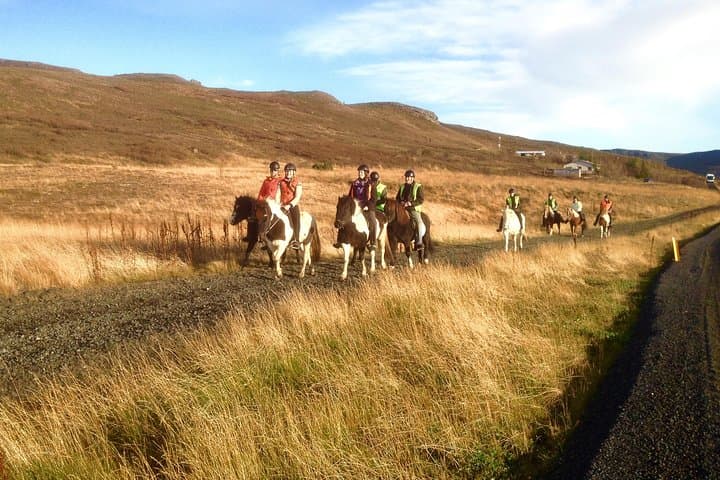
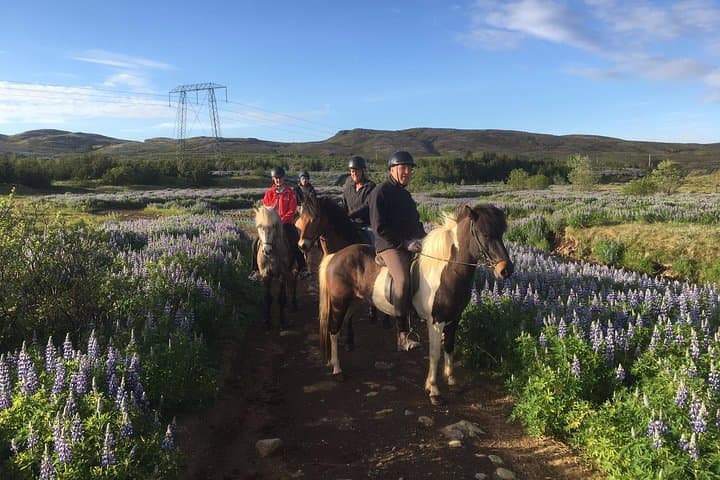
You arrive at a small farm on the eastern edge of Reykjavík and the city’s noise falls away—replaced by the soft breaths of Icelandic horses and a wide northern sky. Guides fit helmets and check tack while the animals, compact and sure-footed, flick their manes. The trail slips through lava-scoured fields and low scrub toward Lake Hafravatn; the water calls like a quiet promise, and distant ridgelines of the Capital Region outline the horizon.
You arrive at a small farm on the eastern edge of Reykjavík and the city’s noise falls away—replaced by the soft breaths of Icelandic horses and a wide northern sky. Guides fit helmets and check tack while the animals, compact and sure-footed, flick their manes. The trail slips through lava-scoured fields and low scrub toward Lake Hafravatn; the water calls like a quiet promise, and distant ridgelines of the Capital Region outline the horizon.
This ride sits where recent volcanic geology meets long-settled pastureland. The Icelandic horse itself is central to local culture: a breed brought by early Norse settlers and preserved here for centuries. Along the route you’ll pass pillow lavas, mossy outcrops, and drainage ditches carved by glacial melt—reminders that the landscape is young and active.
Expect an experience tuned for riders of varying skill: mounts are steady, guides adapt pace, and the loop focuses on steady gaits and lake views rather than technical riding. Practicalities matter—total visit time is roughly three hours including briefing; maximum rider weight is about 105 kg and minimum age is 12. Public bus 15 serves the area, and helmets are supplied.
Bring layered, waterproof outerwear, closed-toe shoes with a modest heel or short riding boot, and a small daypack for snacks and a camera. Hydrate before you mount and speak up if you’re unsure—guides tailor the ride to your comfort. The payoff is immediate: a slow, human-paced way to read Iceland’s geology and history under an open sky.