THE ADVENTURE COLLECTIVE® · Independent discovery and booking for outdoor travel

Step off the ship at Tien Sa Port and into Hoi An’s layered history—Cham ports, Chinese guild halls and marble caves—on a private shore excursion that balances relaxed walking with curated cultural stops. Local guides, lunch and port pickup make this a seamless half-day to full-day exploration.
Step off the ship at Tien Sa Port and into Hoi An’s layered history—Cham ports, Chinese guild halls and marble caves—on a private shore excursion that balances relaxed walking with curated cultural stops. Local guides, lunch and port pickup make this a seamless half-day to full-day exploration.
A humid morning at Tien Sa Port, the ship’s gangway still creaking, and the guide’s placard appears like an invitation to step ashore into centuries. The drive to Hoi An crosses low rice paddies and the pale ribbon of the Thu Bon River; by the time the wooden houses of the old town appear, the air smells of frying sesame and coffee.
Verified experiences and guided adventures in the surrounding area.
Operated by Huebookingtour - Private tours · Hoi An, Quang Nam
A humid morning at Tien Sa Port, the ship’s gangway still creaking, and the guide’s placard appears like an invitation to step ashore into centuries. The drive to Hoi An crosses low rice paddies and the pale ribbon of the Thu Bon River; by the time the wooden houses of the old town appear, the air smells of frying sesame and coffee.
Hoi An was a crossroads of the South China Sea: Cham traders, Chinese merchants, Japanese sea captains and later European ships left layers of architecture and tradecraft. The nearby Marble Mountains are limestone and dolomite outcrops weathered into caves and pagodas—geology made devotional stage. The old town’s crisscross of narrow lanes and half-timbered shop-houses reveals its role from the 16th–19th centuries as a major trading port.
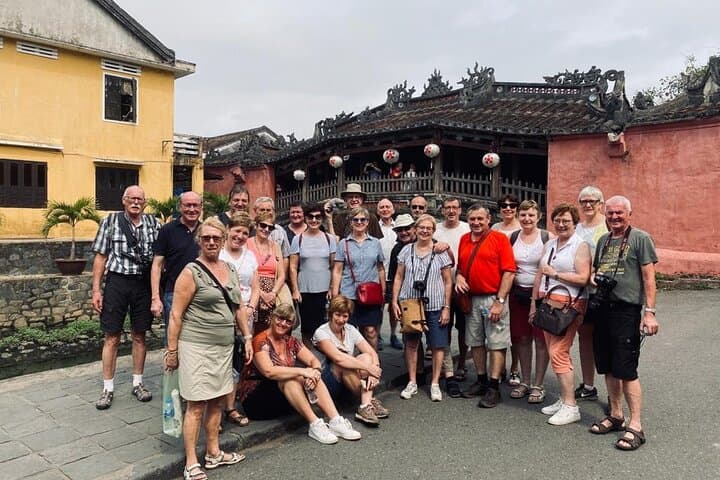
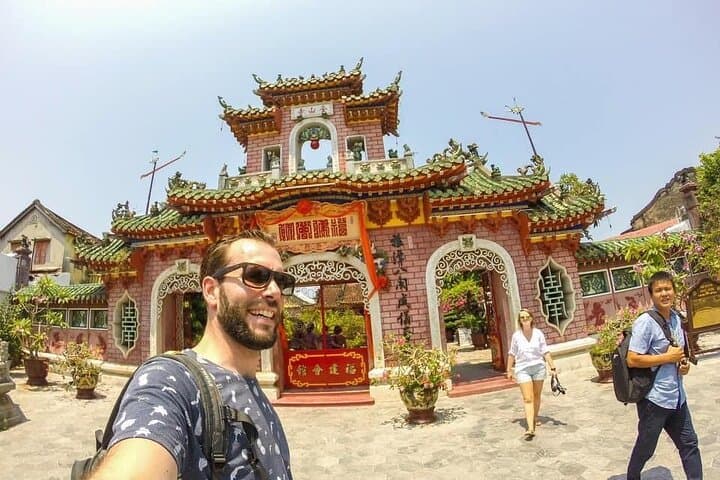
On a private shore excursion, visitors move at their own pace—shrine rooms, the Japanese Covered Bridge, a lantern-strewn riverside, and a chance to visit a marble cave or join craftsmen in a tailor or pottery studio. Expect guided cultural context, included lunch and bottled water, and short drives between sights.
Practical notes: bring your passport for re-boarding, wear breathable, closed-toe shoes for uneven streets and cave steps, and carry small cash for markets. Midday in central Vietnam is hot and humid—plan to start early or keep breaks in shade.
This itinerary pairs local history with accessible walking and light climbing at the Marble Mountains, ideal for travelers who prefer structured, private exploration off a cruise timetable.
easy.
5–8 hours.
Suitable for most fitness levels; involves 1–2 hours of walking on uneven ground and short stair climbs at Marble Mountains.
Yes — cruise passengers must carry a valid passport for disembarkation and re-boarding; vendors may also request ID for bookings.
The operator lists wheelchair-accessible transport and some accessible surfaces, but Marble Mountain caves and many old-town lanes have steps and narrow passages—advise the supplier at booking.
The tour description includes lunch and bottled water; specific site admissions may be included per itinerary—confirm at booking.
Private guides commonly speak English and may offer other languages on request; specify your language preference when booking.
Hoi An rose as a port from the Champa period through the 19th century, serving as a commercial hub where Southeast Asian, Chinese, Japanese and European traders met.
Local groups promote sustainable tourism to protect the old town’s wooden architecture and reduce plastic along the river; visitors are encouraged to use refillable water bottles and respect heritage sites.
Huebookingtour - Private tours operates guided outdoor trips and adventures with an emphasis on safety, stewardship, and memorable experiences.
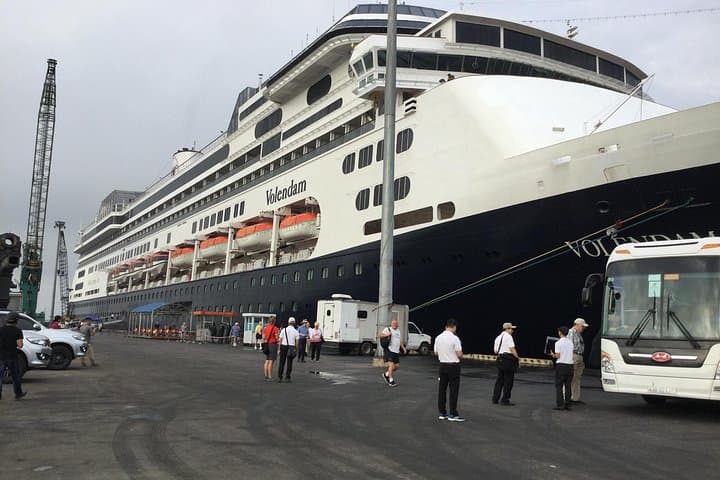
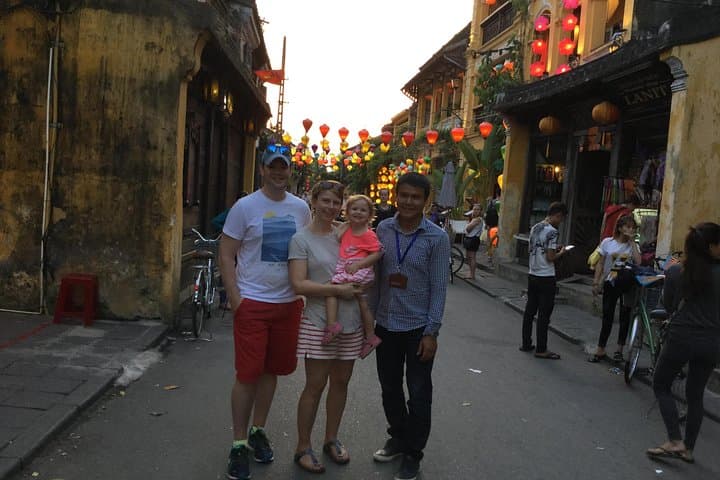
A humid morning at Tien Sa Port, the ship’s gangway still creaking, and the guide’s placard appears like an invitation to step ashore into centuries. The drive to Hoi An crosses low rice paddies and the pale ribbon of the Thu Bon River; by the time the wooden houses of the old town appear, the air smells of frying sesame and coffee.
A humid morning at Tien Sa Port, the ship’s gangway still creaking, and the guide’s placard appears like an invitation to step ashore into centuries. The drive to Hoi An crosses low rice paddies and the pale ribbon of the Thu Bon River; by the time the wooden houses of the old town appear, the air smells of frying sesame and coffee.
Hoi An was a crossroads of the South China Sea: Cham traders, Chinese merchants, Japanese sea captains and later European ships left layers of architecture and tradecraft. The nearby Marble Mountains are limestone and dolomite outcrops weathered into caves and pagodas—geology made devotional stage. The old town’s crisscross of narrow lanes and half-timbered shop-houses reveals its role from the 16th–19th centuries as a major trading port.
On a private shore excursion, visitors move at their own pace—shrine rooms, the Japanese Covered Bridge, a lantern-strewn riverside, and a chance to visit a marble cave or join craftsmen in a tailor or pottery studio. Expect guided cultural context, included lunch and bottled water, and short drives between sights.
Practical notes: bring your passport for re-boarding, wear breathable, closed-toe shoes for uneven streets and cave steps, and carry small cash for markets. Midday in central Vietnam is hot and humid—plan to start early or keep breaks in shade.
This itinerary pairs local history with accessible walking and light climbing at the Marble Mountains, ideal for travelers who prefer structured, private exploration off a cruise timetable.