THE ADVENTURE COLLECTIVE® · Independent discovery and booking for outdoor travel

Walk from York Minster to Clifford’s Tower with an expert historian who turns stones and streets into stories. This private 2–3 hour tour mixes cathedral lore, medieval streetscapes and local culture with practical pacing for all abilities.
Walk from York Minster to Clifford’s Tower with an expert historian who turns stones and streets into stories. This private 2–3 hour tour mixes cathedral lore, medieval streetscapes and local culture with practical pacing for all abilities.
You stand opposite the West Entrance of York Minster, the stone façade rising like a folded map of centuries. A guide—an historian who knows the city by name and nickname—begins to move, turning a crowd of curious faces into a compact caravan. Cobbles click underfoot; the scent of tea from Bennett's across the road threads through explanations of medieval guilds, Viking raids and cathedral builders whose scaffolding once reached these same stained-glass windows.
Verified experiences and guided adventures in the surrounding area.
Operated by White Rose York Tours · York, North Yorkshire
You stand opposite the West Entrance of York Minster, the stone façade rising like a folded map of centuries. A guide—an historian who knows the city by name and nickname—begins to move, turning a crowd of curious faces into a compact caravan. Cobbles click underfoot; the scent of tea from Bennett's across the road threads through explanations of medieval guilds, Viking raids and cathedral builders whose scaffolding once reached these same stained-glass windows.
The route is compact but layered: Roman walls overhead, a medieval minster at your back, timber-framed lanes ahead. York sits where the River Ouse widens and the city’s long history is written into brick and mortar—Norman battlements; a castle once a royal stronghold; narrow streets once the spine of trade. Your guide threads those facts into stories—how Henry VIII’s reformation rearranged ecclesiastical life here, why The Shambles keeps its overhanging fronts, and how Clifford’s Tower has been both fortification and courtroom.
Geology and urban form matter on a walking tour. Expect stretches of cobblestone and compacted earth where centuries of footsteps have polished surfaces. The Minster itself is built from sandstone quarried nearby; rain and time have sculpted its buttresses and gargoyles. The city’s compact center makes this a walkable museum, where buildings push you into their stories instead of offering sterile placards.
Culture is immediate: café windows offering Yorkshire tea, shopfronts selling hand-thrown pottery and local charcuterie, and the quiet of churchyards that double as green breathing spaces. Local guides will point out lesser-known details—a carved mason’s mark, a medallion in a door lintel, a plaque noting a 19th-century reformer—details that turn familiar landmarks into personal discoveries.
Practicalities: tours run 2–3 hours, usually starting opposite the Minster’s West Entrance (near Bennett’s tea rooms) and finishing by Clifford’s Tower and the Castle Museum. Wear sensible shoes for uneven surfaces; the operator notes the tour is wheelchair-accessible with advance notice. Guides can adapt pace for mobility concerns and breaks for refreshments are possible if requested.
Bookings are private and flexible—good for families, scholars or anyone who prefers a personalized pace. For photography, aim for morning light on the Minster façade and late afternoon near the tower for softer tones. If your schedule is tight, reconfirm pickup and note the 24-hour cancellation window.
This is not merely a route of monuments; it’s a guided conversation with a city that keeps its history underfoot, in its tea rooms and along its narrow lanes. Walk it with someone who can point out the small things—those are the parts that make York come alive.
moderate.
2–3 hours.
Moderate fitness—comfortable walking for up to three hours with short, frequent stops; some standing during explanations.
The private tour runs between 2 and 3 hours depending on pace and any requested stops for refreshments.
It normally starts opposite the West Entrance of York Minster (near Bennett’s tea rooms) and ends close to Clifford’s Tower and the Castle Museum.
Yes—children under 16 must be accompanied by an adult. The tour can be adapted for different ages and mobility levels if notified in advance.
Yes. The operator asks that you inform them ahead of time so they can adjust the route accordingly.
Most stops are external commentaries, but if you plan to enter places like the Minster or Castle Museum, check their separate admission policies and consider pre-booking.
For a full refund cancel at least 24 hours before the scheduled departure time; cancellations within 24 hours are not refundable.
York’s urban core carries Roman, Viking and Norman layers—the Minster has been a site of worship since the 7th century and the castle complex marks Norman military and administrative control.
The city balances tourism with conservation—respect for fragile stonework, staying on designated paths and avoiding touching historical masonry helps preserve York’s heritage.
White Rose York Tours operates guided outdoor trips and adventures with an emphasis on safety, stewardship, and memorable experiences.

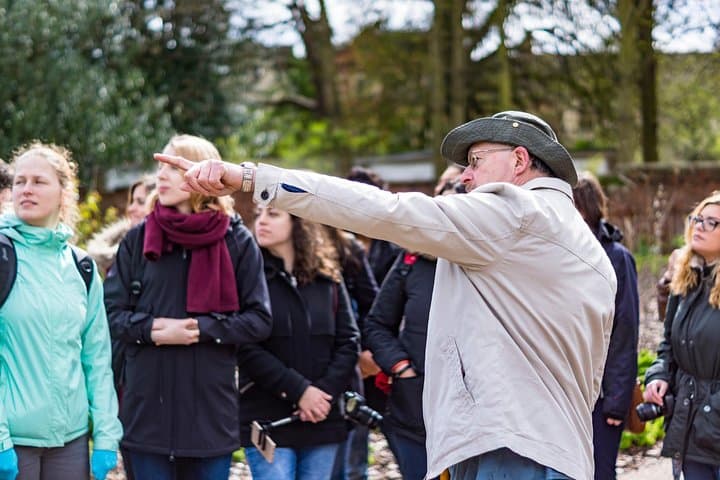
You stand opposite the West Entrance of York Minster, the stone façade rising like a folded map of centuries. A guide—an historian who knows the city by name and nickname—begins to move, turning a crowd of curious faces into a compact caravan. Cobbles click underfoot; the scent of tea from Bennett's across the road threads through explanations of medieval guilds, Viking raids and cathedral builders whose scaffolding once reached these same stained-glass windows.
You stand opposite the West Entrance of York Minster, the stone façade rising like a folded map of centuries. A guide—an historian who knows the city by name and nickname—begins to move, turning a crowd of curious faces into a compact caravan. Cobbles click underfoot; the scent of tea from Bennett's across the road threads through explanations of medieval guilds, Viking raids and cathedral builders whose scaffolding once reached these same stained-glass windows.
The route is compact but layered: Roman walls overhead, a medieval minster at your back, timber-framed lanes ahead. York sits where the River Ouse widens and the city’s long history is written into brick and mortar—Norman battlements; a castle once a royal stronghold; narrow streets once the spine of trade. Your guide threads those facts into stories—how Henry VIII’s reformation rearranged ecclesiastical life here, why The Shambles keeps its overhanging fronts, and how Clifford’s Tower has been both fortification and courtroom.
Geology and urban form matter on a walking tour. Expect stretches of cobblestone and compacted earth where centuries of footsteps have polished surfaces. The Minster itself is built from sandstone quarried nearby; rain and time have sculpted its buttresses and gargoyles. The city’s compact center makes this a walkable museum, where buildings push you into their stories instead of offering sterile placards.
Culture is immediate: café windows offering Yorkshire tea, shopfronts selling hand-thrown pottery and local charcuterie, and the quiet of churchyards that double as green breathing spaces. Local guides will point out lesser-known details—a carved mason’s mark, a medallion in a door lintel, a plaque noting a 19th-century reformer—details that turn familiar landmarks into personal discoveries.
Practicalities: tours run 2–3 hours, usually starting opposite the Minster’s West Entrance (near Bennett’s tea rooms) and finishing by Clifford’s Tower and the Castle Museum. Wear sensible shoes for uneven surfaces; the operator notes the tour is wheelchair-accessible with advance notice. Guides can adapt pace for mobility concerns and breaks for refreshments are possible if requested.
Bookings are private and flexible—good for families, scholars or anyone who prefers a personalized pace. For photography, aim for morning light on the Minster façade and late afternoon near the tower for softer tones. If your schedule is tight, reconfirm pickup and note the 24-hour cancellation window.
This is not merely a route of monuments; it’s a guided conversation with a city that keeps its history underfoot, in its tea rooms and along its narrow lanes. Walk it with someone who can point out the small things—those are the parts that make York come alive.