THE ADVENTURE COLLECTIVE® · Independent discovery and booking for outdoor travel

Spend a private day exploring Hilo’s waterfalls, a lava tube, Hawaii Volcanoes National Park and Punaluʻu’s black sand beach. Small-group logistics, island-inspired lunch and local commentary make this a practical way to see the Big Island’s eastern highlights.
Spend a private day exploring Hilo’s waterfalls, a lava tube, Hawaii Volcanoes National Park and Punaluʻu’s black sand beach. Small-group logistics, island-inspired lunch and local commentary make this a practical way to see the Big Island’s eastern highlights.
The van turns off the coastal road and the air changes — salt folds into damp forest, and the island seems to lean in closer to listen. On a private day tour out of Hilo, the driver-guide opens a map with a few practiced gestures and the route becomes a living thing: waterfalls that throw mist like confetti, a steam-vented caldera that exhales heat, and a beach where the sand is the color of night.
Verified experiences and guided adventures in the surrounding area.
Operated by Shaka Braddah Tours Llc · Hilo, Hawaii
The van turns off the coastal road and the air changes — salt folds into damp forest, and the island seems to lean in closer to listen. On a private day tour out of Hilo, the driver-guide opens a map with a few practiced gestures and the route becomes a living thing: waterfalls that throw mist like confetti, a steam-vented caldera that exhales heat, and a beach where the sand is the color of night.
Start at Rainbow Falls, where a broad sheet of water drops into a fern-ringed amphitheater and rainbows frequently bend into the mist. Signs here recall the Battle of the Wailuku River and local legends that tie the falls to Hawaiian chiefs and the goddess Pele. From there the tour slips through downtown Hilo — clapboard storefronts, banyan-shaded sidewalks and a cadence that still carries plantation-era rhythms — toward Liliʻuokalani Gardens, an Edo-style space that echoes Hawaii’s 19th-century connections to Japanese immigrants.
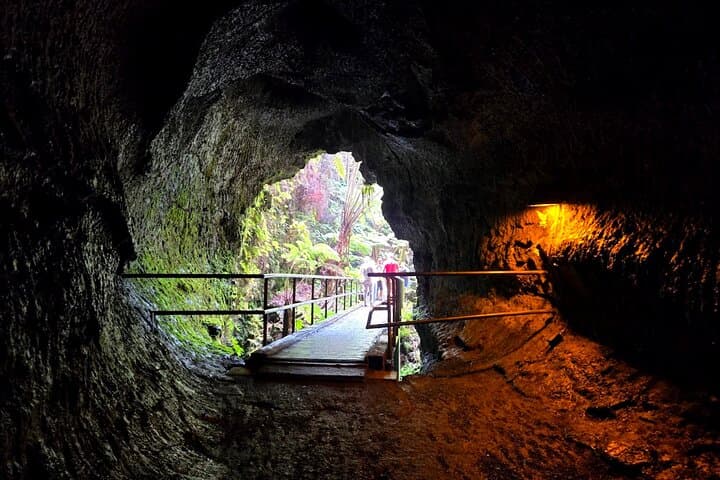
The island’s geology is on full display at Hawaii Volcanoes National Park. Kīlauea’s caldera and the pocked bowl of Kīlauea Iki show volcanic processes at human scale: cooled flows, fumaroles steaming sulfur-scented breaths, and the blown-open scars of more recent eruptions. Walking into Nahuku (Thurston Lava Tube) is like stepping into the throat of the island — the rock is older than memory and cool underfoot despite the sun.
Punaluʻu Black Sand Beach closes the circuit with surf and a natural drama: black glassy sand from basalt flows and frequent visits from honu (green sea turtles) that come ashore to rest. The beach is fed by an underground spring, and the contrast of green turtles on black sand is both stark and intimate.
Practicality is part of the pleasure. The full tour runs about 6–7 hours with pick-up in Hilo; small groups mean time to stretch legs at each stop and a locally inspired lunch in Volcano Village that accommodates vegan and gluten-free diets. Guides carry fresh fruit samples and local stories — about Pele, sugar-plantation history, and how communities adapt when the island rearranges itself.
Terrain is easy walking at overlooks, a boardwalk-like stroll through the lava tube and a short beach approach at Punaluʻu. Expect variable weather — Hilo’s side of the island is green for a reason — so pack a lightweight rain layer and sun protection. Bring a refillable bottle: water stations are limited on the road.
For travelers who want a compact introduction to the Big Island’s eastern character, this private tour stitches natural spectacle, cultural notes and practical logistics into a single, manageable day. It’s an efficient way to meet Kīlauea’s heat, Hilo’s history and the ocean’s quiet insistence — and leave with a clearer sense of why the island keeps reshaping itself, literally and in story.
easy.
6–7 hours.
Suitable for most fitness levels; requires short walks and standing at viewpoints.
The tour lasts about 6–7 hours and meets at the Moʻoheau County Park bus station in Hilo with optional pick-up in the Hilo area.
Yes — an island-inspired lunch at a Volcano Village restaurant is included with vegan, vegetarian, and gluten-free options available.
Yes — the tour is family-friendly and specialized infant seats are available on request; indicate needs at booking.
Active flows are rare to view safely from roadside vantage points; the tour shows steaming vents, caldera views and solidified flows rather than fresh lava in most cases.
No — honu frequently visit Punaluʻu but wildlife sightings cannot be guaranteed; the beach’s underwater spring and habitat make sightings common.
The operator notes it is not recommended for travelers with spinal injuries due to vehicle travel and some uneven walking surfaces.
Hilo and the slopes of Kīlauea were shaped by centuries of native Hawaiian settlement, 19th-century sugar plantations and later conservation efforts that established national park protections.
Visitors should follow posted rules around turtles, stay on trails to protect fragile native vegetation and carry out all trash; supporting local businesses helps keep cultural sites maintained.
Shaka Braddah Tours Llc operates guided outdoor trips and adventures with an emphasis on safety, stewardship, and memorable experiences.



The van turns off the coastal road and the air changes — salt folds into damp forest, and the island seems to lean in closer to listen. On a private day tour out of Hilo, the driver-guide opens a map with a few practiced gestures and the route becomes a living thing: waterfalls that throw mist like confetti, a steam-vented caldera that exhales heat, and a beach where the sand is the color of night.
The van turns off the coastal road and the air changes — salt folds into damp forest, and the island seems to lean in closer to listen. On a private day tour out of Hilo, the driver-guide opens a map with a few practiced gestures and the route becomes a living thing: waterfalls that throw mist like confetti, a steam-vented caldera that exhales heat, and a beach where the sand is the color of night.
Start at Rainbow Falls, where a broad sheet of water drops into a fern-ringed amphitheater and rainbows frequently bend into the mist. Signs here recall the Battle of the Wailuku River and local legends that tie the falls to Hawaiian chiefs and the goddess Pele. From there the tour slips through downtown Hilo — clapboard storefronts, banyan-shaded sidewalks and a cadence that still carries plantation-era rhythms — toward Liliʻuokalani Gardens, an Edo-style space that echoes Hawaii’s 19th-century connections to Japanese immigrants.
The island’s geology is on full display at Hawaii Volcanoes National Park. Kīlauea’s caldera and the pocked bowl of Kīlauea Iki show volcanic processes at human scale: cooled flows, fumaroles steaming sulfur-scented breaths, and the blown-open scars of more recent eruptions. Walking into Nahuku (Thurston Lava Tube) is like stepping into the throat of the island — the rock is older than memory and cool underfoot despite the sun.
Punaluʻu Black Sand Beach closes the circuit with surf and a natural drama: black glassy sand from basalt flows and frequent visits from honu (green sea turtles) that come ashore to rest. The beach is fed by an underground spring, and the contrast of green turtles on black sand is both stark and intimate.
Practicality is part of the pleasure. The full tour runs about 6–7 hours with pick-up in Hilo; small groups mean time to stretch legs at each stop and a locally inspired lunch in Volcano Village that accommodates vegan and gluten-free diets. Guides carry fresh fruit samples and local stories — about Pele, sugar-plantation history, and how communities adapt when the island rearranges itself.
Terrain is easy walking at overlooks, a boardwalk-like stroll through the lava tube and a short beach approach at Punaluʻu. Expect variable weather — Hilo’s side of the island is green for a reason — so pack a lightweight rain layer and sun protection. Bring a refillable bottle: water stations are limited on the road.
For travelers who want a compact introduction to the Big Island’s eastern character, this private tour stitches natural spectacle, cultural notes and practical logistics into a single, manageable day. It’s an efficient way to meet Kīlauea’s heat, Hilo’s history and the ocean’s quiet insistence — and leave with a clearer sense of why the island keeps reshaping itself, literally and in story.