THE ADVENTURE COLLECTIVE® · Independent discovery and booking for outdoor travel

Explore the Hajjar Mountains with a private guide — summit Jebel Jais, descend into wadis, visit mountain farms and villages reachable only on foot. Tailored routes suit all fitness levels while exposing rugged geology and local culture.
Explore the Hajjar Mountains with a private guide — summit Jebel Jais, descend into wadis, visit mountain farms and villages reachable only on foot. Tailored routes suit all fitness levels while exposing rugged geology and local culture.
Morning light strips across the Hajjar peaks as the guide points the group toward a narrow track that disappears into rock and scrub. Footsteps kick up powdered stone; a wadi below gapes and dares you to peer into its cooler shade. This is Ras Al Khaimah’s high country — rocky ridges, terraced farms, and villages you can only reach by foot.
Verified experiences and guided adventures in the surrounding area.
Operated by Adventure Quest · Ras Al Khaimah, Ras Al Khaimah
Morning light strips across the Hajjar peaks as the guide points the group toward a narrow track that disappears into rock and scrub. Footsteps kick up powdered stone; a wadi below gapes and dares you to peer into its cooler shade. This is Ras Al Khaimah’s high country — rocky ridges, terraced farms, and villages you can only reach by foot.
Geology here is blunt: uplifted limestone and volcanic intrusions carved by seasonal flash floods that form the wadis. Human history clings to terraces and stone houses where small-scale farming and date cultivation persist. Meet farmers who still coax crops from thin soils and watch ravens and raptors ride the thermals above the gullies.
A private guide customizes the route: summit Jebel Jais (near 1,900m) for sweeping panoramas, descend into cool wadis to find pools and abandoned stone settlements, or follow quiet ridgelines past terraced plantations. Trails vary from packed dirt to sharp scree; expect uneven terrain and short steep sections rather than maintained boardwalks.
Practical guidance: wear sturdy shoes with firm ankle support, carry at least 2 liters of water, sun protection, and layered clothing for temperature swings between valley and summit. Tell your guide about any medical issues so the day can be tailored.
Timing matters — start early in summer to avoid heat, and aim for late afternoon in cooler months when light skims the rock for better photos. Leave no trace: the mountain’s arid soils recover slowly.
moderate.
4 hours.
Reasonable fitness for walking on uneven terrain and short steep sections; suitable for most active travelers.
Yes—routes are customizable and guides adjust pace and distance; disclose fitness or health concerns when booking.
Air-conditioned vehicle transfer to the trailhead is typically included; confirm pickup details at booking.
Hot, dry summers with early starts recommended; cooler, breezy conditions at higher elevations in winter and spring.
No special hiking permits are generally required for these areas, but private land and village access may be restricted—your guide will manage permissions.
The Hajjar Mountains are a young fold of rock that shaped local livelihoods: terraced farming and small mountain settlements date back generations.
Fragile arid soils and scarce water mean visitors should follow leave-no-trace practices and avoid creating new trails to protect plant regeneration.
Adventure Quest operates guided outdoor trips and adventures with an emphasis on safety, stewardship, and memorable experiences.
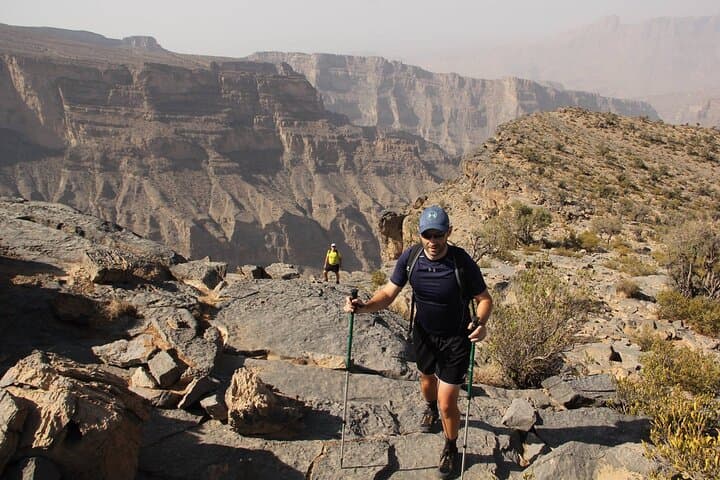
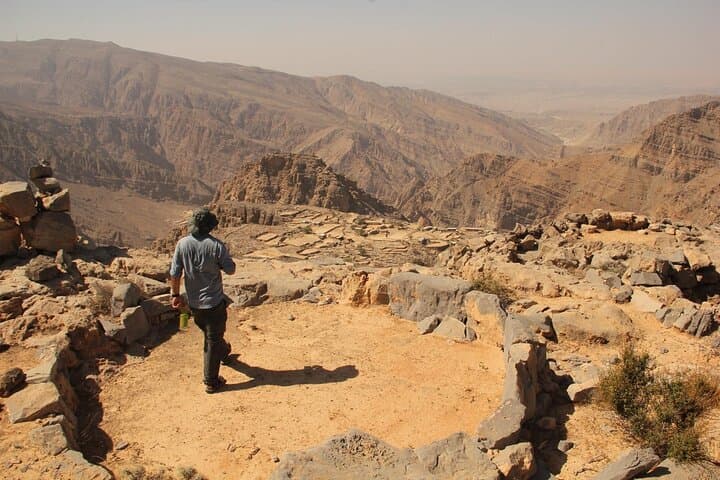
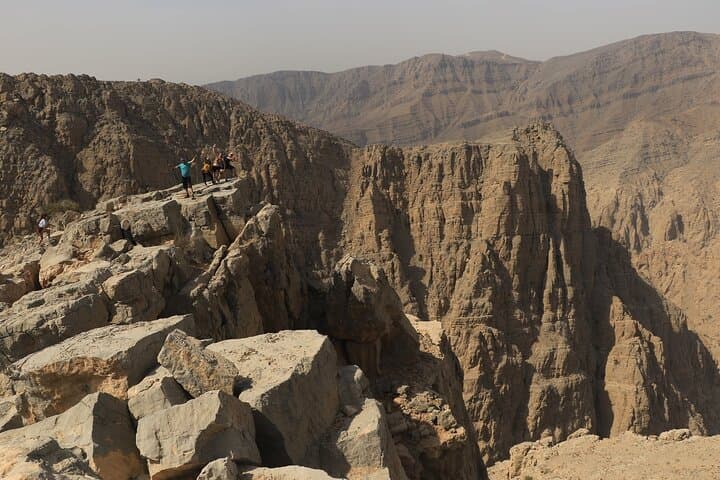
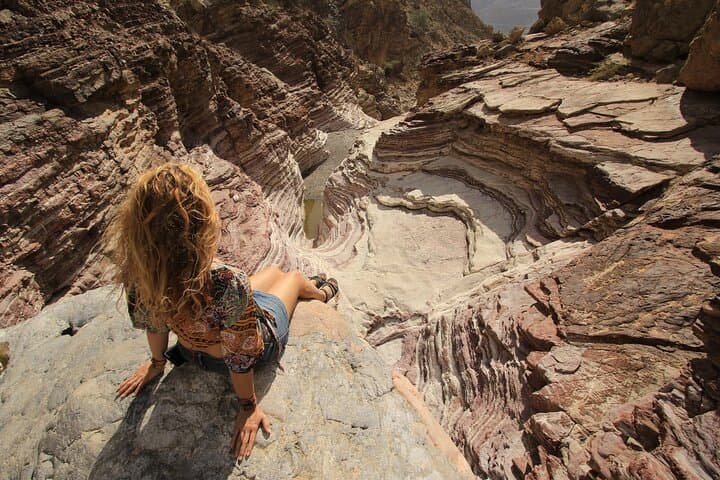
Morning light strips across the Hajjar peaks as the guide points the group toward a narrow track that disappears into rock and scrub. Footsteps kick up powdered stone; a wadi below gapes and dares you to peer into its cooler shade. This is Ras Al Khaimah’s high country — rocky ridges, terraced farms, and villages you can only reach by foot.
Morning light strips across the Hajjar peaks as the guide points the group toward a narrow track that disappears into rock and scrub. Footsteps kick up powdered stone; a wadi below gapes and dares you to peer into its cooler shade. This is Ras Al Khaimah’s high country — rocky ridges, terraced farms, and villages you can only reach by foot.
Geology here is blunt: uplifted limestone and volcanic intrusions carved by seasonal flash floods that form the wadis. Human history clings to terraces and stone houses where small-scale farming and date cultivation persist. Meet farmers who still coax crops from thin soils and watch ravens and raptors ride the thermals above the gullies.
A private guide customizes the route: summit Jebel Jais (near 1,900m) for sweeping panoramas, descend into cool wadis to find pools and abandoned stone settlements, or follow quiet ridgelines past terraced plantations. Trails vary from packed dirt to sharp scree; expect uneven terrain and short steep sections rather than maintained boardwalks.
Practical guidance: wear sturdy shoes with firm ankle support, carry at least 2 liters of water, sun protection, and layered clothing for temperature swings between valley and summit. Tell your guide about any medical issues so the day can be tailored.
Timing matters — start early in summer to avoid heat, and aim for late afternoon in cooler months when light skims the rock for better photos. Leave no trace: the mountain’s arid soils recover slowly.