THE ADVENTURE COLLECTIVE® · Independent discovery and booking for outdoor travel

Touch down in the icy amphitheater of Annapurna Base Camp on a private helicopter charter from Pokhara. Enjoy dedicated time on the ground for photos and short exploration with sweeping, uninterrupted views of the Annapurna massif.
Touch down in the icy amphitheater of Annapurna Base Camp on a private helicopter charter from Pokhara. Enjoy dedicated time on the ground for photos and short exploration with sweeping, uninterrupted views of the Annapurna massif.
The rotor wash clears a halo of snow and dust as the helicopter settles on the rocky amphitheater of Annapurna Base Camp (≈4,130 m). For a brief, suspended hour the world rearranges itself: jagged seracs and granite ridgelines close in, a hush replaces the valley’s distant bustle, and the peaks—Machhapuchhre, Annapurna South, Hiunchuli—stand like sentries around the bowl.
Verified experiences and guided adventures in the surrounding area.
Operated by Dragon Charter Service · Pokhara, Gandaki Province
The rotor wash clears a halo of snow and dust as the helicopter settles on the rocky amphitheater of Annapurna Base Camp (≈4,130 m). For a brief, suspended hour the world rearranges itself: jagged seracs and granite ridgelines close in, a hush replaces the valley’s distant bustle, and the peaks—Machhapuchhre, Annapurna South, Hiunchuli—stand like sentries around the bowl.
This is the high Himalaya where glacial sculpting dominates the geology and centuries-old trails trace trade and pilgrimage routes. The Annapurna massif became globally famous after the 1950 French expedition—one of the first major Western ascents in the region—and the valleys below are home to Gurung and Magar communities whose village terraces and prayer flags mark human presence in an alpine theatre.
From the air you’ll pass Seti Gorge and the Modi Khola, rivers that have carved deep channels through softer rock, and drift over rhododendron forests that burn red in spring. Local tea houses at lower elevations provide the cultural counterpoint: cups of strong Nepali tea and stories of long treks.
Practical guidance: flights depart early to exploit stable morning air; expect 3–4 hours total including transfers and 15–20 minutes on the ground. Dress in warm layers, bring sunglasses and a camera with spare batteries (cold drains power fast), and disclose exact weights for helicopter seating. This private landing is accessible to most fitness levels but carries high-altitude exposure—move slowly on the ground and stay hydrated. Weather can cancel with little notice; plan flexible schedules and respect local conservation practices by leaving no trace behind.
easy.
3–4 hours.
Minimal sustained fitness required since no trekking is necessary, but participants should tolerate short exposure to high altitude and be able to walk on uneven ground for 10–20 minutes.
No—this is a helicopter landing requiring no trekking; passengers should be able to step on and off the helicopter and walk short distances on uneven ground.
Helicopters have strict passenger and baggage weight limits; the operator will request weights at booking to safely configure seating—honest disclosure is required.
Flights are commonly canceled or rescheduled for safety due to low visibility, high winds, or heavy cloud; operators typically offer full refunds if canceled within the stated policy window.
Landing and overflight fees are included by standard charter operators, but operators handle necessary permits—confirm details at booking and carry ID for local regulations.
The Annapurna massif drew global attention after early Western expeditions; the region has long been inhabited by Gurung and Magar communities who maintain mountain agriculture and trade routes.
The alpine environment is fragile—minimize footprint, pack out any waste, and support local tea houses and conservation levies that help manage trail and waste impacts.
Dragon Charter Service operates guided outdoor trips and adventures with an emphasis on safety, stewardship, and memorable experiences.

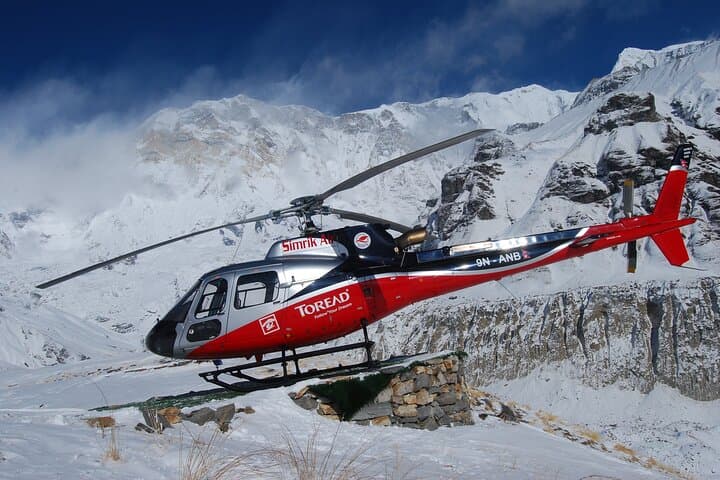
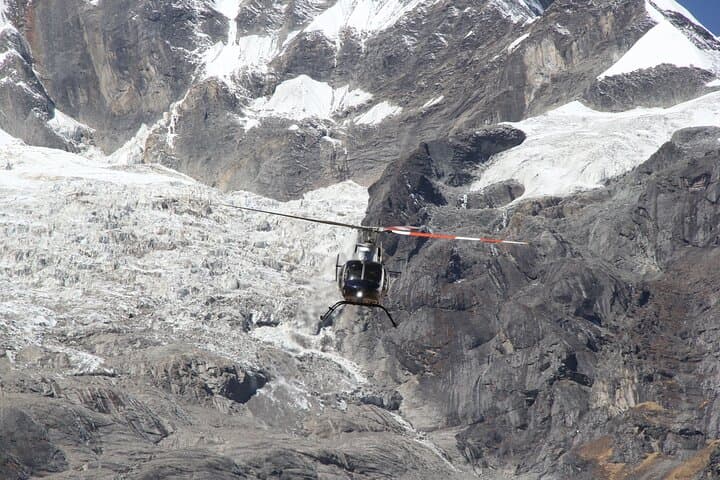

The rotor wash clears a halo of snow and dust as the helicopter settles on the rocky amphitheater of Annapurna Base Camp (≈4,130 m). For a brief, suspended hour the world rearranges itself: jagged seracs and granite ridgelines close in, a hush replaces the valley’s distant bustle, and the peaks—Machhapuchhre, Annapurna South, Hiunchuli—stand like sentries around the bowl.
The rotor wash clears a halo of snow and dust as the helicopter settles on the rocky amphitheater of Annapurna Base Camp (≈4,130 m). For a brief, suspended hour the world rearranges itself: jagged seracs and granite ridgelines close in, a hush replaces the valley’s distant bustle, and the peaks—Machhapuchhre, Annapurna South, Hiunchuli—stand like sentries around the bowl.
This is the high Himalaya where glacial sculpting dominates the geology and centuries-old trails trace trade and pilgrimage routes. The Annapurna massif became globally famous after the 1950 French expedition—one of the first major Western ascents in the region—and the valleys below are home to Gurung and Magar communities whose village terraces and prayer flags mark human presence in an alpine theatre.
From the air you’ll pass Seti Gorge and the Modi Khola, rivers that have carved deep channels through softer rock, and drift over rhododendron forests that burn red in spring. Local tea houses at lower elevations provide the cultural counterpoint: cups of strong Nepali tea and stories of long treks.
Practical guidance: flights depart early to exploit stable morning air; expect 3–4 hours total including transfers and 15–20 minutes on the ground. Dress in warm layers, bring sunglasses and a camera with spare batteries (cold drains power fast), and disclose exact weights for helicopter seating. This private landing is accessible to most fitness levels but carries high-altitude exposure—move slowly on the ground and stay hydrated. Weather can cancel with little notice; plan flexible schedules and respect local conservation practices by leaving no trace behind.