THE ADVENTURE COLLECTIVE® · Independent discovery and booking for outdoor travel

A four- to five-hour private walking and metro tour that threads Montmartre, Sacré‑Cœur, the Moulin Rouge, the Latin Quarter and the Eiffel Tower summit — ideal for first-time visitors who want curated history, efficient transit, and local tips.
A four- to five-hour private walking and metro tour that threads Montmartre, Sacré‑Cœur, the Moulin Rouge, the Latin Quarter and the Eiffel Tower summit — ideal for first-time visitors who want curated history, efficient transit, and local tips.
You step out of the Anvers Metro into a tangle of cobblestones and voices — street performers tuning guitars, boulangeries exhaling warm butter. The guide leads you up the steep approaches to Sacré-Cœur where Paris unfurls below: rooftops, cranes, and the slow pulse of the Seine. Over four to five hours you trade narrow hilltop lanes for grand boulevards and a few efficient metro hops, moving from Montmartre’s artist haunts to the arc of the Champs-Élysées and the formal lines of the Tuileries.
Verified experiences and guided adventures in the surrounding area.
Operated by Top Sights Tours · Paris, Île-de-France
You step out of the Anvers Metro into a tangle of cobblestones and voices — street performers tuning guitars, boulangeries exhaling warm butter. The guide leads you up the steep approaches to Sacré-Cœur where Paris unfurls below: rooftops, cranes, and the slow pulse of the Seine. Over four to five hours you trade narrow hilltop lanes for grand boulevards and a few efficient metro hops, moving from Montmartre’s artist haunts to the arc of the Champs-Élysées and the formal lines of the Tuileries.
Paris has been a crossroads of empire, revolution and art; the city’s layered geology — an island of limestone under a river city — made easy cellars and winding streets where painters like Van Gogh and Picasso found cheap light and cheaper rent. The Latin Quarter still carries the scholar’s cadence; Montmartre keeps the stubborn, bohemian edges where cabarets and cafés shaped modern culture.
Practical guidance: expect 6–8 km of on-foot moving with frequent stops for photos and stories. The walking is urban and flat except for Montmartre’s stairways; comfortable walking shoes and a jacket for the Eiffel summit are wise. Your Eiffel Tower summit ticket is provided electronically — confirm delivery before you start. Bring a small lockable daypack, a printed ID, and a credit card for cafés and markets. Be mindful of pickpockets in crowded areas; keep valuables secured and use the metro during off-peak windows when possible. Start early to catch softer light on the city’s façades and to stay ahead of peak tourist crowds.
moderate.
4–5 hours.
Light to moderate — you should be comfortable walking 6–8 km with stops and climbing short staircases.
Yes — summit tickets are provided electronically; you can go up at the end of the tour and stay as long as you like.
Expect about 6–8 km of walking over 4–5 hours, with metro transfers that reduce continuous walking distance.
The tour is family-friendly and labeled physically easy, though Montmartre’s stairways may be strenuous for some — private pace adjustments are possible.
It starts and ends at the information kiosk opposite the stairway entrance to Metro Anvers (Montmartre).
Montmartre grew in the 19th century as an inexpensive quarter for artists and performers; its cafés and cabarets helped incubate modern art movements.
Respect cultural sites by staying on paths and disposing of waste; small-group tours help reduce foot traffic impact in sensitive historic neighborhoods.
Top Sights Tours operates guided outdoor trips and adventures with an emphasis on safety, stewardship, and memorable experiences.
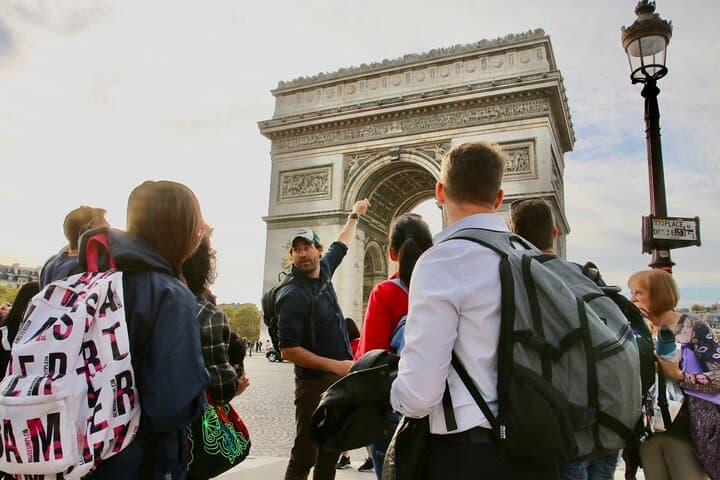
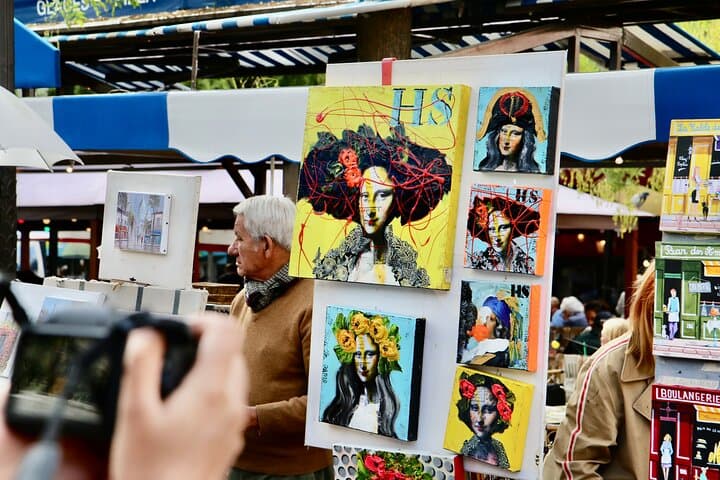
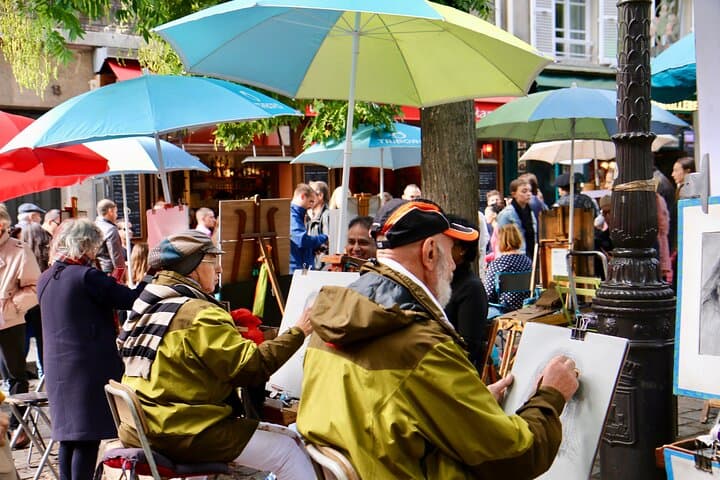
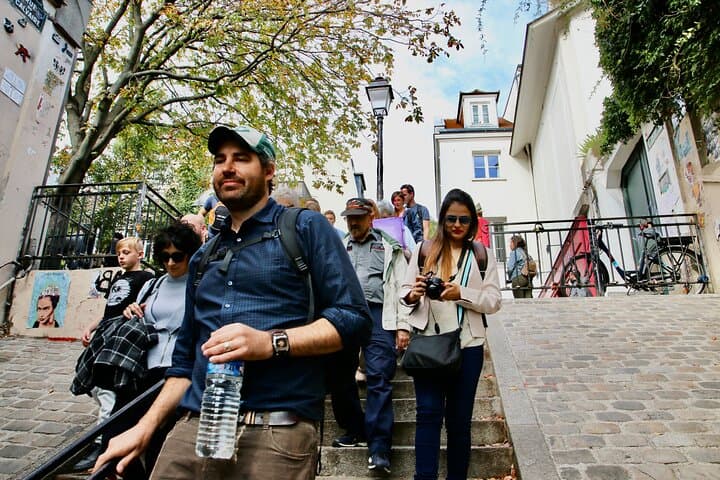
You step out of the Anvers Metro into a tangle of cobblestones and voices — street performers tuning guitars, boulangeries exhaling warm butter. The guide leads you up the steep approaches to Sacré-Cœur where Paris unfurls below: rooftops, cranes, and the slow pulse of the Seine. Over four to five hours you trade narrow hilltop lanes for grand boulevards and a few efficient metro hops, moving from Montmartre’s artist haunts to the arc of the Champs-Élysées and the formal lines of the Tuileries.
You step out of the Anvers Metro into a tangle of cobblestones and voices — street performers tuning guitars, boulangeries exhaling warm butter. The guide leads you up the steep approaches to Sacré-Cœur where Paris unfurls below: rooftops, cranes, and the slow pulse of the Seine. Over four to five hours you trade narrow hilltop lanes for grand boulevards and a few efficient metro hops, moving from Montmartre’s artist haunts to the arc of the Champs-Élysées and the formal lines of the Tuileries.
Paris has been a crossroads of empire, revolution and art; the city’s layered geology — an island of limestone under a river city — made easy cellars and winding streets where painters like Van Gogh and Picasso found cheap light and cheaper rent. The Latin Quarter still carries the scholar’s cadence; Montmartre keeps the stubborn, bohemian edges where cabarets and cafés shaped modern culture.
Practical guidance: expect 6–8 km of on-foot moving with frequent stops for photos and stories. The walking is urban and flat except for Montmartre’s stairways; comfortable walking shoes and a jacket for the Eiffel summit are wise. Your Eiffel Tower summit ticket is provided electronically — confirm delivery before you start. Bring a small lockable daypack, a printed ID, and a credit card for cafés and markets. Be mindful of pickpockets in crowded areas; keep valuables secured and use the metro during off-peak windows when possible. Start early to catch softer light on the city’s façades and to stay ahead of peak tourist crowds.