THE ADVENTURE COLLECTIVE® · Independent discovery and booking for outdoor travel

Spend a focused half-day exploring Udo’s shell beaches, lighthouses, and haenyeo culture. This private tour combines a short ferry ride with taxi or e-bike stops at the island’s top viewpoints and coastal cafes.
Spend a focused half-day exploring Udo’s shell beaches, lighthouses, and haenyeo culture. This private tour combines a short ferry ride with taxi or e-bike stops at the island’s top viewpoints and coastal cafes.
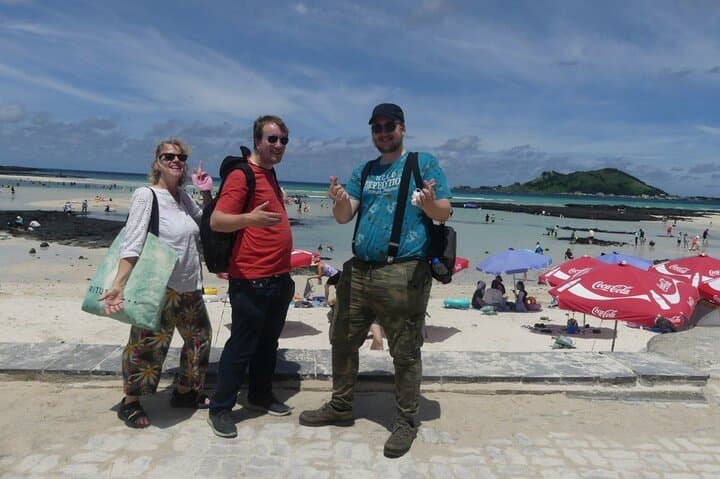
A low-slung island comes into view as the ferry cuts across the blue—Udo’s white shell beaches and small peaks rise like a quiet shoulder off Jeju’s eastern flank. Morning wind moves through low grasses on the headland while local fishing boats rock at the pier; the air smells faintly of salt and roasted peanuts from roadside cafes.
Verified experiences and guided adventures in the surrounding area.
Operated by Jeju K Tour(Jeju K Travel Agency Co., Ltd.) · Seogwipo, Jeju Special Self-Governing Province
A low-slung island comes into view as the ferry cuts across the blue—Udo’s white shell beaches and small peaks rise like a quiet shoulder off Jeju’s eastern flank. Morning wind moves through low grasses on the headland while local fishing boats rock at the pier; the air smells faintly of salt and roasted peanuts from roadside cafes.
Udo is the second-largest islet in Jeju Province, formed from lava flows and coastal uplift that created basalt cliffs, black volcanic rock, and beaches unlike continental sand—some are made of crushed shells. The island’s villages preserve islander culture: haenyeo (women divers) still surface with seafood, and thatched-roof houses remain in nearby Seongeup Village on Jeju. Seopjikoji’s coastal promontory and the small lighthouse here have been used in Korean film and television, adding a contemporary cultural layer to the geology.
This private half-day tour typically hits Geommollae and Hongjodangoe beaches, Udobong peak viewpoints, and Hagosu-dong’s shoreline by taxi, with time for a café stop. Expect short walks to lookouts, flat coastal roads ideal for e-bikes, and a ferry crossing of about 15 minutes from Seongsan. Bring an ID to buy ferry tickets, check weather-dependent boat schedules, and allow 3–4 hours for a concise loop or plan to spend a full day ashore for a relaxed pace.
Practical: wear comfortable walking shoes, sun protection, and a light wind layer; batteries for e-bikes and small cameras charge easily at mainland accommodations. Book morning departures to avoid late-afternoon sea change and confirm return ferry times in advance.
easy.
3–4 hours.
Suitable for most travelers with basic mobility; involves short walks and optional e-bike rides.
Ferries from Seongsan or Jongdal Port take about 15 minutes each way; schedules vary by season and weather.
Yes—Korean authorities require photo ID to buy a ferry ticket and to board Udo-bound boats.
Yes; electric bikes and small rental vehicles are popular for touring the island and typically do not require an international license for low-powered e-bikes.
The tour is mostly by vehicle with short walks to viewpoints; wheelchair accessibility is possible for some stops, but check specific pickup/drop-off and path conditions in advance.
Udo’s volcanic formations are part of Jeju’s volcanic system; the island’s fishing and diving traditions date back centuries, with haenyeo culture central to local identity.
Visitors should avoid taking shells and stay on marked paths to protect fragile shore habitats; support local businesses to sustain small-island livelihoods.
Jeju K Tour(Jeju K Travel Agency Co., Ltd.) operates guided outdoor trips and adventures with an emphasis on safety, stewardship, and memorable experiences.
A low-slung island comes into view as the ferry cuts across the blue—Udo’s white shell beaches and small peaks rise like a quiet shoulder off Jeju’s eastern flank. Morning wind moves through low grasses on the headland while local fishing boats rock at the pier; the air smells faintly of salt and roasted peanuts from roadside cafes.
A low-slung island comes into view as the ferry cuts across the blue—Udo’s white shell beaches and small peaks rise like a quiet shoulder off Jeju’s eastern flank. Morning wind moves through low grasses on the headland while local fishing boats rock at the pier; the air smells faintly of salt and roasted peanuts from roadside cafes.
Udo is the second-largest islet in Jeju Province, formed from lava flows and coastal uplift that created basalt cliffs, black volcanic rock, and beaches unlike continental sand—some are made of crushed shells. The island’s villages preserve islander culture: haenyeo (women divers) still surface with seafood, and thatched-roof houses remain in nearby Seongeup Village on Jeju. Seopjikoji’s coastal promontory and the small lighthouse here have been used in Korean film and television, adding a contemporary cultural layer to the geology.
This private half-day tour typically hits Geommollae and Hongjodangoe beaches, Udobong peak viewpoints, and Hagosu-dong’s shoreline by taxi, with time for a café stop. Expect short walks to lookouts, flat coastal roads ideal for e-bikes, and a ferry crossing of about 15 minutes from Seongsan. Bring an ID to buy ferry tickets, check weather-dependent boat schedules, and allow 3–4 hours for a concise loop or plan to spend a full day ashore for a relaxed pace.
Practical: wear comfortable walking shoes, sun protection, and a light wind layer; batteries for e-bikes and small cameras charge easily at mainland accommodations. Book morning departures to avoid late-afternoon sea change and confirm return ferry times in advance.