THE ADVENTURE COLLECTIVE® · Independent discovery and booking for outdoor travel

Beat the crowds on a private half-day visit to the Tulum ruins with an expert local guide. Early access along the cliff yields clear views of the Castillo and practical insights into the site’s Mayan maritime role.
Beat the crowds on a private half-day visit to the Tulum ruins with an expert local guide. Early access along the cliff yields clear views of the Castillo and practical insights into the site’s Mayan maritime role.
The path to Tulum’s cliff-top ruins begins with salt on the air and gulls cutting the morning sky. Arriving early—before the midday crowds—reveals the Castillo’s outline against the Caribbean; wind pushes you to the cliff edge where turquoise water hurls itself at the limestone below. A private guide tightens the narrative: trade routes, carved stucco, and a city built where reef and shore meet.
Verified experiences and guided adventures in the surrounding area.
Operated by Carey Tours Riviera Maya · Tulum, Quintana Roo
The path to Tulum’s cliff-top ruins begins with salt on the air and gulls cutting the morning sky. Arriving early—before the midday crowds—reveals the Castillo’s outline against the Caribbean; wind pushes you to the cliff edge where turquoise water hurls itself at the limestone below. A private guide tightens the narrative: trade routes, carved stucco, and a city built where reef and shore meet.
Tulum was a Late Postclassic Maya port, one of the few walled settlements on the Yucatán coast. Geologically, the site perches on a low limestone escarpment formed by ancient reefs; erosion and coastal dynamics shaped the beaches at its base. Culturally the ruins reflect maritime trade in cacao, salt and textiles, and the frescoes and cenote-adjacent structures hint at ritual life tied to sea and cenote.
Practical side: expect paved walkways and some uneven stone platforms—the visit is low-impact physically but involves standing and short climbs. Bring sun protection and sip water steadily; shade is limited. Your guide will typically allow an organized hour of interpretation and another hour free to photograph or stroll to the beach access below. Photography is allowed but avoid climbing on structures; follow posted routes and local staff instructions.
Timing matters—early mornings or late afternoons offer cooler light and fewer people. Combine this half-day stop with a later cenote visit or return to Playa del Carmen mid-afternoon. Respect the ruins: touch less, look more. The place rewards quiet attention with details—carved stone, nesting iguanas, and the steady push of the Caribbean beyond.
easy.
4 hours.
Suitable for all fitness levels; involves walking on paved and uneven stone surfaces and short stair sections.
Check the tour listing—some private tours include entrance, others require onsite ticket purchase; confirm at booking.
Yes, there’s a public beach access below the cliff, but currents can be strong—swim cautiously and follow lifeguard or guide advice.
Parts of the site have accessible paths, but the cliff edge and some viewing platforms involve steps; confirm access needs with the operator in advance.
Many private tours offer bilingual guides (Spanish and English); request language preferences when booking.
Tulum was a Late Postclassic Mayan walled city and an important Caribbean trading port, with structures oriented to maritime routes and coastal ceremonies.
High visitation stresses coastal dunes and fragile masonry—stay on marked paths, avoid touching carvings, and use reef-safe sunscreen to protect marine ecosystems.
Carey Tours Riviera Maya operates guided outdoor trips and adventures with an emphasis on safety, stewardship, and memorable experiences.

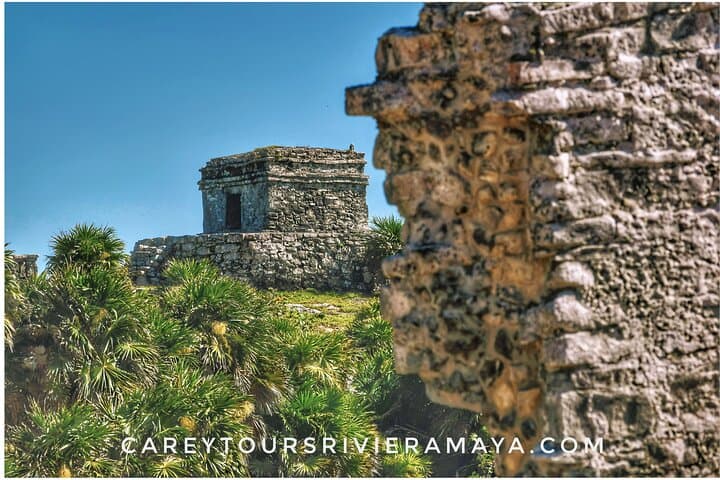


The path to Tulum’s cliff-top ruins begins with salt on the air and gulls cutting the morning sky. Arriving early—before the midday crowds—reveals the Castillo’s outline against the Caribbean; wind pushes you to the cliff edge where turquoise water hurls itself at the limestone below. A private guide tightens the narrative: trade routes, carved stucco, and a city built where reef and shore meet.
The path to Tulum’s cliff-top ruins begins with salt on the air and gulls cutting the morning sky. Arriving early—before the midday crowds—reveals the Castillo’s outline against the Caribbean; wind pushes you to the cliff edge where turquoise water hurls itself at the limestone below. A private guide tightens the narrative: trade routes, carved stucco, and a city built where reef and shore meet.
Tulum was a Late Postclassic Maya port, one of the few walled settlements on the Yucatán coast. Geologically, the site perches on a low limestone escarpment formed by ancient reefs; erosion and coastal dynamics shaped the beaches at its base. Culturally the ruins reflect maritime trade in cacao, salt and textiles, and the frescoes and cenote-adjacent structures hint at ritual life tied to sea and cenote.
Practical side: expect paved walkways and some uneven stone platforms—the visit is low-impact physically but involves standing and short climbs. Bring sun protection and sip water steadily; shade is limited. Your guide will typically allow an organized hour of interpretation and another hour free to photograph or stroll to the beach access below. Photography is allowed but avoid climbing on structures; follow posted routes and local staff instructions.
Timing matters—early mornings or late afternoons offer cooler light and fewer people. Combine this half-day stop with a later cenote visit or return to Playa del Carmen mid-afternoon. Respect the ruins: touch less, look more. The place rewards quiet attention with details—carved stone, nesting iguanas, and the steady push of the Caribbean beyond.