THE ADVENTURE COLLECTIVE® · Independent discovery and booking for outdoor travel

Explore the Giza Plateau on a private half-day tour that pairs expert guiding with a camel ride and close-up views of the Great Pyramid and Sphinx. Practical inclusions and local insights make this an efficient way to experience one of the world’s oldest archaeological sites.
Explore the Giza Plateau on a private half-day tour that pairs expert guiding with a camel ride and close-up views of the Great Pyramid and Sphinx. Practical inclusions and local insights make this an efficient way to experience one of the world’s oldest archaeological sites.
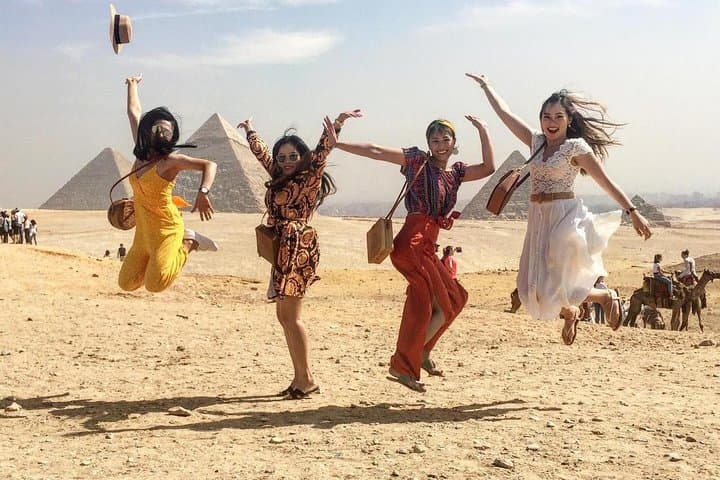
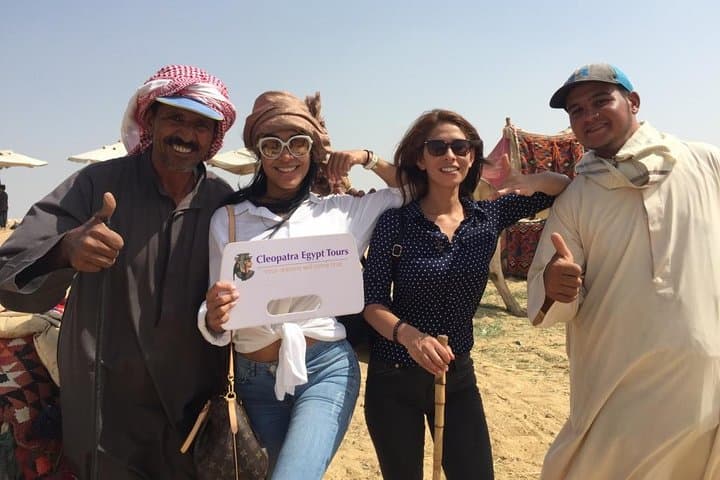
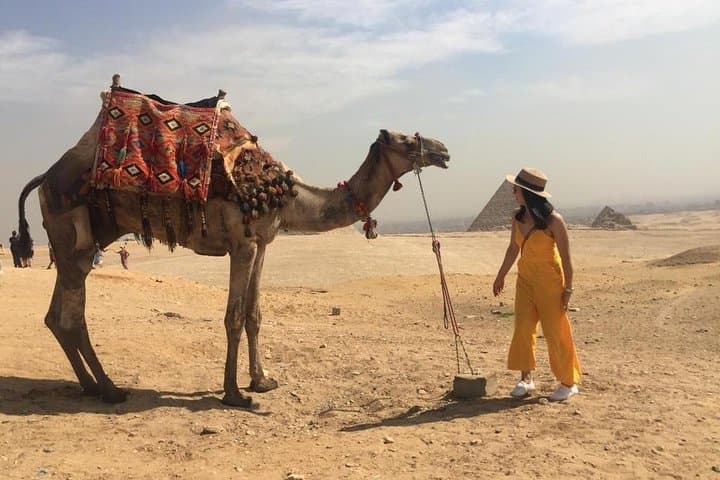
You arrive on the Giza Plateau with dust on your shoes and the wind moving like a low voice across the stones. The bulk of the Great Pyramid rises ahead: sheer, weathered limestone blocks that have watched the edge of the Sahara for nearly 4,600 years. A camel handler offers a steady mount while the Sphinx sits quiet, its gaze fixed eastward.
Verified experiences and guided adventures in the surrounding area.
Operated by Cleopatra Egypt Tours · Giza, Giza Governorate
You arrive on the Giza Plateau with dust on your shoes and the wind moving like a low voice across the stones. The bulk of the Great Pyramid rises ahead: sheer, weathered limestone blocks that have watched the edge of the Sahara for nearly 4,600 years. A camel handler offers a steady mount while the Sphinx sits quiet, its gaze fixed eastward.
The three main pyramids—Khufu (Great Pyramid), Khafre and Menkaure—date to Egypt’s Fourth Dynasty, c. 2600–2500 BCE. The Sphinx and the adjacent Valley Temple once formed part of a funerary complex, their carved faces and dressed stone speaking to ancient engineering and ritual practice. Geologically, the plateau is a limestone bench cut by wind-blown sand; artifacts and masonry bear the slow abrasion of desert grit.
Culturally, the site remains an active place: local guides narrate dynastic politics and pharaonic beliefs while vendors sell tea and postcards at the plateau’s margins. Expect close-range views, photo stops, and the option to ride a camel for a classic perspective over the dunes.
Practical guidance: this private half-day runs about four hours and includes pickup, a licensed Egyptologist guide, bottled water, and a light lunch. Wear sun protection, closed-toe shoes for uneven ground, and bring cash for tips and optional extras. Morning or late-afternoon departures avoid the peak heat; climbing the monuments is prohibited—respect ropes and signage to help conserve the site.
easy.
4 hours.
Suitable for most fitness levels; requires standing and walking on uneven, sandy ground for short stretches.
Yes—the tour listing indicates a camel ride at the pyramids is included as part of the private half-day experience.
Policies vary by operator; confirm at booking whether the site entrance ticket is included or paid separately by the guest.
The tour is described as suitable for all fitness levels, but participants should be able to walk on uneven ground and mount a camel if they choose to ride.
Early morning or late afternoon offers cooler temperatures and softer light for photography; midday can be very hot, especially in summer.
The Giza complex dates to Egypt’s Old Kingdom (4th Dynasty); the Great Pyramid was built for Pharaoh Khufu around 2560 BCE and remains the largest of the three main pyramids.
The site is sensitive to erosion and visitor impact; follow signage, avoid touching carved surfaces, and comply with local rules—climbing the monuments is prohibited to protect the structures.
Cleopatra Egypt Tours operates guided outdoor trips and adventures with an emphasis on safety, stewardship, and memorable experiences.

You arrive on the Giza Plateau with dust on your shoes and the wind moving like a low voice across the stones. The bulk of the Great Pyramid rises ahead: sheer, weathered limestone blocks that have watched the edge of the Sahara for nearly 4,600 years. A camel handler offers a steady mount while the Sphinx sits quiet, its gaze fixed eastward.
You arrive on the Giza Plateau with dust on your shoes and the wind moving like a low voice across the stones. The bulk of the Great Pyramid rises ahead: sheer, weathered limestone blocks that have watched the edge of the Sahara for nearly 4,600 years. A camel handler offers a steady mount while the Sphinx sits quiet, its gaze fixed eastward.
The three main pyramids—Khufu (Great Pyramid), Khafre and Menkaure—date to Egypt’s Fourth Dynasty, c. 2600–2500 BCE. The Sphinx and the adjacent Valley Temple once formed part of a funerary complex, their carved faces and dressed stone speaking to ancient engineering and ritual practice. Geologically, the plateau is a limestone bench cut by wind-blown sand; artifacts and masonry bear the slow abrasion of desert grit.
Culturally, the site remains an active place: local guides narrate dynastic politics and pharaonic beliefs while vendors sell tea and postcards at the plateau’s margins. Expect close-range views, photo stops, and the option to ride a camel for a classic perspective over the dunes.
Practical guidance: this private half-day runs about four hours and includes pickup, a licensed Egyptologist guide, bottled water, and a light lunch. Wear sun protection, closed-toe shoes for uneven ground, and bring cash for tips and optional extras. Morning or late-afternoon departures avoid the peak heat; climbing the monuments is prohibited—respect ropes and signage to help conserve the site.