THE ADVENTURE COLLECTIVE® · Independent discovery and booking for outdoor travel

See Georgia’s spiritual heart in one half-day: monumental pillars at the Chronicles, hilltop views from Jvari Monastery, and the centuries-old Svetitskhoveli Cathedral in Mtskheta. This private tour blends history, short walks, and local flavors with easy logistics from Tbilisi.
See Georgia’s spiritual heart in one half-day: monumental pillars at the Chronicles, hilltop views from Jvari Monastery, and the centuries-old Svetitskhoveli Cathedral in Mtskheta. This private tour blends history, short walks, and local flavors with easy logistics from Tbilisi.
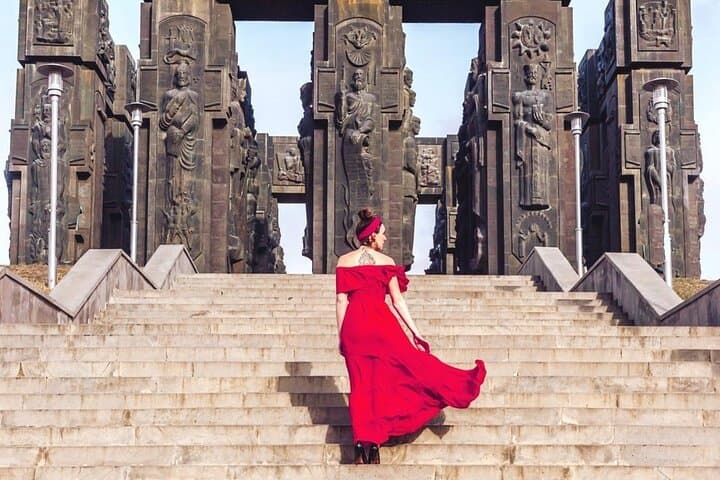
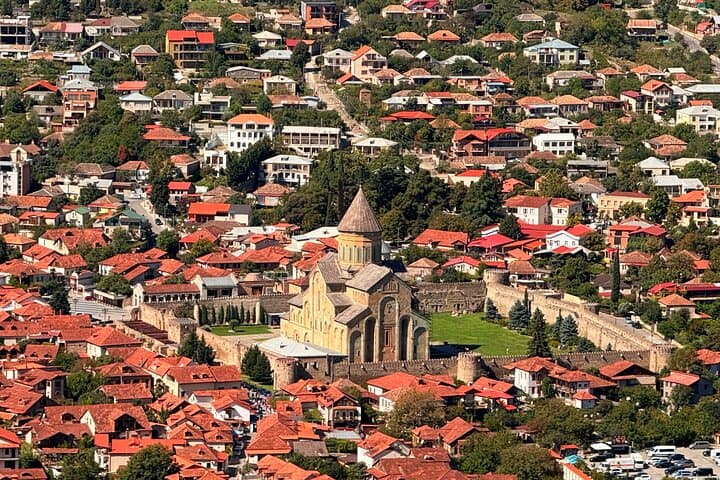
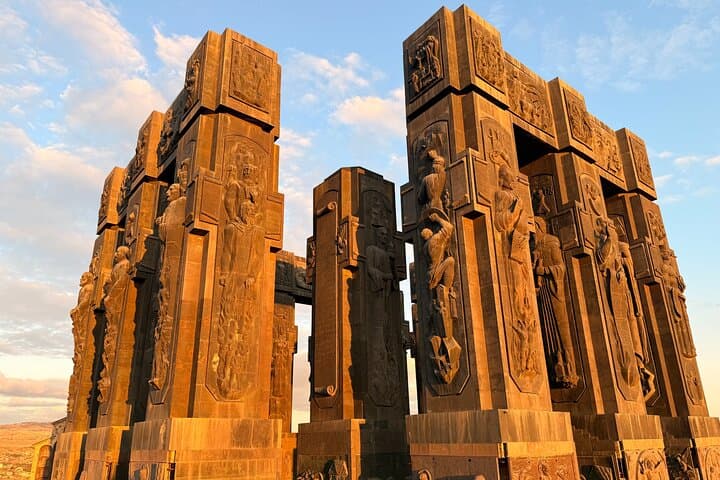
A low-slung bus pulls away from central Tbilisi and the road opens toward the low hills north of the city. In an hour the air sharpens with river-borne breeze and the massive pillars of the Chronicles of Georgia rise up on the skyline like a modern colonnade guarding the Tbilisi Sea. Visitors stand on the concrete plaza and look downhill toward a ribbon of water and, farther, the compact town of Mtskheta where stone roofs cluster around a medieval cathedral.
Verified experiences and guided adventures in the surrounding area.
Operated by Georgian Welcome Tours · Mtskheta, Mtskheta-Mtianeti
A low-slung bus pulls away from central Tbilisi and the road opens toward the low hills north of the city. In an hour the air sharpens with river-borne breeze and the massive pillars of the Chronicles of Georgia rise up on the skyline like a modern colonnade guarding the Tbilisi Sea. Visitors stand on the concrete plaza and look downhill toward a ribbon of water and, farther, the compact town of Mtskheta where stone roofs cluster around a medieval cathedral.
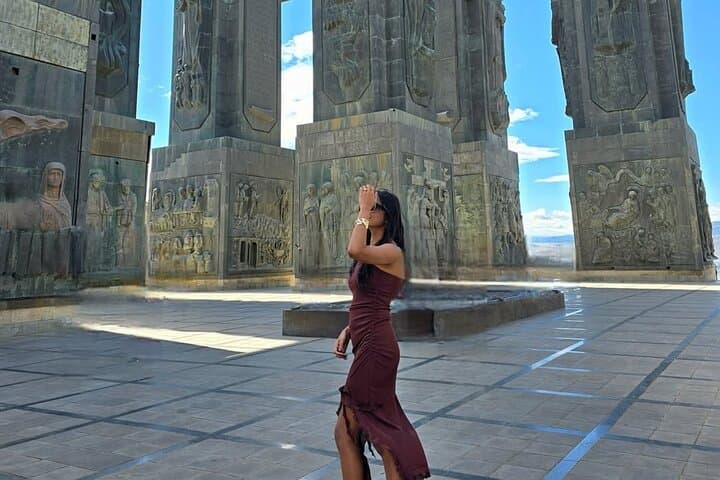
Mtskheta was Georgia’s first capital and a crucible of early Christianity in the Caucasus; Svetitskhoveli Cathedral dates to the 11th century and is said to shelter the Robe of Christ. Jvari Monastery, a compact 6th-century church, perches above the confluence of the Mtkvari and Aragvi rivers—its hilltop outlook reveals why this site has been sacred for a millennium. The Chronicles, finished in the late Soviet era, juxtapose monumental Soviet-era stonework with carved scenes from Georgia’s royal and ecclesiastical past.
Expect a mix of short walks, stair climbs and paved viewpoints rather than long hikes; the terrain is rocky and exposed in places, with wind that often seems to push visitors toward the railings. Local guides point out fresco fragments, Georgian cross motifs and neighborhood bakeries where fresh bread steams in the morning.
Practical guidance: bring modest clothing for churches, comfortable shoes for uneven surfaces, sun protection in summer, and a small amount of cash for souvenirs. Tours typically include pickup from Tbilisi, bottled water and local wine tasting—plan for roughly five hours round-trip and a steady pace with multiple photo stops.
easy.
5 hours.
Suitable for most people who can manage short uphill walks and stairs; minimal endurance required.
Most standard entrances on this tour (Chronicles, Jvari, Svetitskhoveli) are included, but verify with your operator if special exhibitions require extra payment.
The route includes stairs and uneven paths; it is not recommended for wheelchair users or those with limited mobility.
Travel time is typically 30–45 minutes to the Chronicles area and another short drive down to Mtskheta, depending on traffic.
Photography is usually permitted in exterior and some interior areas, but flash and tripods may be restricted—follow onsite signage and guide instruction.
Mtskheta served as Georgia’s capital until the 5th century and was central to the country’s conversion to Christianity in the 4th century, which shaped its monumental churches.
These UNESCO-listed sites are sensitive to wear; stick to designated paths, avoid touching frescoes, and support local guides and small vendors to help sustain the town’s economy.
Georgian Welcome Tours operates guided outdoor trips and adventures with an emphasis on safety, stewardship, and memorable experiences.
A low-slung bus pulls away from central Tbilisi and the road opens toward the low hills north of the city. In an hour the air sharpens with river-borne breeze and the massive pillars of the Chronicles of Georgia rise up on the skyline like a modern colonnade guarding the Tbilisi Sea. Visitors stand on the concrete plaza and look downhill toward a ribbon of water and, farther, the compact town of Mtskheta where stone roofs cluster around a medieval cathedral.
A low-slung bus pulls away from central Tbilisi and the road opens toward the low hills north of the city. In an hour the air sharpens with river-borne breeze and the massive pillars of the Chronicles of Georgia rise up on the skyline like a modern colonnade guarding the Tbilisi Sea. Visitors stand on the concrete plaza and look downhill toward a ribbon of water and, farther, the compact town of Mtskheta where stone roofs cluster around a medieval cathedral.
Mtskheta was Georgia’s first capital and a crucible of early Christianity in the Caucasus; Svetitskhoveli Cathedral dates to the 11th century and is said to shelter the Robe of Christ. Jvari Monastery, a compact 6th-century church, perches above the confluence of the Mtkvari and Aragvi rivers—its hilltop outlook reveals why this site has been sacred for a millennium. The Chronicles, finished in the late Soviet era, juxtapose monumental Soviet-era stonework with carved scenes from Georgia’s royal and ecclesiastical past.
Expect a mix of short walks, stair climbs and paved viewpoints rather than long hikes; the terrain is rocky and exposed in places, with wind that often seems to push visitors toward the railings. Local guides point out fresco fragments, Georgian cross motifs and neighborhood bakeries where fresh bread steams in the morning.
Practical guidance: bring modest clothing for churches, comfortable shoes for uneven surfaces, sun protection in summer, and a small amount of cash for souvenirs. Tours typically include pickup from Tbilisi, bottled water and local wine tasting—plan for roughly five hours round-trip and a steady pace with multiple photo stops.