THE ADVENTURE COLLECTIVE® · Independent discovery and booking for outdoor travel

Explore the origins of Egypt’s monumental age on a private half-day tour to Saqqara and Memphis. See Djoser’s Step Pyramid and the alabaster sphinx with a guide who explains the engineering, art, and recent finds that shaped pharaonic history.
Explore the origins of Egypt’s monumental age on a private half-day tour to Saqqara and Memphis. See Djoser’s Step Pyramid and the alabaster sphinx with a guide who explains the engineering, art, and recent finds that shaped pharaonic history.
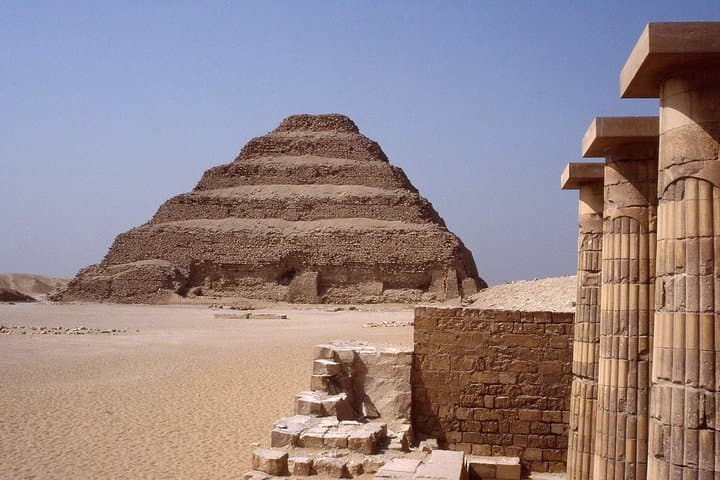
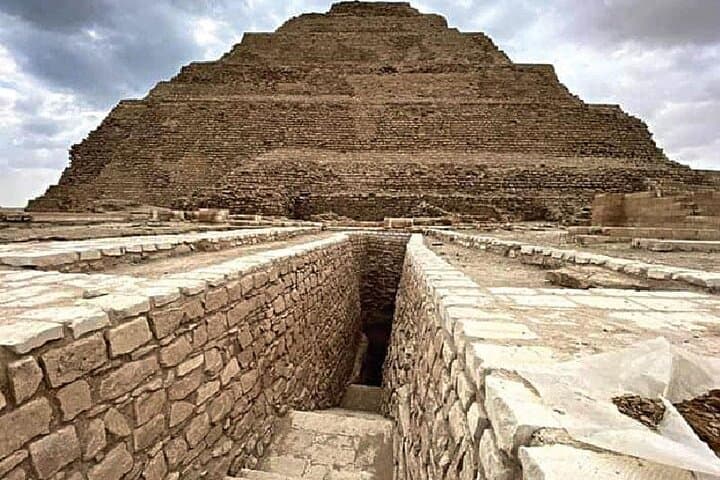
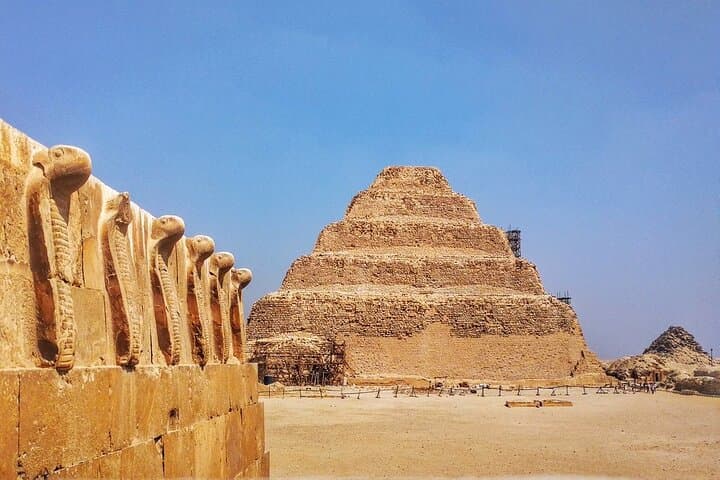
A dry wind brushes the open desert as the tour vehicle drops you at the low stone ridge that marks Saqqara. The stepped silhouette of Djoser’s pyramid cuts the sky — a plain, angular promise of something older and deliberate. With an expert guide, visitors move from the broad, sand-swept causeways to the shaded recesses of mastaba tombs, where carved reliefs still hold the measured lines of early pharaonic life.
Verified experiences and guided adventures in the surrounding area.
Operated by Your Egypt Tours · Saqqara, Cairo Governorate
A dry wind brushes the open desert as the tour vehicle drops you at the low stone ridge that marks Saqqara. The stepped silhouette of Djoser’s pyramid cuts the sky — a plain, angular promise of something older and deliberate. With an expert guide, visitors move from the broad, sand-swept causeways to the shaded recesses of mastaba tombs, where carved reliefs still hold the measured lines of early pharaonic life.
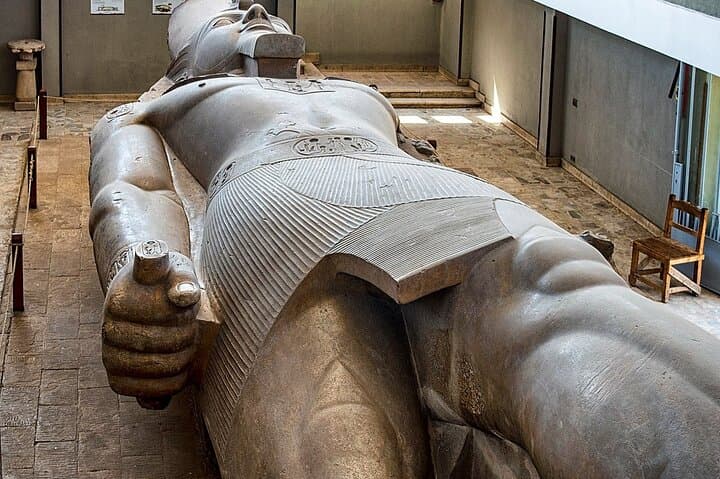
This half-day circuit threads two foundational sites in ancient Egyptian history. Saqqara, where Imhotep’s Step Pyramid of Djoser (c. 2800 BCE) launched the age of monumental stone, occupies a dry limestone plateau dotted with mastabas and recent archaeological finds. A short drive brings you to Memphis (Mit Rahina), the open-air museum of Egypt’s first capital, home to the colossus of Ramses II and the alabaster sphinx — evidence of the sculptural skill that followed early engineering experiments.
Geology here is simple: a compact desert plateau of limestone and sand, offering mostly level walking with minimal elevation change (under a few dozen meters across the sites). Culture and commerce meet archaeology at the Papyrus Institute near the necropolis, where demonstrations and small purchases are optional.
Practical guidance: expect a 4–5 hour outing about 30 km south of central Cairo with hotel pickup and drop-off, bottled water provided, and wheelchair-accessible transport if requested. Wear sturdy walking shoes, sun protection, and plan morning or late-afternoon visits to avoid peak heat. Ask your guide about restricted zones and recent excavations — they control access and the pace of your visit.
easy.
4–5 hours.
Suitable for most fitness levels; involves several short walks on flat, uneven stone and sand.
Yes — entrance to the archaeological areas visited on this private tour is included as part of the itinerary.
The tour lists wheelchair-accessible transportation and options; some uneven ground at the sites may limit access within certain excavated areas—check with the operator on booking.
There is an optional stop at a Papyrus Institute where demonstrations and purchases are available; buying is optional and small local vendors may take cash only.
Photography is generally permitted in outdoor areas; your guide will point out any restricted zones or museum rules — drone use typically requires permits and is not allowed without authorization.
Saqqara is the necropolis for Memphis and houses the Step Pyramid of Djoser (designed by Imhotep, c. 2800 BCE), a pivotal development in stone architecture. Memphis served as the administrative capital of unified Upper and Lower Egypt in the Early Dynastic and Old Kingdom periods.
Visitor management and controlled access protect fragile tomb decorations and newly excavated finds; follow the guide and avoid touching ancient surfaces to minimize erosion and damage.
Your Egypt Tours operates guided outdoor trips and adventures with an emphasis on safety, stewardship, and memorable experiences.
A dry wind brushes the open desert as the tour vehicle drops you at the low stone ridge that marks Saqqara. The stepped silhouette of Djoser’s pyramid cuts the sky — a plain, angular promise of something older and deliberate. With an expert guide, visitors move from the broad, sand-swept causeways to the shaded recesses of mastaba tombs, where carved reliefs still hold the measured lines of early pharaonic life.
A dry wind brushes the open desert as the tour vehicle drops you at the low stone ridge that marks Saqqara. The stepped silhouette of Djoser’s pyramid cuts the sky — a plain, angular promise of something older and deliberate. With an expert guide, visitors move from the broad, sand-swept causeways to the shaded recesses of mastaba tombs, where carved reliefs still hold the measured lines of early pharaonic life.
This half-day circuit threads two foundational sites in ancient Egyptian history. Saqqara, where Imhotep’s Step Pyramid of Djoser (c. 2800 BCE) launched the age of monumental stone, occupies a dry limestone plateau dotted with mastabas and recent archaeological finds. A short drive brings you to Memphis (Mit Rahina), the open-air museum of Egypt’s first capital, home to the colossus of Ramses II and the alabaster sphinx — evidence of the sculptural skill that followed early engineering experiments.
Geology here is simple: a compact desert plateau of limestone and sand, offering mostly level walking with minimal elevation change (under a few dozen meters across the sites). Culture and commerce meet archaeology at the Papyrus Institute near the necropolis, where demonstrations and small purchases are optional.
Practical guidance: expect a 4–5 hour outing about 30 km south of central Cairo with hotel pickup and drop-off, bottled water provided, and wheelchair-accessible transport if requested. Wear sturdy walking shoes, sun protection, and plan morning or late-afternoon visits to avoid peak heat. Ask your guide about restricted zones and recent excavations — they control access and the pace of your visit.