THE ADVENTURE COLLECTIVE® · Independent discovery and booking for outdoor travel

Stand on the Giza Plateau with an Egyptologist at your side and encounter the Great Pyramid, Khafre’s complex, and the Sphinx in a focused private half-day tour. Expect expert context, optional pyramid entry, and a chance to ride a camel across millennia of history.
Stand on the Giza Plateau with an Egyptologist at your side and encounter the Great Pyramid, Khafre’s complex, and the Sphinx in a focused private half-day tour. Expect expert context, optional pyramid entry, and a chance to ride a camel across millennia of history.
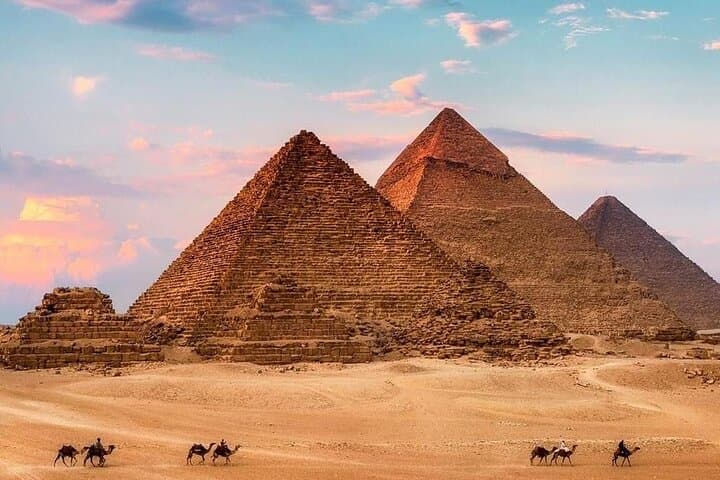
A low wind carries dry golden grit across the Giza Plateau as the three great tombs rise from the desert like constructed mountains. Your Egyptologist meets you at your hotel and, within an hour, you step out onto the plateau where stone blocks older than many nations press against the horizon.
Verified experiences and guided adventures in the surrounding area.
Operated by Camel Tours Egypt · Giza, Cairo Governorate
A low wind carries dry golden grit across the Giza Plateau as the three great tombs rise from the desert like constructed mountains. Your Egyptologist meets you at your hotel and, within an hour, you step out onto the plateau where stone blocks older than many nations press against the horizon.
These monuments date to the Fourth Dynasty (c. 2600–2500 BCE). The Great Pyramid of Khufu was the world's tallest structure for millennia; its limestone casing once gleamed in the sun. Geologically the plateau is a raised limestone shelf capped by wind-polished bedrock, the very material quarried to build the tombs.
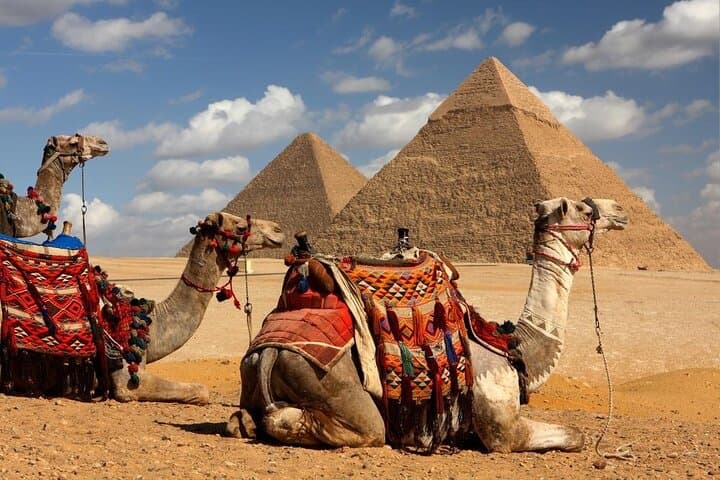
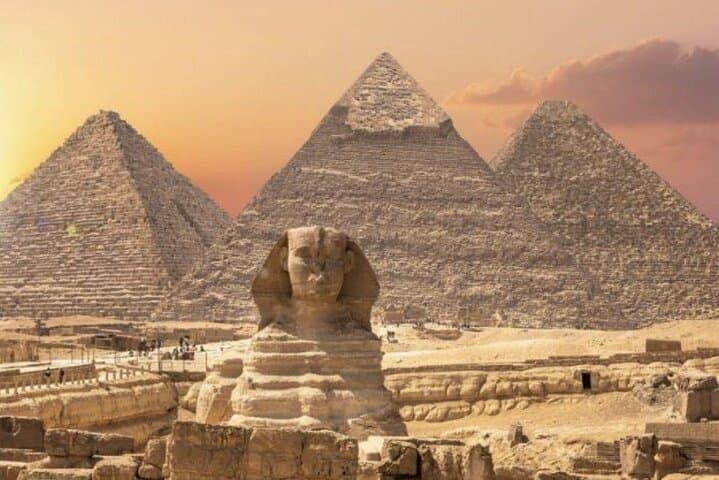
Culturally the site remains active: local families, bazaar sellers, and Bedouin camel handlers form a living layer around ancient funerary architecture. Your guide will explain mortuary rituals at the Valley Temples, the rise of Old Kingdom statecraft, and the Sphinx’s fractured face and possible associations with Khafre.
Practicalities frame the visit. The standard private half-day runs about 4–6 hours with hotel pickup; expect uneven walking surfaces, loose gravel, and short climbs. Interior pyramid access requires a separate ticket and narrow, low-ceiling passages—bring a headlamp if claustrophobia is a concern. Camel rides and panoramic viewpoint stops are optional and paid locally. Carry water, sun protection, and some cash for small purchases or tips. Aim for early morning or late afternoon to avoid peak heat and harsh midday light for photos.
A guided half-day here crystallizes thousands of years into a few precise hours: monumental stone, meticulous explanation, and enough time to feel the desert push at your boots before returning to the modern city.
easy.
4–6 hours.
Basic fitness—able to walk 1–3 miles on uneven ground and climb short stone steps.
Yes—interior entry requires an additional ticket available locally; tell your guide early so they can arrange it and explain the narrow, low passages.
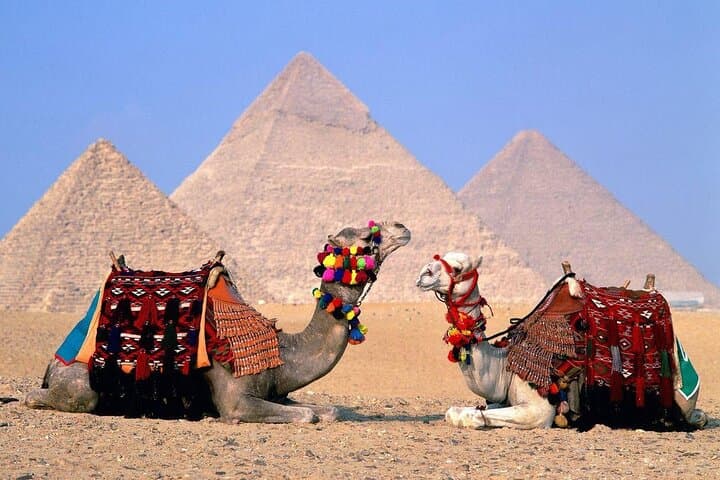
Camel rides are optional and not always included; they are offered on-site for an extra charge and prices vary by operator.
Most private tours include hotel pickup and return by air-conditioned vehicle within central Cairo and Giza; confirm pickup details when booking.
The plateau has uneven terrain and loose gravel; some areas are stroller-accessible, but full accessibility is limited—contact the operator to discuss specific needs.
The Giza monuments were built during Egypt’s Fourth Dynasty (c. 2600–2500 BCE); the Great Pyramid was engineered as a precise funerary structure for Pharaoh Khufu.
High visitor numbers and wind erosion threaten fragile surfaces; stick to designated paths, avoid climbing on monuments, and follow guide instructions to support preservation.
Camel Tours Egypt operates guided outdoor trips and adventures with an emphasis on safety, stewardship, and memorable experiences.
A low wind carries dry golden grit across the Giza Plateau as the three great tombs rise from the desert like constructed mountains. Your Egyptologist meets you at your hotel and, within an hour, you step out onto the plateau where stone blocks older than many nations press against the horizon.
A low wind carries dry golden grit across the Giza Plateau as the three great tombs rise from the desert like constructed mountains. Your Egyptologist meets you at your hotel and, within an hour, you step out onto the plateau where stone blocks older than many nations press against the horizon.
These monuments date to the Fourth Dynasty (c. 2600–2500 BCE). The Great Pyramid of Khufu was the world's tallest structure for millennia; its limestone casing once gleamed in the sun. Geologically the plateau is a raised limestone shelf capped by wind-polished bedrock, the very material quarried to build the tombs.
Culturally the site remains active: local families, bazaar sellers, and Bedouin camel handlers form a living layer around ancient funerary architecture. Your guide will explain mortuary rituals at the Valley Temples, the rise of Old Kingdom statecraft, and the Sphinx’s fractured face and possible associations with Khafre.
Practicalities frame the visit. The standard private half-day runs about 4–6 hours with hotel pickup; expect uneven walking surfaces, loose gravel, and short climbs. Interior pyramid access requires a separate ticket and narrow, low-ceiling passages—bring a headlamp if claustrophobia is a concern. Camel rides and panoramic viewpoint stops are optional and paid locally. Carry water, sun protection, and some cash for small purchases or tips. Aim for early morning or late afternoon to avoid peak heat and harsh midday light for photos.
A guided half-day here crystallizes thousands of years into a few precise hours: monumental stone, meticulous explanation, and enough time to feel the desert push at your boots before returning to the modern city.