THE ADVENTURE COLLECTIVE® · Independent discovery and booking for outdoor travel

Spend four hours exploring the Sakkara plateau with a private guide. Visit the Step Pyramid of Djoser, historic mastabas, and select tombs while learning how Imhotep’s innovations shaped ancient Egypt.
Spend four hours exploring the Sakkara plateau with a private guide. Visit the Step Pyramid of Djoser, historic mastabas, and select tombs while learning how Imhotep’s innovations shaped ancient Egypt.
The sun cuts a clean line across the desert as you step from an air-conditioned vehicle onto packed sand and crushed limestone. The Step Pyramid of Djoser rises ahead—stone tiers stacked like the first answer to a long architectural question—while low walls, carved tomb facades, and scattered mastabas hold the quieter stories of an empire that shaped the Nile’s future.
Verified experiences and guided adventures in the surrounding area.
Operated by Pharaoh's voyage Egypt · Saqqara, Giza Governorate
The sun cuts a clean line across the desert as you step from an air-conditioned vehicle onto packed sand and crushed limestone. The Step Pyramid of Djoser rises ahead—stone tiers stacked like the first answer to a long architectural question—while low walls, carved tomb facades, and scattered mastabas hold the quieter stories of an empire that shaped the Nile’s future.
Sakkara is the burial ground of ancient Memphis and the laboratory of early Egyptian architecture. Imhotep’s Step Pyramid (c. 27th century BCE) marks the shift from mudbrick mastaba to monumental stone. Around it, tombs from the Old and Middle Kingdoms preserve vivid reliefs, offering insight into daily life, religious rites, and funerary craft. Geologically, the plateau is a sweep of Eocene limestone; erosion and rising groundwater are constant concerns for conservation.
On a four-hour private tour you’ll move deliberately: guided visits to the Step Pyramid, the funerary complex, and select mastabas (entrance included). Expect uneven surfaces, short stair sections into tomb chambers, and open exposure to the sun. Photography is allowed in many areas but check with your guide about restricted interiors.
Practical edge: start early to avoid midday heat, carry water and sun protection, and wear shoes with firm soles for compacted sand and carved thresholds. Respect ropes and signage—many surfaces are fragile. A private guide streamlines access and context, turning names and dates into scenes you can picture standing where history was built.
easy.
4 hours.
Suitable for most fitness levels; expect short walks on uneven ground and a few steps into tomb shafts.
Yes—this private tour includes entrance fees as noted, so you won’t need to pay on arrival for standard site access.
The tour runs about four hours total; pickups are typically arranged from Cairo/Giza hotels—confirm your pickup point when booking.
Many tombs are visitable and photography is usually allowed, but some interiors may be restricted to protect fragile surfaces—your guide will advise on site rules.
The tour is classified as easy; it’s family-friendly, but mobility limitations may restrict access to some tomb chambers that require steps or low passages.
Sakkara served as the necropolis for ancient Memphis; Imhotep’s Step Pyramid is the earliest large-scale stone structure, marking a milestone in Egyptian funerary architecture.
Rising groundwater and visitor impact threaten carved surfaces; follow stay-on-path rules and support conservation fees to help protect the site.
Pharaoh's voyage Egypt operates guided outdoor trips and adventures with an emphasis on safety, stewardship, and memorable experiences.
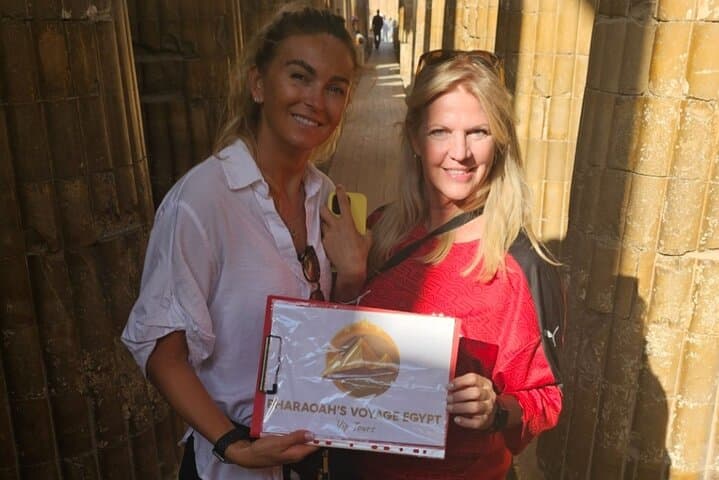
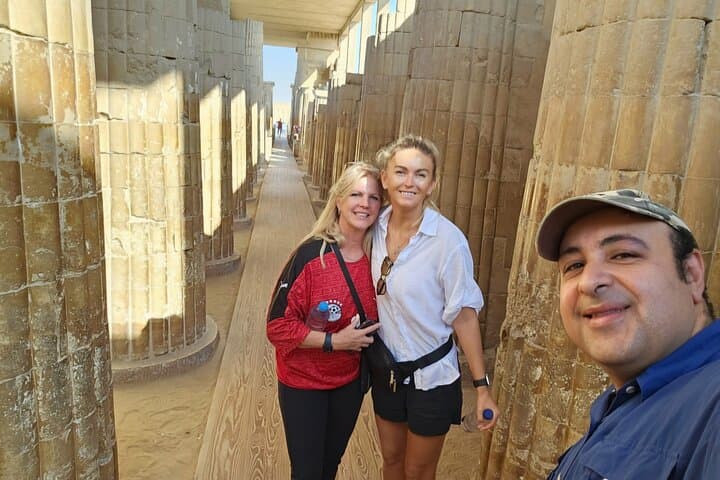
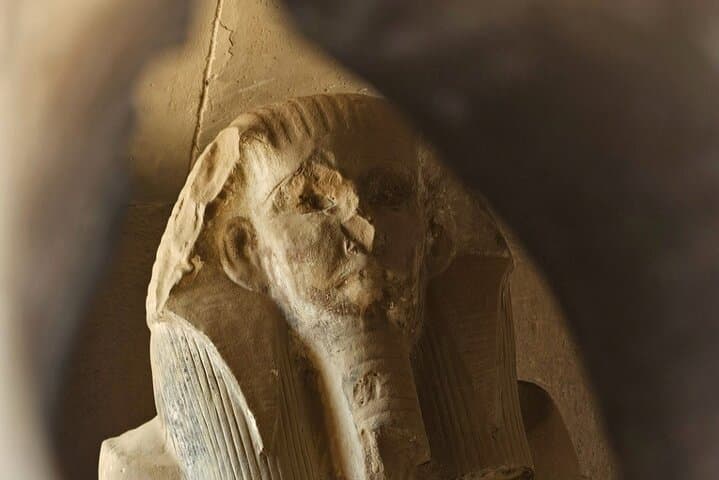
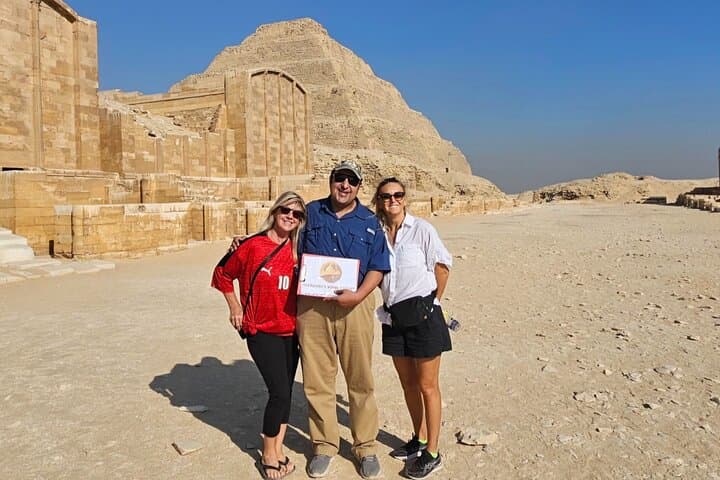
The sun cuts a clean line across the desert as you step from an air-conditioned vehicle onto packed sand and crushed limestone. The Step Pyramid of Djoser rises ahead—stone tiers stacked like the first answer to a long architectural question—while low walls, carved tomb facades, and scattered mastabas hold the quieter stories of an empire that shaped the Nile’s future.
The sun cuts a clean line across the desert as you step from an air-conditioned vehicle onto packed sand and crushed limestone. The Step Pyramid of Djoser rises ahead—stone tiers stacked like the first answer to a long architectural question—while low walls, carved tomb facades, and scattered mastabas hold the quieter stories of an empire that shaped the Nile’s future.
Sakkara is the burial ground of ancient Memphis and the laboratory of early Egyptian architecture. Imhotep’s Step Pyramid (c. 27th century BCE) marks the shift from mudbrick mastaba to monumental stone. Around it, tombs from the Old and Middle Kingdoms preserve vivid reliefs, offering insight into daily life, religious rites, and funerary craft. Geologically, the plateau is a sweep of Eocene limestone; erosion and rising groundwater are constant concerns for conservation.
On a four-hour private tour you’ll move deliberately: guided visits to the Step Pyramid, the funerary complex, and select mastabas (entrance included). Expect uneven surfaces, short stair sections into tomb chambers, and open exposure to the sun. Photography is allowed in many areas but check with your guide about restricted interiors.
Practical edge: start early to avoid midday heat, carry water and sun protection, and wear shoes with firm soles for compacted sand and carved thresholds. Respect ropes and signage—many surfaces are fragile. A private guide streamlines access and context, turning names and dates into scenes you can picture standing where history was built.