THE ADVENTURE COLLECTIVE® · Independent discovery and booking for outdoor travel

Explore Karnak’s colossal columns and Luxor’s sunset-lit sanctuaries on a private half-day guided tour. Skip the lines, learn the stories of pharaohs, and see two of ancient Thebes’ most iconic temple complexes with an expert Egyptologist.
Explore Karnak’s colossal columns and Luxor’s sunset-lit sanctuaries on a private half-day guided tour. Skip the lines, learn the stories of pharaohs, and see two of ancient Thebes’ most iconic temple complexes with an expert Egyptologist.
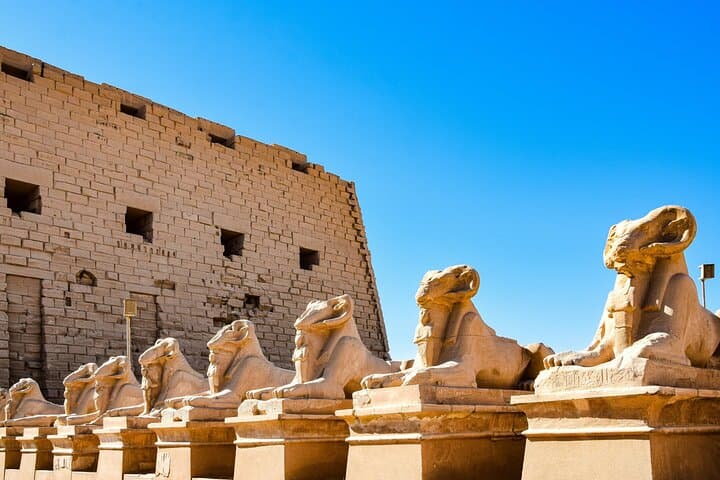
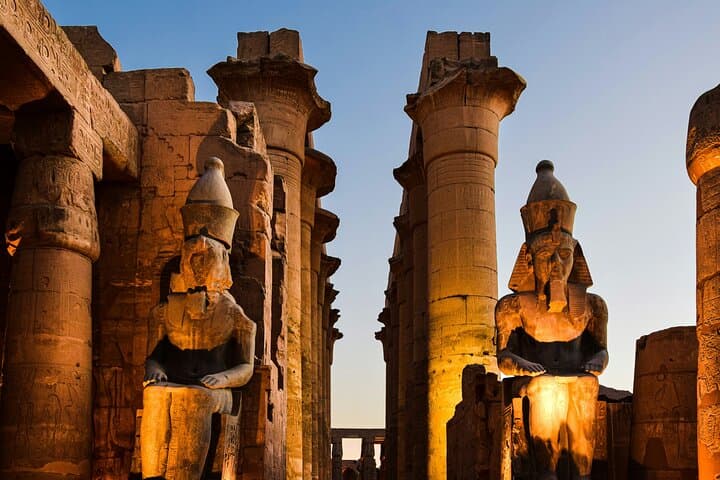
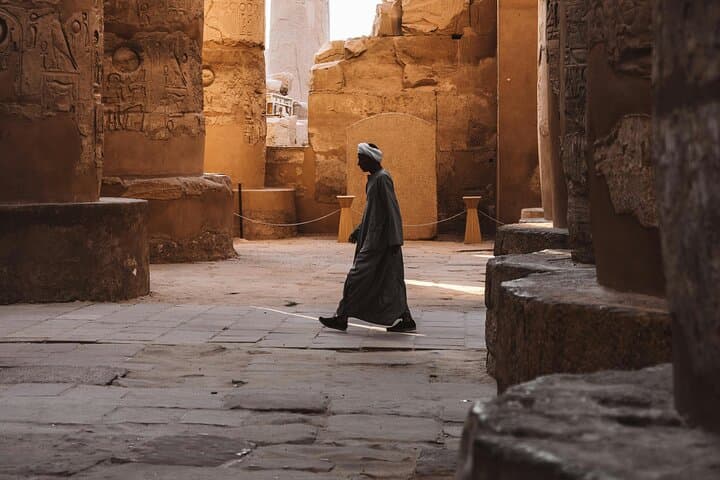
You step from the shaded van into a sun-washed avenue where stone sphinxes keep silent guard and columns rise like a carved forest. Dust skirts the base of obelisks; the air tastes of sand and the Nile’s distant coolness. This private half-day tour threads you through Karnak’s hypostyle hall and the layered courts of Luxor Temple, where light and shadow rewrite the hieroglyphs every hour.
Verified experiences and guided adventures in the surrounding area.
Operated by Ancient Luxor Tours · Luxor, Luxor Governorate
You step from the shaded van into a sun-washed avenue where stone sphinxes keep silent guard and columns rise like a carved forest. Dust skirts the base of obelisks; the air tastes of sand and the Nile’s distant coolness. This private half-day tour threads you through Karnak’s hypostyle hall and the layered courts of Luxor Temple, where light and shadow rewrite the hieroglyphs every hour.
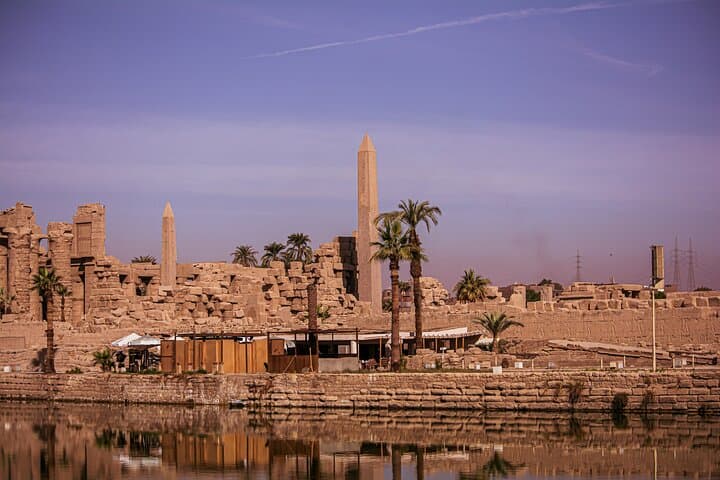
Karnak grew across millennia, a complex of sanctuaries expanded by New Kingdom pharaohs — Ramses, Hatshepsut and Amenhotep among them. The temple’s sandstone and granite speak to both geology (Egypt’s sedimentary stones) and to imperial ambition: colossal columns, the Sacred Lake, and an Avenue of Sphinxes that once linked twin precincts. Luxor Temple, rebuilt and reused by Romans and later rulers, shows the city’s continuous occupation from Thebes to Alexander and beyond, a cultural palimpsest where local ritual met imperial pageantry.
Practically: plan the day to see Karnak when the sun slants across the Hypostyle Hall and save Luxor Temple for late afternoon or sunset to get the dramatic reliefs in warm light. Expect uneven stone floors, steps and exposed surfaces; guided context makes inscriptions accessible and skips common pitfalls like missing small chapels. Bring water, sun protection and modest clothing; most options include private transport and a licensed Egyptologist but check whether entrance tickets are included. Respect the sites—no climbing or touching fragile carvings—and tip guides who translate centuries of history into a clear, personal narrative.
easy.
4 hours.
Light fitness required—ability to walk and stand for extended periods and navigate uneven stone surfaces.
Some tour options include entrance tickets while others charge separately—confirm your booking option and have cash or a card ready if tickets must be purchased on site.
The operator lists accessibility, but ancient temples have uneven thresholds and steps; request accessibility details and vehicle accommodations when you book.
Karnak is best visited in the cooler morning light to study hieroglyphs, while Luxor Temple is most atmospheric at late afternoon and sunset when carvings are backlit.
Expect moderate walking across flat and stepped stone areas—roughly 1–3 km total while exploring both temples, with plenty of stops for interpretation.
Luxor (ancient Thebes) served as Egypt’s religious heart in the New Kingdom; Karnak’s complex accumulated building campaigns over more than a millennium.
Tourism places continual pressure on fragile stonework—stay on designated paths, avoid touching reliefs, and support licensed local guides who help fund site stewardship.
Ancient Luxor Tours operates guided outdoor trips and adventures with an emphasis on safety, stewardship, and memorable experiences.
You step from the shaded van into a sun-washed avenue where stone sphinxes keep silent guard and columns rise like a carved forest. Dust skirts the base of obelisks; the air tastes of sand and the Nile’s distant coolness. This private half-day tour threads you through Karnak’s hypostyle hall and the layered courts of Luxor Temple, where light and shadow rewrite the hieroglyphs every hour.
You step from the shaded van into a sun-washed avenue where stone sphinxes keep silent guard and columns rise like a carved forest. Dust skirts the base of obelisks; the air tastes of sand and the Nile’s distant coolness. This private half-day tour threads you through Karnak’s hypostyle hall and the layered courts of Luxor Temple, where light and shadow rewrite the hieroglyphs every hour.
Karnak grew across millennia, a complex of sanctuaries expanded by New Kingdom pharaohs — Ramses, Hatshepsut and Amenhotep among them. The temple’s sandstone and granite speak to both geology (Egypt’s sedimentary stones) and to imperial ambition: colossal columns, the Sacred Lake, and an Avenue of Sphinxes that once linked twin precincts. Luxor Temple, rebuilt and reused by Romans and later rulers, shows the city’s continuous occupation from Thebes to Alexander and beyond, a cultural palimpsest where local ritual met imperial pageantry.
Practically: plan the day to see Karnak when the sun slants across the Hypostyle Hall and save Luxor Temple for late afternoon or sunset to get the dramatic reliefs in warm light. Expect uneven stone floors, steps and exposed surfaces; guided context makes inscriptions accessible and skips common pitfalls like missing small chapels. Bring water, sun protection and modest clothing; most options include private transport and a licensed Egyptologist but check whether entrance tickets are included. Respect the sites—no climbing or touching fragile carvings—and tip guides who translate centuries of history into a clear, personal narrative.