THE ADVENTURE COLLECTIVE® · Independent discovery and booking for outdoor travel

A fast, private half‑day from Munich to Neuschwanstein that combines car and train transport with skip‑the‑line entry and a 35‑minute guided interior visit. Perfect for travelers short on time who still want the classic bridge and castle views.
A fast, private half‑day from Munich to Neuschwanstein that combines car and train transport with skip‑the‑line entry and a 35‑minute guided interior visit. Perfect for travelers short on time who still want the classic bridge and castle views.
You step out of Munich Central Station before dawn, the city still folding itself up around the platforms, and settle into a compact itinerary: a private car-and-train shuttle that pushes southwest across Bavarian farmland toward the limestone foothills of the Alps. The route tightens as the road climbs toward Schwangau; the Pöllat Gorge and the Alpsee appear like features with intent, water and forest daring you to slow down and look.
Verified experiences and guided adventures in the surrounding area.
Operated by Bavarian Castle Tour · Schwangau, Bavaria
You step out of Munich Central Station before dawn, the city still folding itself up around the platforms, and settle into a compact itinerary: a private car-and-train shuttle that pushes southwest across Bavarian farmland toward the limestone foothills of the Alps. The route tightens as the road climbs toward Schwangau; the Pöllat Gorge and the Alpsee appear like features with intent, water and forest daring you to slow down and look.
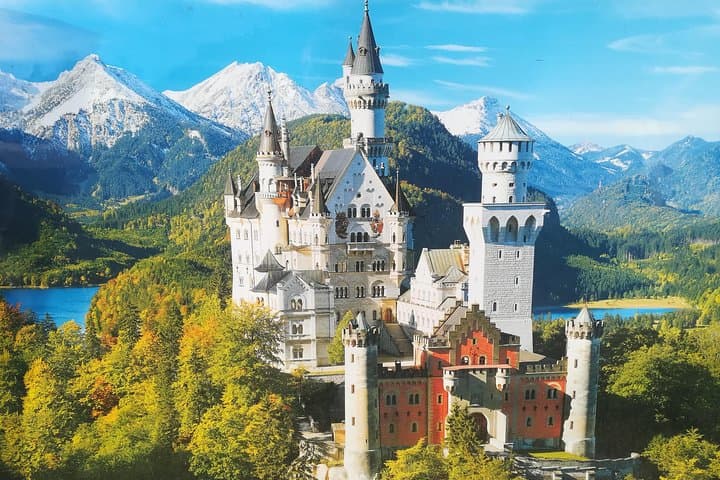
Neuschwanstein is 19th‑century Romanticism made of stone — King Ludwig II’s dream in Romanesque revival, set on a crag above the village. The castle’s white towers catch the light; Marienbrücke (Mary’s Bridge) offers the classic, vertiginous view over the gorge. Geology here is simple and sharp: steep limestone slopes, glacially carved basins, and forested ridgelines that frame the structure.
Locals in Füssen and nearby Schwangau maintain a steady stream of tourism infrastructure: shuttle buses, horse carriages, and well-marked walking paths. Expect a quick, guided interior visit of roughly 35 minutes and time to explore viewpoints, the village, and the lakeshore.
Practical guidance: the tour is efficient — 5–6 hours total from Munich with skip‑the‑line entry included — but it’s still a high‑traffic attraction. Wear sturdy shoes for the uphill walk or be prepared for the shuttle; bring layered clothing and a rain shell; allow extra time at Marienbrücke if you want photos without crowds. If you prefer less bustle, plan a morning visit or a return to Füssen for quieter trails around the Alpsee.
easy.
5–6 hours.
Light activity level; able to walk 20–30 minutes uphill and negotiate stairs inside the castle.
The tour departs Munich Central Station around 7:15 AM and returns to Munich Central Station by approximately 1:26 PM; exact times are confirmed at booking.
The interior includes narrow rooms and many stairs; mobility access is limited and some areas are not wheelchair‑accessible—ask the operator about alternatives like viewing points and carriage drop‑offs.
Photography is generally prohibited inside the castle during the guided tour; outdoor viewpoints and the bridge allow photos.
You can receive a full refund if you cancel at least 24 hours before the scheduled departure time; check your booking confirmation for details.
Neuschwanstein was commissioned by King Ludwig II in the late 19th century as a private retreat and homage to medieval models; its Romantic design influenced later popular imagery of European castles.
High visitor numbers strain trails and shoreline habitats—stay on marked paths, use shuttle services, and carry out all waste to reduce impact.
Bavarian Castle Tour operates guided outdoor trips and adventures with an emphasis on safety, stewardship, and memorable experiences.


You step out of Munich Central Station before dawn, the city still folding itself up around the platforms, and settle into a compact itinerary: a private car-and-train shuttle that pushes southwest across Bavarian farmland toward the limestone foothills of the Alps. The route tightens as the road climbs toward Schwangau; the Pöllat Gorge and the Alpsee appear like features with intent, water and forest daring you to slow down and look.
You step out of Munich Central Station before dawn, the city still folding itself up around the platforms, and settle into a compact itinerary: a private car-and-train shuttle that pushes southwest across Bavarian farmland toward the limestone foothills of the Alps. The route tightens as the road climbs toward Schwangau; the Pöllat Gorge and the Alpsee appear like features with intent, water and forest daring you to slow down and look.
Neuschwanstein is 19th‑century Romanticism made of stone — King Ludwig II’s dream in Romanesque revival, set on a crag above the village. The castle’s white towers catch the light; Marienbrücke (Mary’s Bridge) offers the classic, vertiginous view over the gorge. Geology here is simple and sharp: steep limestone slopes, glacially carved basins, and forested ridgelines that frame the structure.
Locals in Füssen and nearby Schwangau maintain a steady stream of tourism infrastructure: shuttle buses, horse carriages, and well-marked walking paths. Expect a quick, guided interior visit of roughly 35 minutes and time to explore viewpoints, the village, and the lakeshore.
Practical guidance: the tour is efficient — 5–6 hours total from Munich with skip‑the‑line entry included — but it’s still a high‑traffic attraction. Wear sturdy shoes for the uphill walk or be prepared for the shuttle; bring layered clothing and a rain shell; allow extra time at Marienbrücke if you want photos without crowds. If you prefer less bustle, plan a morning visit or a return to Füssen for quieter trails around the Alpsee.