THE ADVENTURE COLLECTIVE® · Independent discovery and booking for outdoor travel

Skim shallow mangrove channels and hunt for rare shells while dolphins escort your private boat across the Ten Thousand Islands. This half-day tour from Goodland focuses on shelling hotspots, coast ecology and intimate wildlife encounters.
Skim shallow mangrove channels and hunt for rare shells while dolphins escort your private boat across the Ten Thousand Islands. This half-day tour from Goodland focuses on shelling hotspots, coast ecology and intimate wildlife encounters.
The boat slips out of Walker’s Coon Key Marina with the hush of a place that’s still mostly water. Salt air pulls at the brim of your hat while mangrove channels narrow and then open again, revealing a mosaic of shallow bars and emerald backwaters. Dolphins arc ahead like punctuation marks, curious and quick, their sleek backs flashing sun as if agreeing to lead you to the best shelling beaches.
Verified experiences and guided adventures in the surrounding area.
Operated by Sand Dollar Boat Tours of Naples · Goodland, Florida
The boat slips out of Walker’s Coon Key Marina with the hush of a place that’s still mostly water. Salt air pulls at the brim of your hat while mangrove channels narrow and then open again, revealing a mosaic of shallow bars and emerald backwaters. Dolphins arc ahead like punctuation marks, curious and quick, their sleek backs flashing sun as if agreeing to lead you to the best shelling beaches.
This is the Ten Thousand Islands — a fringe of barrier islands, oyster bars and mangrove islets carved from the same forces that shaped Florida’s Gulf coast: rising seas, slow-moving currents and ancient carbonate platforms. The region’s geology is simple and patient; limestone reefs and sand spits shift with storms, producing the mixing zones where scallop shells, whelks and rare junonia show up after a strong tide.
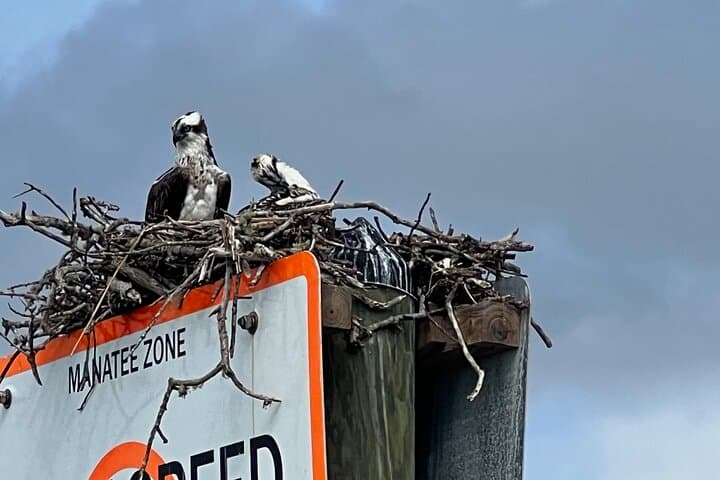
Goodland and nearby Marco Island have been fishing and shelling grounds for centuries. Indigenous Calusa communities used the islands for seasonal harvests long before 19th-century settlers mapped anything here. Today, local skippers blend that practical knowledge with a conservation-first ethic: they read tides and wind like a language and avoid spooking sensitive bird and turtle nesting areas while steering visitors to ephemeral shelling spots.
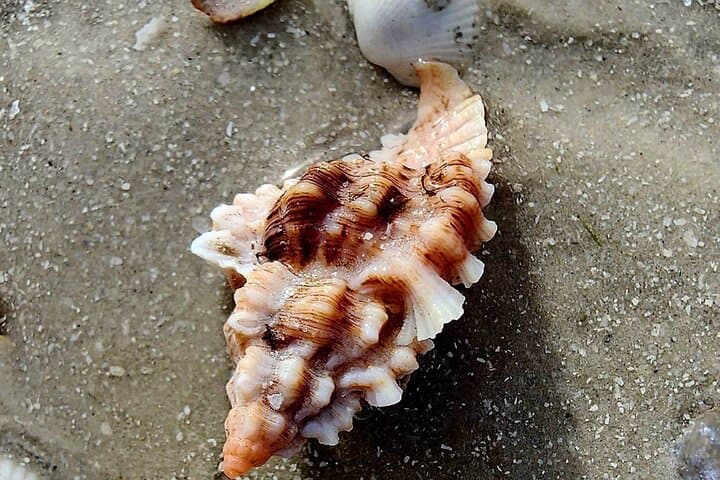
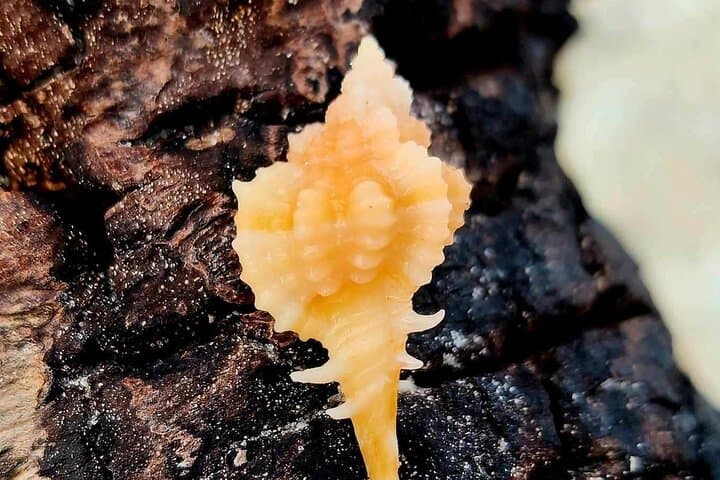
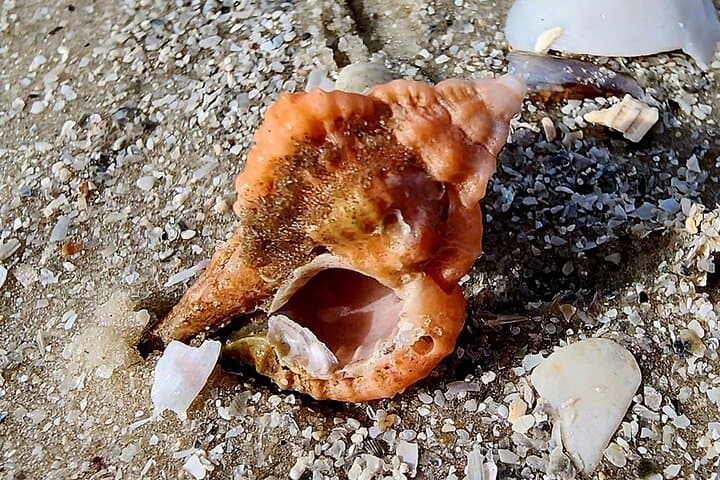
On this private half-day tour you’ll spend roughly three hours skimming shallow flats that larger vessels can’t reach. Guides limit groups to six to keep the experience intimate and to minimize wake on fragile flats. Expect to stop at Kice Island, Cape Romano fringe beaches and other low-lying bars where guides will show you how to identify quality finds, from olive shells to lightning whelks and the occasional prized junonia.
Practicalities: wear reef shoes and bring polarized sunglasses — glare hides shells and polarized lenses make the shallow bottom pop. Sunscreen is non-negotiable; the Gulf reflects heat and light. The tour includes bottled water and is rated easy physically, but you’ll bend, squat and walk on uneven sandbars — simple mobility helps. Morning departures are best for calm water and cooler temperatures; late afternoon trips bring more dramatic light but can accompany rising winds.
Respect the place: take photos, not shells in excessive quantities; many islands are bird nesting habitat and shell beds recover slowly. If you’re after dolphins, relax and let them approach — sudden moves push them away. For a true sense of Florida’s wild edge, stand on a low spit with the tide running and let the current pull your attention out past the horizon, where water keeps rewriting the coastline.
easy.
3 hours.
Suitable for most fitness levels; you should be able to step on/off a low boat and walk short distances on uneven sandbars.
Boats are limited to six passengers per private charter; multiple boats can be arranged for larger groups.
Dolphins are commonly sighted along the route but wildlife sightings can’t be guaranteed—guides choose routes that maximize chances.
You may take reasonable personal keepsakes; avoid removing large quantities and follow state rules for protected species and archaeological material.
Yes—infants must sit on an adult’s lap; the trip is considered easy, but parents should be prepared for sun exposure and brief wading.
Walker's Coon Key Marina on E Palm Ave, Goodland (604 E Palm Ave); arrive early to park and check in.
Tours are cancellable for full refund at least 24 hours prior; operators may cancel for bad weather or unsafe sea conditions and will reschedule or refund accordingly.
The Ten Thousand Islands were traditional harvest areas for the Calusa people; later 19th-century fishermen and early tourists developed Goodland as a small fishing community.
Guides practice low-wake navigation and teach visitors about shell bed recovery; limiting group size helps reduce impact on sensitive flats and bird habitat.
Sand Dollar Boat Tours of Naples operates guided outdoor trips and adventures with an emphasis on safety, stewardship, and memorable experiences.
The boat slips out of Walker’s Coon Key Marina with the hush of a place that’s still mostly water. Salt air pulls at the brim of your hat while mangrove channels narrow and then open again, revealing a mosaic of shallow bars and emerald backwaters. Dolphins arc ahead like punctuation marks, curious and quick, their sleek backs flashing sun as if agreeing to lead you to the best shelling beaches.
The boat slips out of Walker’s Coon Key Marina with the hush of a place that’s still mostly water. Salt air pulls at the brim of your hat while mangrove channels narrow and then open again, revealing a mosaic of shallow bars and emerald backwaters. Dolphins arc ahead like punctuation marks, curious and quick, their sleek backs flashing sun as if agreeing to lead you to the best shelling beaches.
This is the Ten Thousand Islands — a fringe of barrier islands, oyster bars and mangrove islets carved from the same forces that shaped Florida’s Gulf coast: rising seas, slow-moving currents and ancient carbonate platforms. The region’s geology is simple and patient; limestone reefs and sand spits shift with storms, producing the mixing zones where scallop shells, whelks and rare junonia show up after a strong tide.
Goodland and nearby Marco Island have been fishing and shelling grounds for centuries. Indigenous Calusa communities used the islands for seasonal harvests long before 19th-century settlers mapped anything here. Today, local skippers blend that practical knowledge with a conservation-first ethic: they read tides and wind like a language and avoid spooking sensitive bird and turtle nesting areas while steering visitors to ephemeral shelling spots.
On this private half-day tour you’ll spend roughly three hours skimming shallow flats that larger vessels can’t reach. Guides limit groups to six to keep the experience intimate and to minimize wake on fragile flats. Expect to stop at Kice Island, Cape Romano fringe beaches and other low-lying bars where guides will show you how to identify quality finds, from olive shells to lightning whelks and the occasional prized junonia.
Practicalities: wear reef shoes and bring polarized sunglasses — glare hides shells and polarized lenses make the shallow bottom pop. Sunscreen is non-negotiable; the Gulf reflects heat and light. The tour includes bottled water and is rated easy physically, but you’ll bend, squat and walk on uneven sandbars — simple mobility helps. Morning departures are best for calm water and cooler temperatures; late afternoon trips bring more dramatic light but can accompany rising winds.
Respect the place: take photos, not shells in excessive quantities; many islands are bird nesting habitat and shell beds recover slowly. If you’re after dolphins, relax and let them approach — sudden moves push them away. For a true sense of Florida’s wild edge, stand on a low spit with the tide running and let the current pull your attention out past the horizon, where water keeps rewriting the coastline.