THE ADVENTURE COLLECTIVE® · Independent discovery and booking for outdoor travel

Spend six carefully paced hours exploring Saint-Émilion’s medieval streets and limestone vineyards with a certified sommelier. Two estate visits, guided tastings, and a town walk make this a concentrated introduction to one of Bordeaux’s most storied appellations.
Spend six carefully paced hours exploring Saint-Émilion’s medieval streets and limestone vineyards with a certified sommelier. Two estate visits, guided tastings, and a town walk make this a concentrated introduction to one of Bordeaux’s most storied appellations.
You arrive on a limestone lane where rows of vines slope like pages in a well-thumbed book; the air smells of earth, ripening grapes and wood smoke. The town’s honey-colored stone rises ahead—narrow streets, a Romanesque church, and a compact core that reads like a medieval map. A local sommelier meets your small group and the day begins with stories as clean and precise as a tasting flight.
Verified experiences and guided adventures in the surrounding area.
Operated by Private Wine Tours Bordeaux · Saint-Émilion, Nouvelle-Aquitaine
You arrive on a limestone lane where rows of vines slope like pages in a well-thumbed book; the air smells of earth, ripening grapes and wood smoke. The town’s honey-colored stone rises ahead—narrow streets, a Romanesque church, and a compact core that reads like a medieval map. A local sommelier meets your small group and the day begins with stories as clean and precise as a tasting flight.
Saint-Émilion’s streets and cellars reflect centuries of viticulture: monastic plots in the Middle Ages, 18th-century classification that shaped estates, and UNESCO recognition for a living cultural landscape. The soils here—limestone, clay and sand—give the Merlot-led wines their structure and softness; a short walk between two estates illustrates how geology meets bottle.
Expect two estate visits: a family domaine where you’ll see vine rows, vat rooms and basic winemaking; and a Grand Cru Classé focused on comparative tasting. A guided stroll through town highlights the monolithic church and the viticultural terraces that define the appellation.
Practical guidance: the tour covers roughly six to seven hours with moderate amounts of walking on cobbles and dirt tracks. Bring comfortable shoes, a small daypack, and a notepad for tasting impressions. Plan for a light bakery stop; lunch is not included. Weather changes quickly—layers are useful—and the sommelier can adapt tastings to diet restrictions if notified in advance.
This half-day balances immersion and efficiency: history, geology and focused tastings delivered by a guide who translates technical detail into clear context for both new and experienced wine travelers.
easy.
6–7 hours.
Suitable for travelers with basic mobility who can walk short distances on uneven ground
The tour is approximately 6–7 hours (390 minutes) and includes two estate visits plus a guided walk through Saint-Émilion.
Yes—tastings at both estates are included, typically 2–3 wines at a family estate and 3–4 at a Grand Cru Classé.
Yes—an air-conditioned vehicle is provided for the tour; confirm pickup and drop-off details when booking.
The guide can adapt tastings or pacing for dietary needs if notified in advance; the tour involves walking on uneven surfaces and is not recommended for travelers with serious mobility issues.
Saint-Émilion developed around monastic viticulture and medieval trade; UNESCO recognizes its continuous cultural landscape and historic vineyards.
Many estates practice sustainable or organic techniques; visitors should stay on paths, avoid stepping on vine roots and pack out waste to protect fragile soils.
Private Wine Tours Bordeaux operates guided outdoor trips and adventures with an emphasis on safety, stewardship, and memorable experiences.
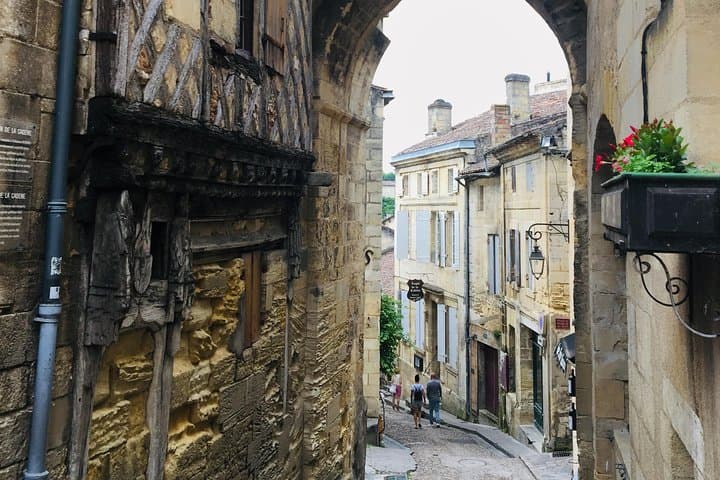


You arrive on a limestone lane where rows of vines slope like pages in a well-thumbed book; the air smells of earth, ripening grapes and wood smoke. The town’s honey-colored stone rises ahead—narrow streets, a Romanesque church, and a compact core that reads like a medieval map. A local sommelier meets your small group and the day begins with stories as clean and precise as a tasting flight.
You arrive on a limestone lane where rows of vines slope like pages in a well-thumbed book; the air smells of earth, ripening grapes and wood smoke. The town’s honey-colored stone rises ahead—narrow streets, a Romanesque church, and a compact core that reads like a medieval map. A local sommelier meets your small group and the day begins with stories as clean and precise as a tasting flight.
Saint-Émilion’s streets and cellars reflect centuries of viticulture: monastic plots in the Middle Ages, 18th-century classification that shaped estates, and UNESCO recognition for a living cultural landscape. The soils here—limestone, clay and sand—give the Merlot-led wines their structure and softness; a short walk between two estates illustrates how geology meets bottle.
Expect two estate visits: a family domaine where you’ll see vine rows, vat rooms and basic winemaking; and a Grand Cru Classé focused on comparative tasting. A guided stroll through town highlights the monolithic church and the viticultural terraces that define the appellation.
Practical guidance: the tour covers roughly six to seven hours with moderate amounts of walking on cobbles and dirt tracks. Bring comfortable shoes, a small daypack, and a notepad for tasting impressions. Plan for a light bakery stop; lunch is not included. Weather changes quickly—layers are useful—and the sommelier can adapt tastings to diet restrictions if notified in advance.
This half-day balances immersion and efficiency: history, geology and focused tastings delivered by a guide who translates technical detail into clear context for both new and experienced wine travelers.