THE ADVENTURE COLLECTIVE® · Independent discovery and booking for outdoor travel

Ride a camel across the Giza Plateau and walk among the Great Pyramids with a private Egyptologist guide. This half-day tour mixes sweeping panoramas with focused history and practical tips for a memorable, low-effort visit.
Ride a camel across the Giza Plateau and walk among the Great Pyramids with a private Egyptologist guide. This half-day tour mixes sweeping panoramas with focused history and practical tips for a memorable, low-effort visit.
You arrive at the edge of the Giza Plateau as the sun sharpens the angles of limestone and sand; camels shift and sigh, their shadows cutting across the wide, open plain. The Great Pyramid rises ahead — a machine of stone that still orders the horizon — while your private Egyptologist guide places the monuments into human time, not myth.
Verified experiences and guided adventures in the surrounding area.
Operated by Magic Life Tours · Giza, Giza Governorate
You arrive at the edge of the Giza Plateau as the sun sharpens the angles of limestone and sand; camels shift and sigh, their shadows cutting across the wide, open plain. The Great Pyramid rises ahead — a machine of stone that still orders the horizon — while your private Egyptologist guide places the monuments into human time, not myth.
The plateau holds more than three millennia of funerary architecture. The pyramids of Khufu, Khafre and Menkaure are masonry feats from around 2600–2500 BCE, built on bedrock of Eocene limestone with mortuary temples and causeways that speak to ancient ritual economies. The Valley Temple’s dressed stone and the Sphinx’s carved visage recall a civilization that organized landscape, labor and belief into monumental form.
Culturally the site remains alive: camel handlers, local vendors and guides share practical knowledge and hospitality. The desert here is active — wind pushes sand across pathways, and the plateau gives panoramic sightlines where you can pick out other pyramids clustered on the horizon.
Practical guidance: this is an easy half-day outing but expect sun and dust. Wear closed, breathable shoes for the uneven sand and limestone, bring a sun hat, and sip water regularly. Photography is straightforward but be respectful of handlers and archeological boundaries; climbing monuments is prohibited. A private vehicle and guide simplify logistics, letting you focus on vantage points and stories rather than timing. Aim for morning or late afternoon for softer light and cooler temperatures — the plateau rewards patience with clearer views and quieter corners of an ancient landscape.
easy.
4–5 hours.
Suitable for most fitness levels; involves short walks on sand and flat limestone with camel seating for part of the visit.
This private half-day tour typically covers viewing the external pyramids and Sphinx; internal pyramid entry tickets are usually not included—confirm with your provider.
Camel rides are generally suitable for most ages though small children often sit with an adult and mobility limitations should be discussed with the operator ahead of booking.
Small backpacks are fine; large tripods or professional gear may be restricted—check with your guide and follow site regulations.
Pickup times vary by hotel location; expect an early morning pickup for cooler temperatures and shorter wait times at viewpoints.
The Giza complex dates to Egypt’s Fourth Dynasty (c. 2600 BCE) and functioned as both burial complexes and ritual landscapes tied to royal power and afterlife belief.
Heavy visitation and wind-driven sand erode surfaces; follow barrier guidelines, don’t climb monuments, and support licensed guides who practice low-impact touring.
Magic Life Tours operates guided outdoor trips and adventures with an emphasis on safety, stewardship, and memorable experiences.
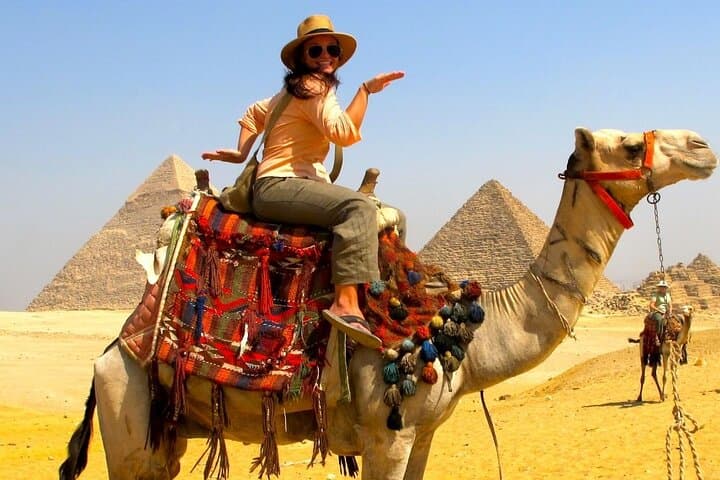
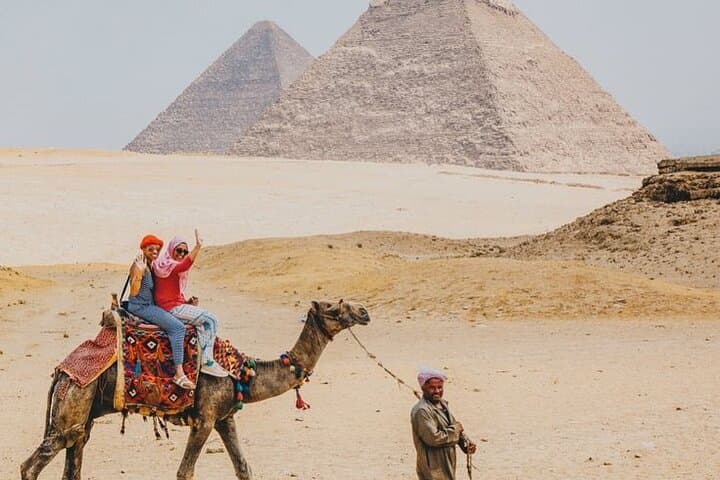
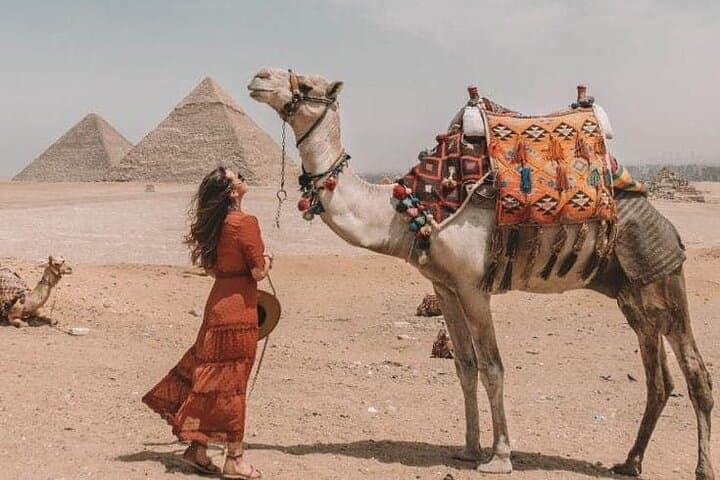
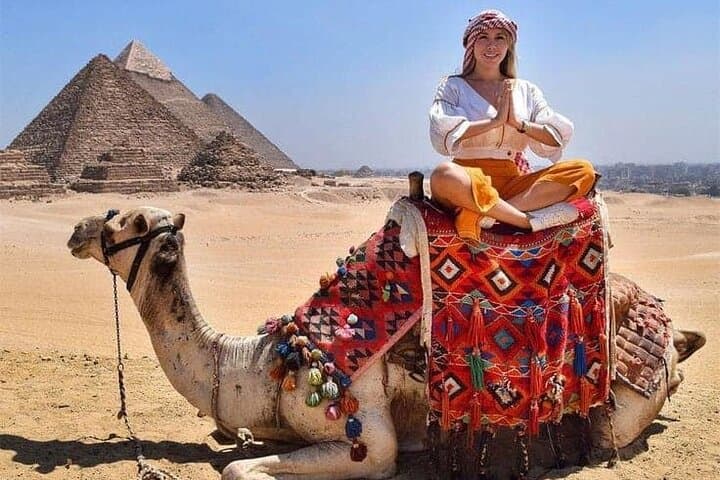
You arrive at the edge of the Giza Plateau as the sun sharpens the angles of limestone and sand; camels shift and sigh, their shadows cutting across the wide, open plain. The Great Pyramid rises ahead — a machine of stone that still orders the horizon — while your private Egyptologist guide places the monuments into human time, not myth.
You arrive at the edge of the Giza Plateau as the sun sharpens the angles of limestone and sand; camels shift and sigh, their shadows cutting across the wide, open plain. The Great Pyramid rises ahead — a machine of stone that still orders the horizon — while your private Egyptologist guide places the monuments into human time, not myth.
The plateau holds more than three millennia of funerary architecture. The pyramids of Khufu, Khafre and Menkaure are masonry feats from around 2600–2500 BCE, built on bedrock of Eocene limestone with mortuary temples and causeways that speak to ancient ritual economies. The Valley Temple’s dressed stone and the Sphinx’s carved visage recall a civilization that organized landscape, labor and belief into monumental form.
Culturally the site remains alive: camel handlers, local vendors and guides share practical knowledge and hospitality. The desert here is active — wind pushes sand across pathways, and the plateau gives panoramic sightlines where you can pick out other pyramids clustered on the horizon.
Practical guidance: this is an easy half-day outing but expect sun and dust. Wear closed, breathable shoes for the uneven sand and limestone, bring a sun hat, and sip water regularly. Photography is straightforward but be respectful of handlers and archeological boundaries; climbing monuments is prohibited. A private vehicle and guide simplify logistics, letting you focus on vantage points and stories rather than timing. Aim for morning or late afternoon for softer light and cooler temperatures — the plateau rewards patience with clearer views and quieter corners of an ancient landscape.