THE ADVENTURE COLLECTIVE® · Independent discovery and booking for outdoor travel

Get a practical, up-close introduction to the Giza Plateau on a private half-day tour with a 15-minute camel ride. Learn what to expect — walking distances, heat, photography rules, and tips to make the most of a compact visit.
Get a practical, up-close introduction to the Giza Plateau on a private half-day tour with a 15-minute camel ride. Learn what to expect — walking distances, heat, photography rules, and tips to make the most of a compact visit.
You arrive at the Giza Plateau as the morning sun slants across pale sand and shadowed stone. The Great Pyramid rises ahead — massive, geometric, uncompromising — while the Sphinx keeps its quiet watch a short walk away. Camels cluster near the base, patient and sure-footed, offering a rhythmically swaying way to circle the monuments.
Verified experiences and guided adventures in the surrounding area.
Operated by Tut Egypt Travel · Giza, Giza Governorate
You arrive at the Giza Plateau as the morning sun slants across pale sand and shadowed stone. The Great Pyramid rises ahead — massive, geometric, uncompromising — while the Sphinx keeps its quiet watch a short walk away. Camels cluster near the base, patient and sure-footed, offering a rhythmically swaying way to circle the monuments.
This private half-day tour traces 4,500 years of funerary engineering and royal ambition. The pyramids date to Egypt’s Fourth Dynasty (c. 2580–2500 BCE) and sit on a limestone plateau formed by ancient sea beds; the terrain is mostly flat with packed sand and gravel underfoot and negligible elevation gain. Cultural life still pulses nearby: vendors selling papyrus prints, the Solar Boat Museum holding a reconstructed funerary craft, and the urban sprawl of greater Cairo pressing towards the horizon.
Expect roughly 2–3 km of walking interspersed with short guided stops — and a 15-minute camel ride included. Practicalities matter here: the sun is relentless, surfaces can be uneven, and lines for interior tomb access are variable. Dress modestly, wear closed-toe shoes for the sand, carry at least 1 liter of water, and bring small bills for tips and purchases. Photography is allowed in exterior areas but rules change for some interior chambers.
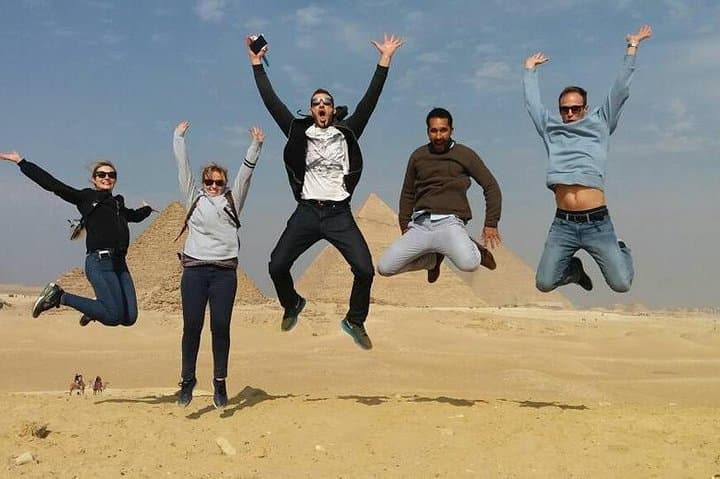
A private guide concentrates the history into a focused visit, leaving time for photos, a brief market stroll, and the camel experience — an efficient, sensory-packed introduction to one of the world’s oldest living landscapes.
easy.
4 hours.
Light activity: comfortable for most people who can stand and walk short distances over sand and gravel.
Interior access depends on ticket options and daily regulations; the basic half-day private tour focuses on exterior viewpoints and the Sphinx, but ask your operator if interior tickets can be added.
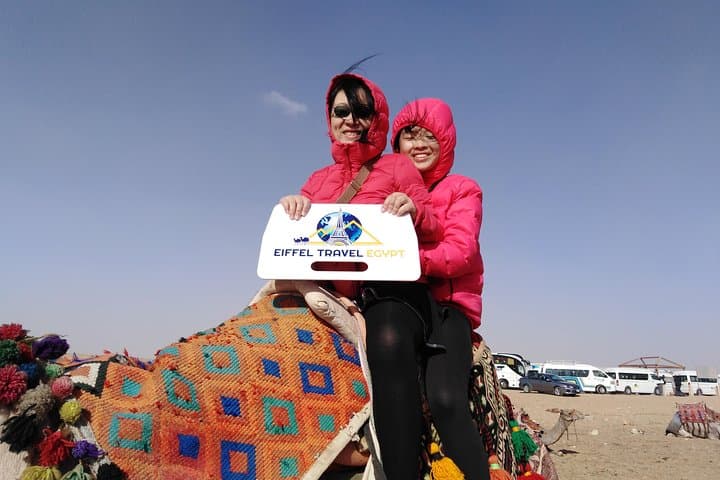
The tour includes a 15-minute camel ride, typically a short loop around the immediate base of the pyramids for photos and experience rather than long-distance travel.
Yes — the tour includes a professional licensed Egyptologist guide who provides historical context and directs the visit.
Parts of the plateau and transportation are wheelchair accessible, but the sandy terrain near monuments can limit mobility; check with the operator for tailored arrangements.
The pyramids at Giza were constructed in Egypt’s Old Kingdom (Fourth Dynasty) as royal tombs and align with sophisticated astronomical and engineering knowledge.
Visitor pressure is constant — avoid littering, don’t climb monuments, and support licensed guides and local conservation fees that fund site protection.
Tut Egypt Travel operates guided outdoor trips and adventures with an emphasis on safety, stewardship, and memorable experiences.
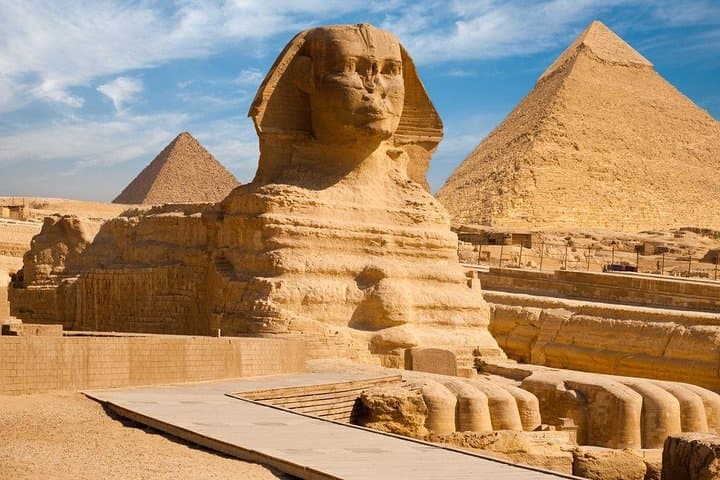
You arrive at the Giza Plateau as the morning sun slants across pale sand and shadowed stone. The Great Pyramid rises ahead — massive, geometric, uncompromising — while the Sphinx keeps its quiet watch a short walk away. Camels cluster near the base, patient and sure-footed, offering a rhythmically swaying way to circle the monuments.
You arrive at the Giza Plateau as the morning sun slants across pale sand and shadowed stone. The Great Pyramid rises ahead — massive, geometric, uncompromising — while the Sphinx keeps its quiet watch a short walk away. Camels cluster near the base, patient and sure-footed, offering a rhythmically swaying way to circle the monuments.
This private half-day tour traces 4,500 years of funerary engineering and royal ambition. The pyramids date to Egypt’s Fourth Dynasty (c. 2580–2500 BCE) and sit on a limestone plateau formed by ancient sea beds; the terrain is mostly flat with packed sand and gravel underfoot and negligible elevation gain. Cultural life still pulses nearby: vendors selling papyrus prints, the Solar Boat Museum holding a reconstructed funerary craft, and the urban sprawl of greater Cairo pressing towards the horizon.
Expect roughly 2–3 km of walking interspersed with short guided stops — and a 15-minute camel ride included. Practicalities matter here: the sun is relentless, surfaces can be uneven, and lines for interior tomb access are variable. Dress modestly, wear closed-toe shoes for the sand, carry at least 1 liter of water, and bring small bills for tips and purchases. Photography is allowed in exterior areas but rules change for some interior chambers.
A private guide concentrates the history into a focused visit, leaving time for photos, a brief market stroll, and the camel experience — an efficient, sensory-packed introduction to one of the world’s oldest living landscapes.