THE ADVENTURE COLLECTIVE® · Independent discovery and booking for outdoor travel

Walk among four millennia of history on a private half-day tour of the Giza Plateau. See the pyramids up close, take a short camel ride from the panorama area, and learn papyrus-making with a licensed Egyptology guide.
Walk among four millennia of history on a private half-day tour of the Giza Plateau. See the pyramids up close, take a short camel ride from the panorama area, and learn papyrus-making with a licensed Egyptology guide.
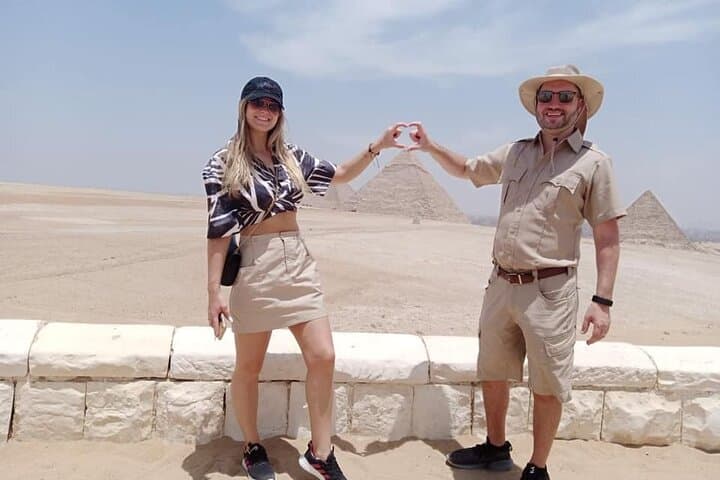
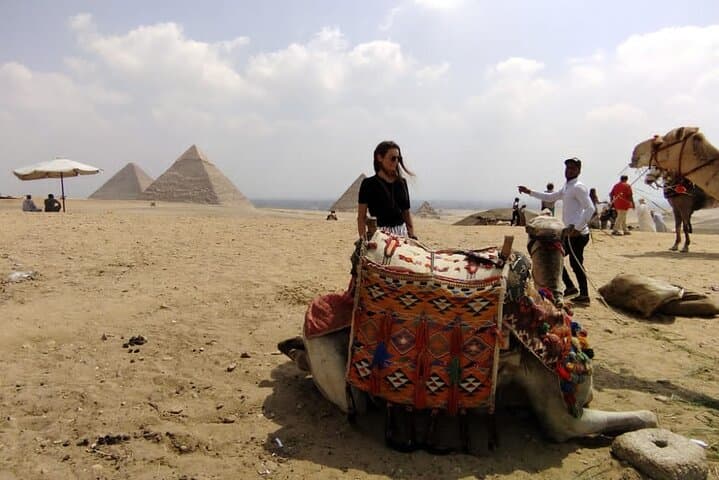
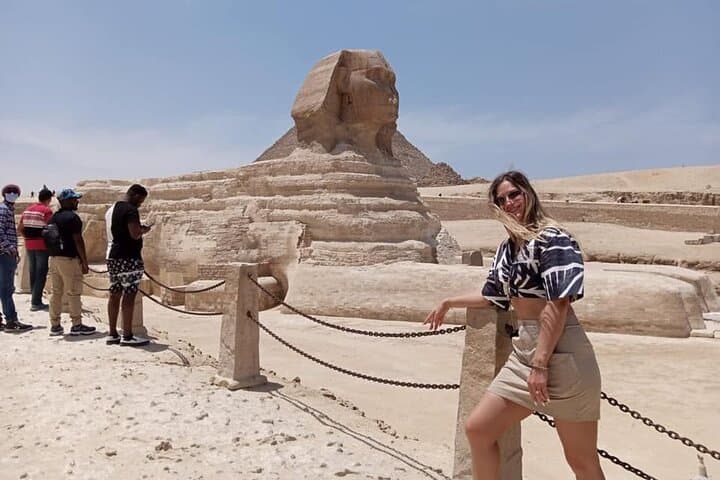
You arrive at the Giza Plateau as heat and stone meet—wind brushes sand across a low ridge, camels shift their weight and the three great pyramids cut the horizon into clean geometry. The Sphinx sits in mute watch, its weathered face catching late-morning light while a licensed Egyptology guide sketches the sequence of monuments and the practical route for the next three hours.
Verified experiences and guided adventures in the surrounding area.
Operated by Excursion Giza Day Tour · Giza, Giza Governorate
You arrive at the Giza Plateau as heat and stone meet—wind brushes sand across a low ridge, camels shift their weight and the three great pyramids cut the horizon into clean geometry. The Sphinx sits in mute watch, its weathered face catching late-morning light while a licensed Egyptology guide sketches the sequence of monuments and the practical route for the next three hours.
The Great Pyramid of Khufu dates to about 2560 BCE and was part of a funerary complex that included temples, causeways and a sealed harbor. The plateau’s limestone bedrock and shifted sand tell a geological story of the Nile’s ancient margins and the human engineer’s use of local stone. Culturally, the site is still lived-in: artisans at nearby papyrus institutes demonstrate a craft that predates 4500 BCE, and market stalls trade handcrafted cartouches and brassware.
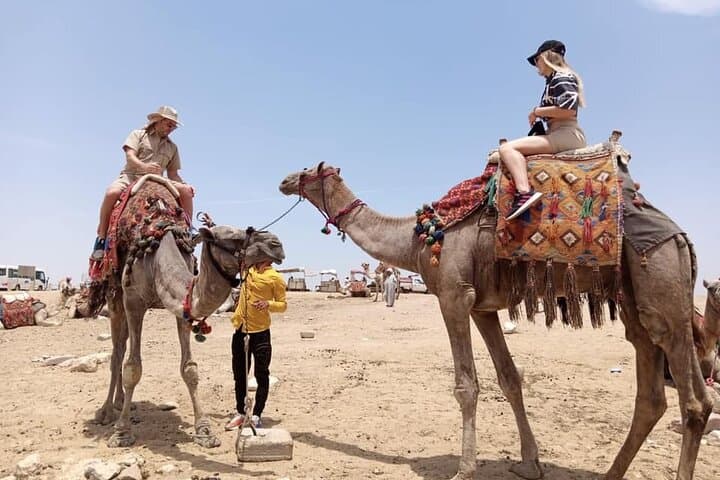
Practically, the tour bundles a focused visit — close views of the pyramids, a 15-minute camel ride from the panorama zone, a walk past the Sphinx and a stop at a papyrus demonstration with an option to have your name written on real papyrus. Expect packed pathways, photographic vantage points, short uphill graded surfaces and busy vendor areas.
Plan for sun protection, a calm tolerance for crowds, and modest bargaining at souvenir shops. Cameras and spare batteries are worthwhile; wear closed shoes for uneven plaster-and-sand surfaces. The guided format and hotel pickup keep logistics simple, leaving you to move through four millennia of history in a single, well-paced morning.
easy.
4 hours.
Basic mobility and ability to walk short distances over uneven ground; suitable for most fitness levels.
Great Pyramid entry is not included; the tour provides close external access and Sphinx/Temple areas—confirm specific entrance tickets with the operator.
The included camel ride runs about 15 minutes from the panorama area; it’s suitable for first-time riders but not a long trek.
Large bags may be cumbersome on the plateau and some areas restrict tripods; check with your guide before bringing bulky gear.
Yes—this private tour is rated easy and suitable for most ages, though individuals should be steady on uneven ground and in the sun.
The three main pyramids were royal tombs from Egypt’s Old Kingdom; the Great Pyramid of Khufu dates to c.2560 BCE and the Sphinx is commonly associated with Khafre’s complex.
Visitor pressure and wind-blown sand affect exposed stone surfaces—stay on marked paths, avoid touching carved faces, and support licensed guides and local conservation fees where used.
Excursion Giza Day Tour operates guided outdoor trips and adventures with an emphasis on safety, stewardship, and memorable experiences.
You arrive at the Giza Plateau as heat and stone meet—wind brushes sand across a low ridge, camels shift their weight and the three great pyramids cut the horizon into clean geometry. The Sphinx sits in mute watch, its weathered face catching late-morning light while a licensed Egyptology guide sketches the sequence of monuments and the practical route for the next three hours.
You arrive at the Giza Plateau as heat and stone meet—wind brushes sand across a low ridge, camels shift their weight and the three great pyramids cut the horizon into clean geometry. The Sphinx sits in mute watch, its weathered face catching late-morning light while a licensed Egyptology guide sketches the sequence of monuments and the practical route for the next three hours.
The Great Pyramid of Khufu dates to about 2560 BCE and was part of a funerary complex that included temples, causeways and a sealed harbor. The plateau’s limestone bedrock and shifted sand tell a geological story of the Nile’s ancient margins and the human engineer’s use of local stone. Culturally, the site is still lived-in: artisans at nearby papyrus institutes demonstrate a craft that predates 4500 BCE, and market stalls trade handcrafted cartouches and brassware.
Practically, the tour bundles a focused visit — close views of the pyramids, a 15-minute camel ride from the panorama zone, a walk past the Sphinx and a stop at a papyrus demonstration with an option to have your name written on real papyrus. Expect packed pathways, photographic vantage points, short uphill graded surfaces and busy vendor areas.
Plan for sun protection, a calm tolerance for crowds, and modest bargaining at souvenir shops. Cameras and spare batteries are worthwhile; wear closed shoes for uneven plaster-and-sand surfaces. The guided format and hotel pickup keep logistics simple, leaving you to move through four millennia of history in a single, well-paced morning.