THE ADVENTURE COLLECTIVE® · Independent discovery and booking for outdoor travel

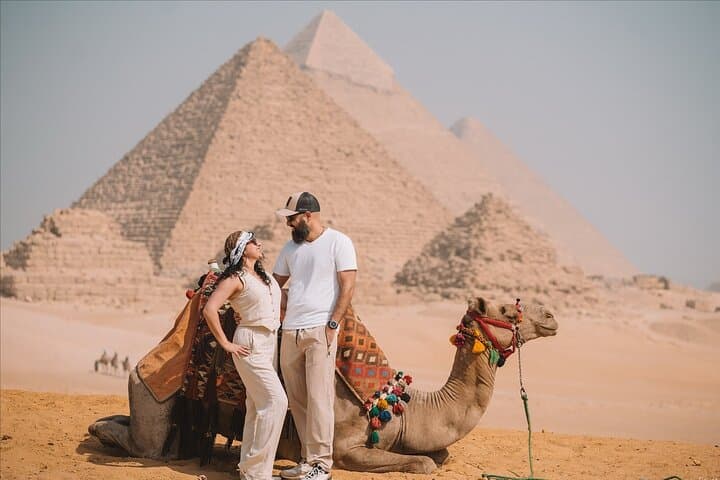
Stand before the oldest of the Ancient Wonders on a private half‑day guided tour from Cairo. Visit Khufu, Khafre and Menkaure, pose at a cliffside viewpoint, ride a camel if you choose, and learn pharaonic history from an Egyptologist guide.
Stand before the oldest of the Ancient Wonders on a private half‑day guided tour from Cairo. Visit Khufu, Khafre and Menkaure, pose at a cliffside viewpoint, ride a camel if you choose, and learn pharaonic history from an Egyptologist guide.
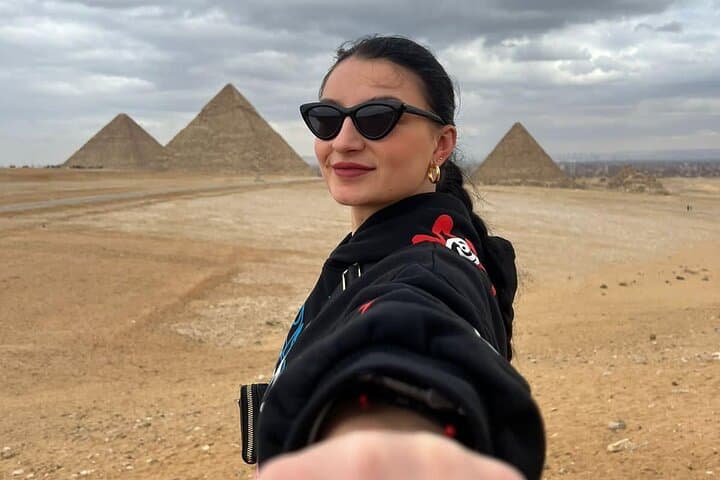
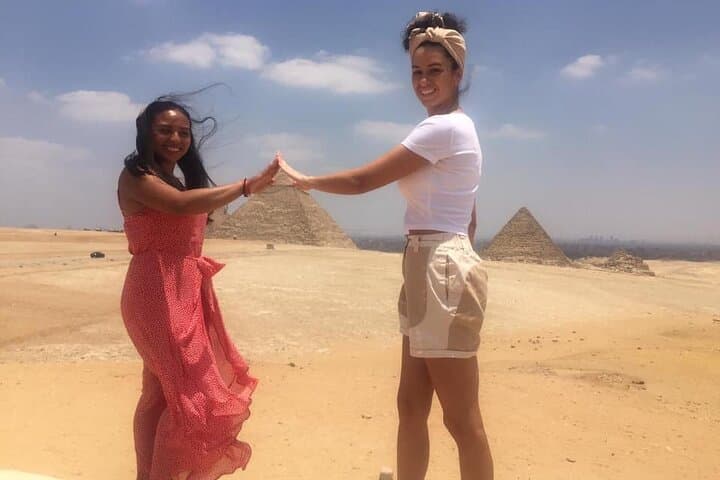
Sand sifts through sandals as the city’s outline drops behind you and the Giza Plateau opens — three monumental silhouettes sitting on the edge of the desert.
Verified experiences and guided adventures in the surrounding area.
Operated by Hesham Egypt tour guide · Giza, Giza Governorate
Sand sifts through sandals as the city’s outline drops behind you and the Giza Plateau opens — three monumental silhouettes sitting on the edge of the desert.
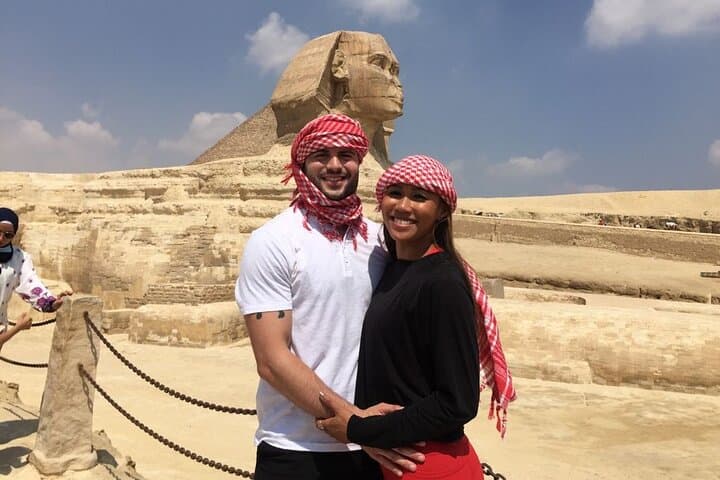
On this private half-day tour, an Egyptologist guide brings the stones to life: the Great Pyramid of Khufu (built in the 26th century BC) looms largest, Khafre’s slightly smaller mass holds the plateau’s optical dominance, and Menkaure’s compact form reads differently against the low sun. The Great Sphinx — a lion’s body with a human visage carved from the limestone outcrop — watches the approach, wind having rounded its edges and tourists having traced its gaze for millennia.
Geology and ancient engineering are visible in the bedrock terraces, the remaining casing stones and the quarry marks of Tura limestone nearby. Culture and commerce sit nearby too: local bazaars hum with spices and textiles, and small cafés serve strong coffee and koshary if you want a quick local meal after your visit.
Practically, the plateau rewards early starts: mornings offer cooler temperatures, softer light for photography and fewer crowds. Expect uneven walking surfaces, short stretches of soft sand, and a guided pace that covers main viewpoints, an optional 15‑minute camel ride, and time at the Sphinx. Bring sun protection, comfortable shoes, and a sense of curiosity — the guide’s interpretations and access to select entrance options change a walk into context-rich exploration. Hotel pickup and bottled water are usually included; plan about 3–4 hours door‑to‑door and leave time for traffic to and from central Cairo.
easy.
3–4 hours.
Light walking on uneven ground; should be able to walk 1–2 miles and stand for extended viewpoints.
Most private options include hotel pickup and drop‑off in Cairo and Giza—confirm your pickup point when booking.
Entrance to the Great Pyramid is an additional option with limited daily tickets; availability depends on the chosen tour package.
No — the 15‑minute camel ride is optional and can be skipped if you prefer to walk or photograph from the viewpoint.
There are basic restroom facilities near tourist areas and cafés, but sanitation standards vary; carry small change for use.
The Great Pyramid of Khufu dates to the Fourth Dynasty (c. 26th century BC) and is the only surviving structure from the ancient Seven Wonders; the Sphinx has been associated with royal iconography since antiquity.
Visitor impact and weathering threaten exposed stonework; follow site rules, avoid touching sensitive surfaces and support licensed guides who work with preservation efforts.
Hesham Egypt tour guide operates guided outdoor trips and adventures with an emphasis on safety, stewardship, and memorable experiences.
Sand sifts through sandals as the city’s outline drops behind you and the Giza Plateau opens — three monumental silhouettes sitting on the edge of the desert.
Sand sifts through sandals as the city’s outline drops behind you and the Giza Plateau opens — three monumental silhouettes sitting on the edge of the desert.
On this private half-day tour, an Egyptologist guide brings the stones to life: the Great Pyramid of Khufu (built in the 26th century BC) looms largest, Khafre’s slightly smaller mass holds the plateau’s optical dominance, and Menkaure’s compact form reads differently against the low sun. The Great Sphinx — a lion’s body with a human visage carved from the limestone outcrop — watches the approach, wind having rounded its edges and tourists having traced its gaze for millennia.
Geology and ancient engineering are visible in the bedrock terraces, the remaining casing stones and the quarry marks of Tura limestone nearby. Culture and commerce sit nearby too: local bazaars hum with spices and textiles, and small cafés serve strong coffee and koshary if you want a quick local meal after your visit.
Practically, the plateau rewards early starts: mornings offer cooler temperatures, softer light for photography and fewer crowds. Expect uneven walking surfaces, short stretches of soft sand, and a guided pace that covers main viewpoints, an optional 15‑minute camel ride, and time at the Sphinx. Bring sun protection, comfortable shoes, and a sense of curiosity — the guide’s interpretations and access to select entrance options change a walk into context-rich exploration. Hotel pickup and bottled water are usually included; plan about 3–4 hours door‑to‑door and leave time for traffic to and from central Cairo.